Weebou Editorial Team
 7 min read

 In this article
A little preparation
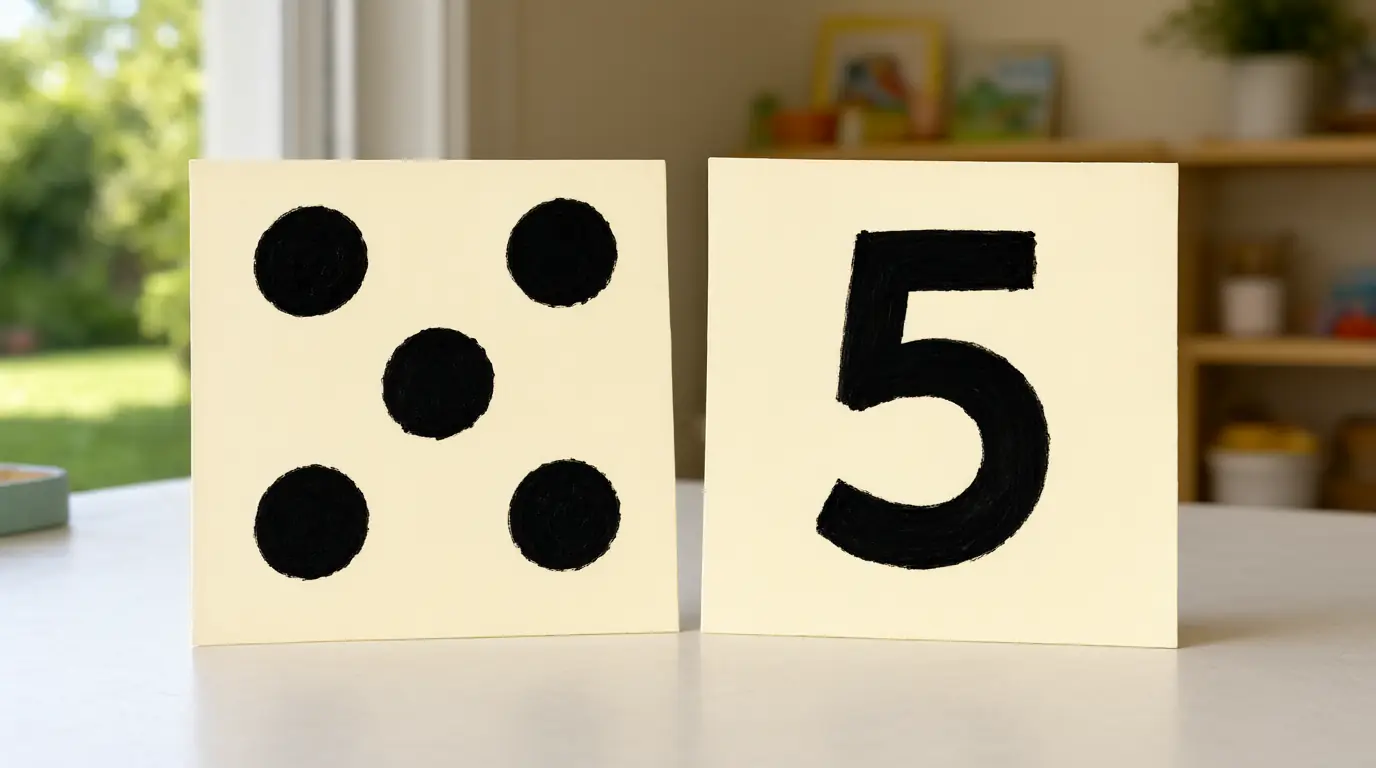
Make your cards from thick paper or the backs of cereal boxes, about the size of a playing card. Write a large numeral from 0 to 10 on one set, and on a second set draw matching dots in different layouts, for example five dots in a line or in a dice pattern. Leave out picture cards and other distractions. Use around twenty counters, such as large buttons, coins or dried beans, in a small tray; avoid small items for children who still put things in their mouths.
Play on a table where cards can be spread out and seen. Start with numbers up to five and extend the range only when your child is confident. Let players check answers by matching counters one to one; the counters are not a crutch but a way to prove an idea. Keep each game to about ten minutes and stop on a good note. If a child gets frustrated, reduce the range or let them be the checker for a round.

Ideas to try together
Match the dots to the numeral
Connecting a numeral to a quantity is the core of early number sense. By matching a numeral card with a dot card in a different arrangement, children learn that a number stays the same however it is shown. The counters act as proof if anyone disagrees.
 You’ll need
- Numeral cards 0–5
- Dot cards 0–5 in mixed layouts
- 10 counters
- A tray
How to do it
- Spread the dot cards face up on the table.
- Turn over a numeral card and say its name.
- Ask your child to find a dot card showing the same amount.
- If they are unsure, place one counter on each dot and then count the counters out loud.
- Swap roles so you pick a dot card and your child finds the numeral.
- Play until all the cards are matched.
Make it your own: Use only numbers up to three for younger children, and let them touch each dot while counting. Older children can play with numbers to ten or match a numeral with two dot cards that add up to it.
Make the target total
Choosing two cards to reach a target teaches children that numbers can be put together in more than one way. It is a gentle introduction to addition, and because the cards are visible, children can try a pair, see that it does not fit and swap one.
You’ll need
- Numeral cards 0–6
- A target card with a number up to 8
- Counters
- A pencil and paper
How to do it
- Set out six numeral cards face up in a row.
- Turn over a target card, such as 5.
- Ask your child to find two cards that make 5 when they are put together.
- Check by lining up counters for the first card and adding the second.
- Write down the pair, for example 2 and 3, and look for another pair.
- Choose a new target and play again.
Make it your own: Use a smaller target such as 4 for a younger child and let them count all the counters. For older children, ask for three cards that make the target.
More, fewer or the same
Comparing two cards builds the language of mathematics: more, fewer, equal, one more. By lining up counters in two rows, children can see the answer rather than guess from the size of the numeral, which often fools young minds.
You’ll need
- Numeral cards 1–8
- 20 counters
- A felt-tip pen
- A small tray
How to do it
- Shuffle the cards and place them face down in a pile.
- Each player turns over a card and says the number.
- Both players place that many counters in a row in front of them.
- Line the rows up side by side and look at the ends.
- Say which player has more, which has fewer, or whether they are the same.
- The player with more takes both cards; play five rounds and count the cards.
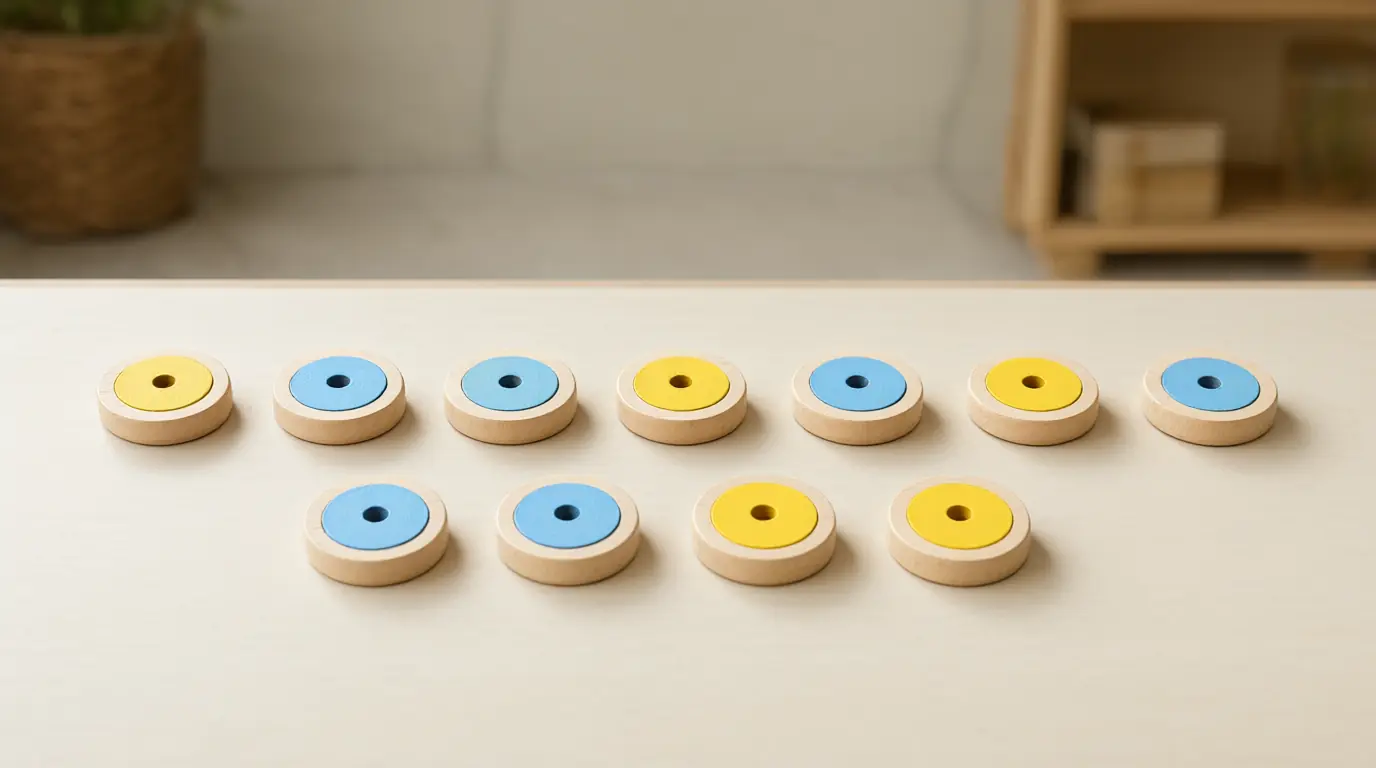
Make it your own: Use numbers up to five for a younger child and have them count each row aloud. Older children can say how many more or fewer and write the difference.
The number neighbour
Placing a missing card in a line of numbers shows how numbers are ordered and how each fits between its neighbours. It builds the mental number line that later helps with counting on and with subtraction, and it works well for a child who likes puzzles.
You’ll need
- Numeral cards 1–10
- A strip of paper as a number path
- A pencil
- A small bag
How to do it
- Lay out the numeral cards in order from 1 to 6.
- Ask your child to close their eyes while you remove one card.
- They open their eyes and say which number is missing.
- Ask them how they know, by looking at the neighbours on either side.
- Return the card and swap roles.
- Increase the line to ten cards once they are confident.
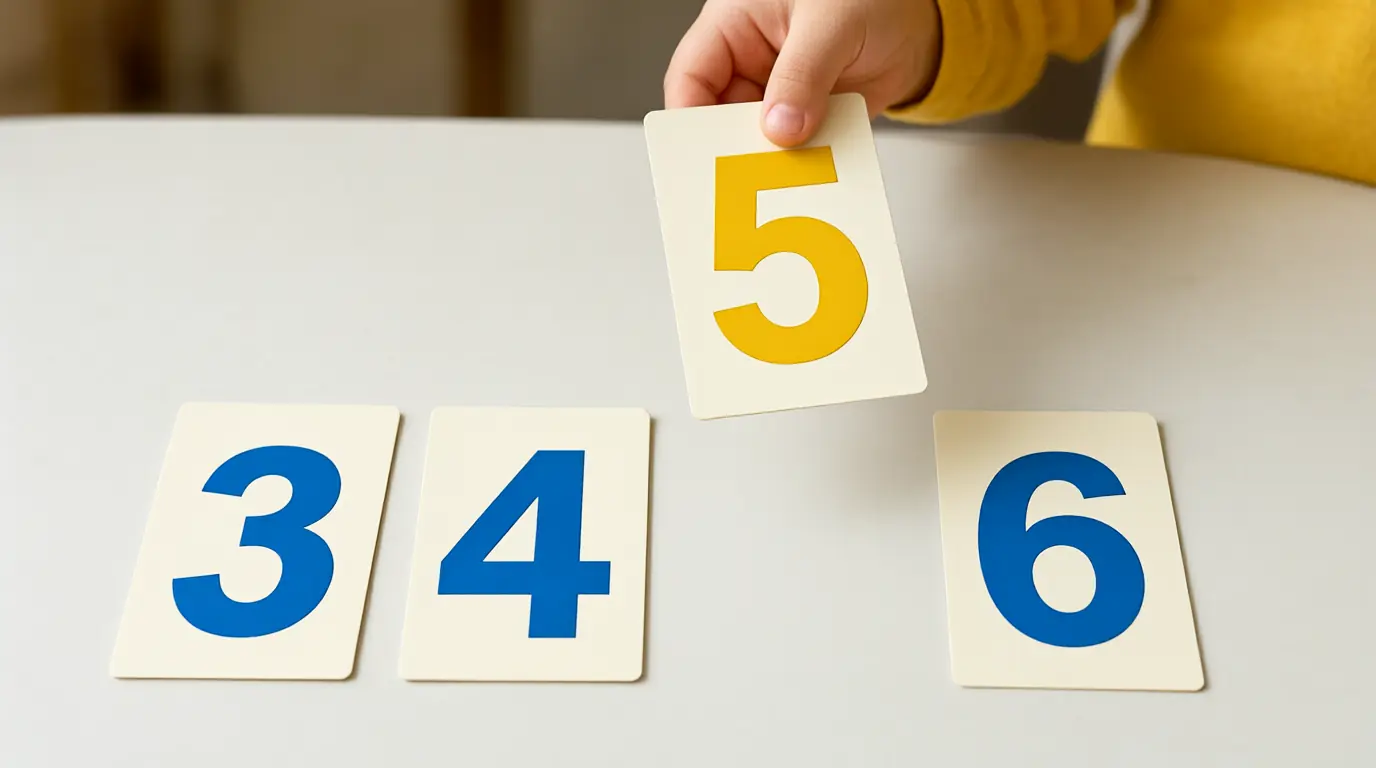
Make it your own: Remove one card from a line of only four for a younger child. Older children can try with two missing cards, or start the line at 5 instead of 1.
Sort the cards and say why
Sorting cards by a rule they choose, such as small numbers and big numbers, or odd and even, gives children a reason to explain their thinking. It shows that mathematics is about patterns and reasons, not only right answers.
You’ll need
- Numeral cards 0–10
- 2 sheets of paper as sorting mats
- Counters
How to do it
- Spread out all the cards and look at them together.
- Choose a rule, such as 'bigger than five' and 'five or smaller'.
- Take turns to place a card on a mat and say why it belongs there.
- Use counters to check any card you are not sure about.
- Mix the cards and try a new rule, such as 'has a curvy shape' and 'has straight lines'.
- Ask your child to invent a rule for you to guess.
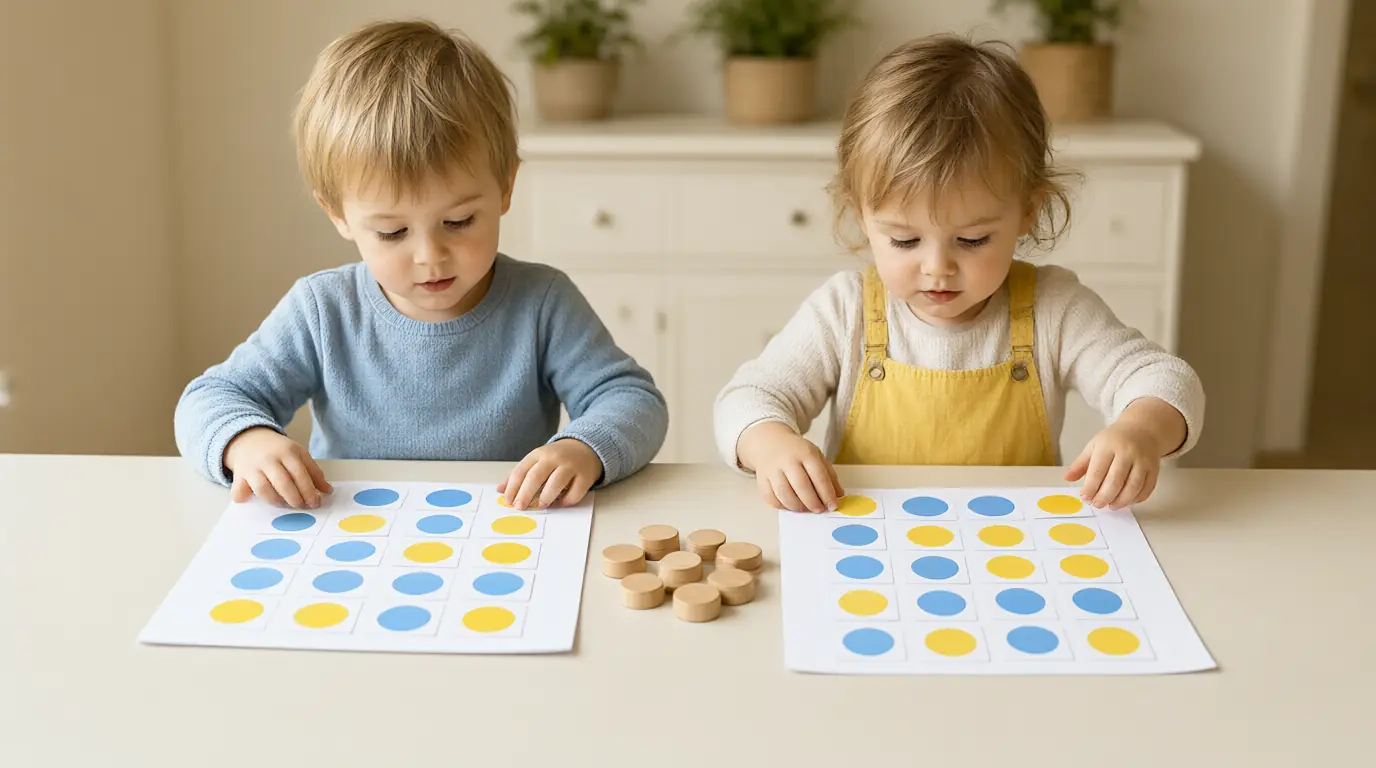
Make it your own: Use cards from zero to five and just two groups for a younger child. Older children can sort into three groups, such as small, middle and large.

Make it work for your family
Resist the temptation to make the games harder by adding speed or scores. Instead change the range of numbers or the question. If your child answers correctly but cannot explain, ask them to show you with counters; if they answer wrongly, count together and let the objects give the answer. Keep the tone relaxed and make mistakes part of the game by sometimes giving a deliberately wrong answer for your child to fix.
A small pack of cards can also support counting practice in the car or while waiting. For more ideas that use small numbers, see kindergarten math games and dice games for kids, or practise numerals with the Weebou numbers game.
Parents also ask
What are good math card games for preschoolers?
Matching dots to numerals, comparing two cards and finding a missing number are all suitable. Use cards with numbers up to five or ten, and always have counters to check answers. Keep rules simple and each game short.
Can I use a regular deck of playing cards?
Yes, you can use the ace to ten cards and remove the picture cards. The pips on each card show the quantity, so they work like dot cards. For younger children, homemade cards with larger numerals are easier to read.
How can I help my child who is not interested in number games?
Try shorter games, allow your child to choose the cards or the counters, and connect the game to something they love, such as feeding toy animals one counter each. Pressure usually reduces interest, so stop if they are tired.
Sources & further reading
Explore these primary sources for further context on this topic.
Choose materials and activities that suit your child, supervise as needed and adapt the ideas to their interests and abilities. About our editorial approach