7 min read


 In this article
A little preparation
Choose a clear table or floor and set out the materials for one game at a time. A sand timer or a visual timer that shows the time running out works better than a ticking clock, because children can see how much is left without counting. Show the game once, let your child practise without the timer, and then try it with the minute.
The point is to try, not to beat anyone. Play against the clock, not against each other, and let everyone repeat the game as many times as they like. Check that all materials are large enough not to be put in the mouth, and keep cups and bowls plastic. If a child feels rushed, stop the timer and say we will do it our way. Keep a short rest between rounds, and end while the mood is still happy.

Ideas to try together
Cup tower
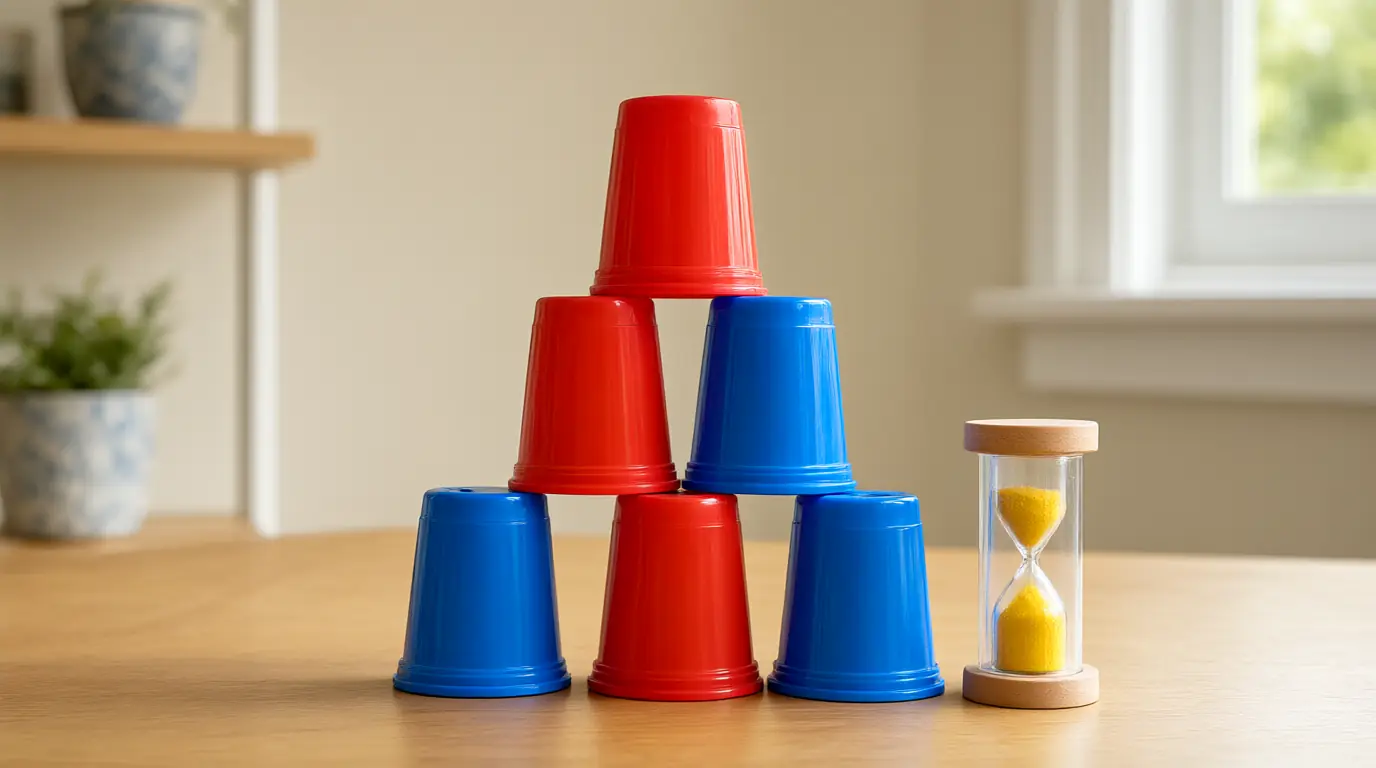
Stacking plastic cups into a tower in a minute asks for steady hands, planning and calm. Children soon discover that a wide base lasts longer than a rushed one. It is a small engineering challenge, and a collapse is just a reason to rebuild.
 You’ll need
- 10 plastic cups
- A flat table
- A visual timer set to 1 minute
How to do it
- Place the cups upside down in a pile.
- Start the timer and stack them into a pyramid, three on the bottom row.
- Add a second row of two and a top cup of one.
- Stop when the timer ends and look at the shape.
- Count how many cups stand up.
- Knock it down gently and try a different shape.
Make it your own: Younger children can stack three or four cups in any way they like. Older children can build a taller tower or a bridge shape and describe the plan.
Cotton-ball scoop
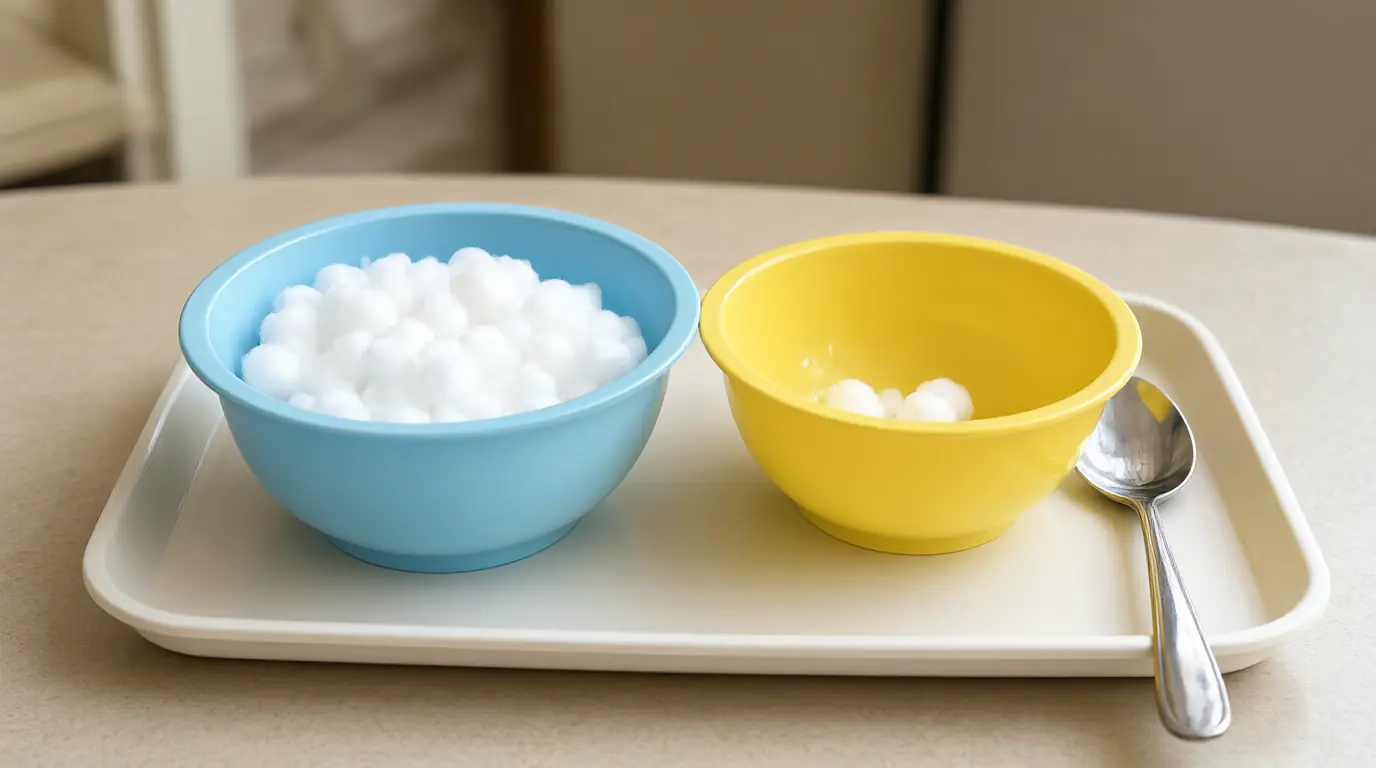
Moving cotton balls from one bowl to another with a spoon builds careful hand control. Because the balls are light and silent, the game stays calm, and it is easy to adjust: use a bigger spoon, a closer bowl or a wider container. Children notice how speed and accuracy pull in different directions.
You’ll need
- 20 large cotton balls
- 2 plastic bowls
- A large spoon
- A tray
How to do it
- Place the cotton balls in one bowl and the empty bowl a hand's width away.
- Start the timer and scoop one ball at a time with the spoon.
- Carry it carefully over and drop it into the second bowl.
- Pause if one falls and pick it up with the spoon.
- Stop when the minute ends and count the balls moved.
- Try again with the bowls further apart.
Make it your own: Younger children can use their fingers or a bigger scoop. Older children can use tongs or a smaller spoon, and predict how many they can move.
Shape sorting sprint
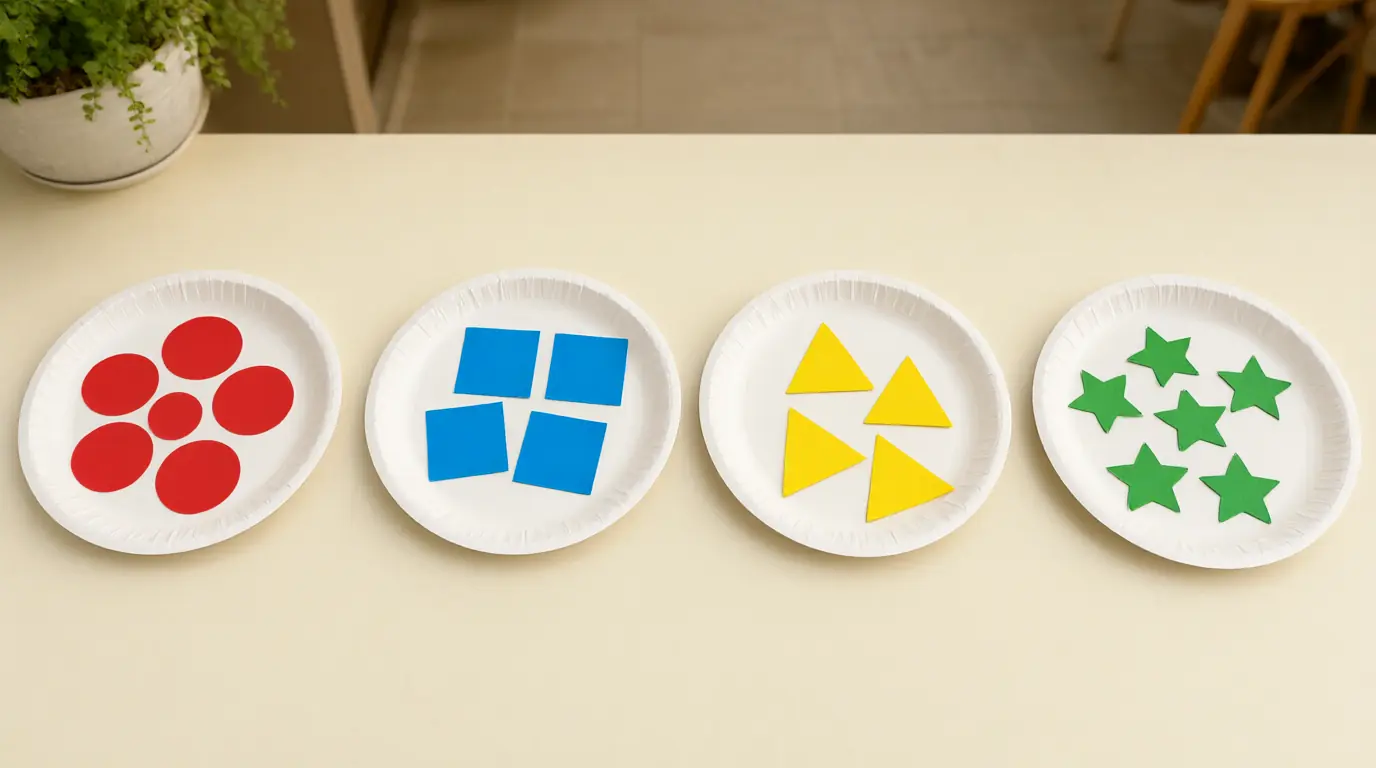
Sorting paper shapes into groups with a timer adds a gentle push to a familiar activity. Children choose the rule, such as colour, shape or size, and sorting quickly means noticing quickly. It is a good way to talk about categories and how one object can belong to several groups.
You’ll need
- 20 flat paper shapes in different colours
- 4 paper plates as sorting spots
- A timer
How to do it
- Mix the shapes in a pile.
- Agree on a sorting rule, such as colour.
- Start the timer and place each shape on the right plate.
- Stop when the minute ends and see what is left.
- Check each plate together for any odd ones.
- Change the rule to shape and play again.
Make it your own: Younger children can sort into two plates. Older children can use two rules at once, such as big red shapes, and explain which plate each belongs to.
Soft delivery
Carrying a soft ball from one place to another without letting it fall asks children to balance speed with care. The twist is that every child can choose how to carry it: on a spoon, on a flat tray or between two hands. Trying a new way each round keeps the game fresh.
You’ll need
- A soft ball or a scrunched sock
- A spoon and a small tray
- A bowl as the delivery point
- Masking tape for a start line
How to do it
- Mark a start line and place the bowl across the room.
- Choose a carrying method: spoon, tray or hands.
- Start the timer and walk the ball to the bowl.
- If it falls, pick it up and begin again from where you are.
- Count how many deliveries are made in the minute.
- Try a different method and compare.
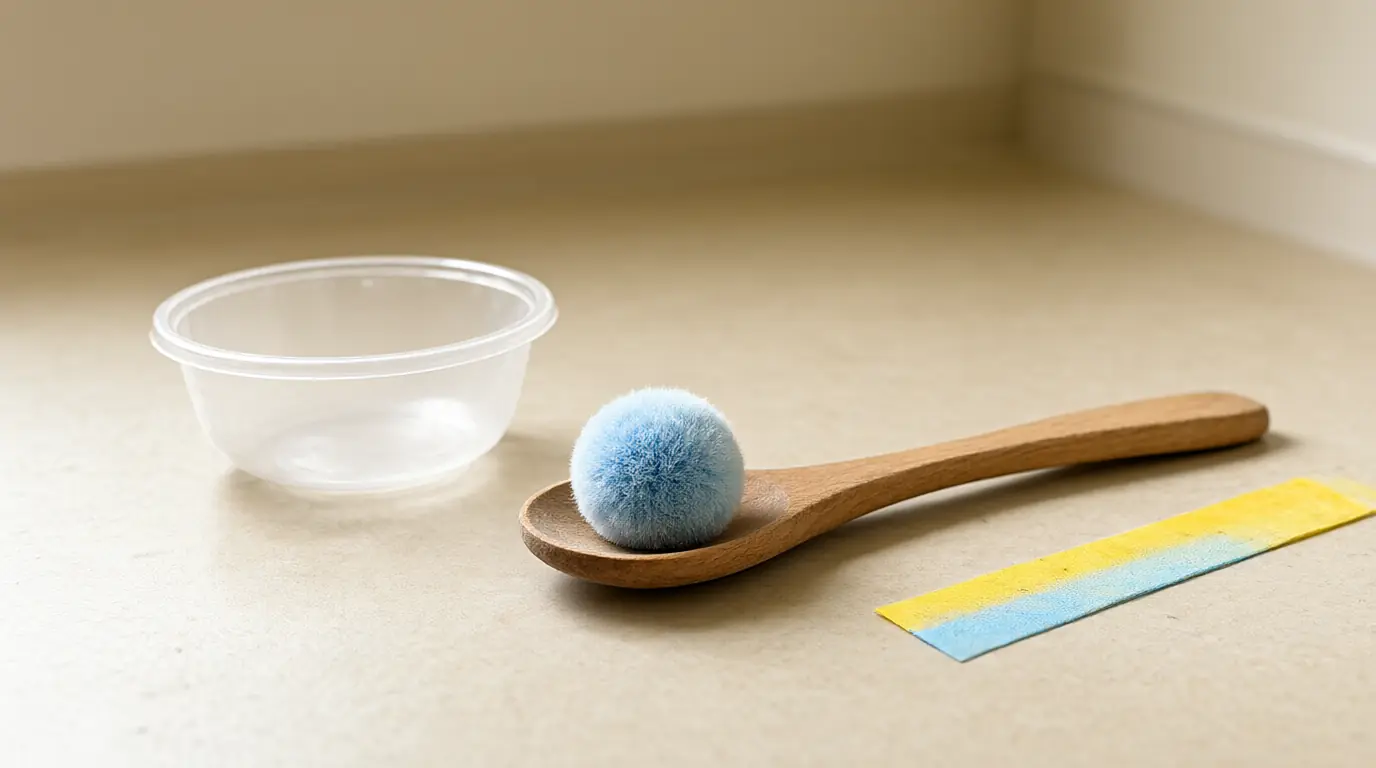
Make it your own: Younger children can carry the ball in both hands over a short distance. Older children can add a zigzag route or carry two balls at once.
Picture clue round
A minute to draw a clue for someone else to guess is a quick creative challenge. It rewards simple, clear pictures and good guessing, and the person who draws and the guesser win together. The game keeps the focus on communication, not on a perfect drawing.
You’ll need
- A small whiteboard or paper
- Marker pens
- A bag of 10 object cards
- A timer
How to do it
- Pick an object card without showing it.
- Start the timer and draw the object without using letters.
- The guesser calls out ideas as the drawing appears.
- Stop the clock when they find the answer.
- If time runs out, talk about which part of the drawing helped most.
- Swap roles and try another card.
Make it your own: Younger children can act out the object. Older children can add one extra clue, such as drawing where the object lives.

Make it work for your family
If the timer makes a child anxious, take it away and agree an end point such as one turn each. Many children prefer a game where they beat their own earlier attempt: remember what you did the first time and see if a new plan helps. Praise strategies, such as using two hands or going slowly, rather than the result. Let your child design a challenge too: choose objects, decide the rule and write the steps on a card. Inventing a one-minute game involves planning, estimating and explaining, and many children discover that a fair, achievable challenge is harder to design than to play.
To keep the fun going with more play ideas, try some party-style birthday games or games to play when bored the next time the afternoon feels long.

Parents also ask
What are easy minute to win it games for kids?
Stacking plastic cups, moving cotton balls with a spoon, sorting paper shapes and carrying a soft ball on a spoon are easy. They use things you already have, take one minute and can be repeated as many times as children like.
How do I keep minute to win it games from becoming too competitive?
Play against the clock or your own earlier score, not each other. Share the timer, let everyone try more than once and praise ideas and effort. If a child feels pressured, remove the timer and agree a natural end such as one turn.
What age are minute to win it games suitable for?
Most are suitable from about four, with supervision and large, soft or plastic materials. Younger children may need longer or no timer, while older ones enjoy harder versions. Always check materials are not small enough to be swallowed.
Choose materials and activities that suit your child, supervise as needed and adapt the ideas to their interests and abilities. About our editorial approach