7 min read

 In this article
A little preparation
Plan around the guests who will actually be there: their ages, how well they know each other, and anything their parents have told you, such as allergies or a child who finds noise hard. Choose a space big enough to move without bumping and put anything breakable out of reach. A party of children aged three to seven usually works best with three or four short games rather than a long programme.
Prepare each game before the first guest arrives, so you can start while the energy is high. Keep a quiet table with paper and crayons available the whole time; children who need a break can draw there and rejoin when they want. Demonstrate each game once, with a volunteer, before anyone plays. Check food-related games with parents first, and avoid any game that needs children to eat something. Finish with a calm activity so guests are settled when parents arrive.

Ideas to try together
Shared birthday mural
A long sheet of paper on the wall or floor lets every guest add a picture, in their own time, to a single celebration scene. It works as an arrival activity, a calm moment between games and a keepsake for the birthday child afterwards.
 You’ll need
- A long roll of plain paper (about 2 metres)
- Crayons, washable markers and stickers
- Masking tape
- A paper title such as Happy Birthday
How to do it
- Tape the paper to a table or the wall at child height.
- Draw a simple scene, such as a big cake, a few balloons drawn on paper and a ground line.
- Invite each guest to add something: a person, an animal, a present.
- Let anyone choose their own colour and place to draw.
- Hang the mural where parents can see it while they collect their children.
- Give the finished mural to the birthday child.
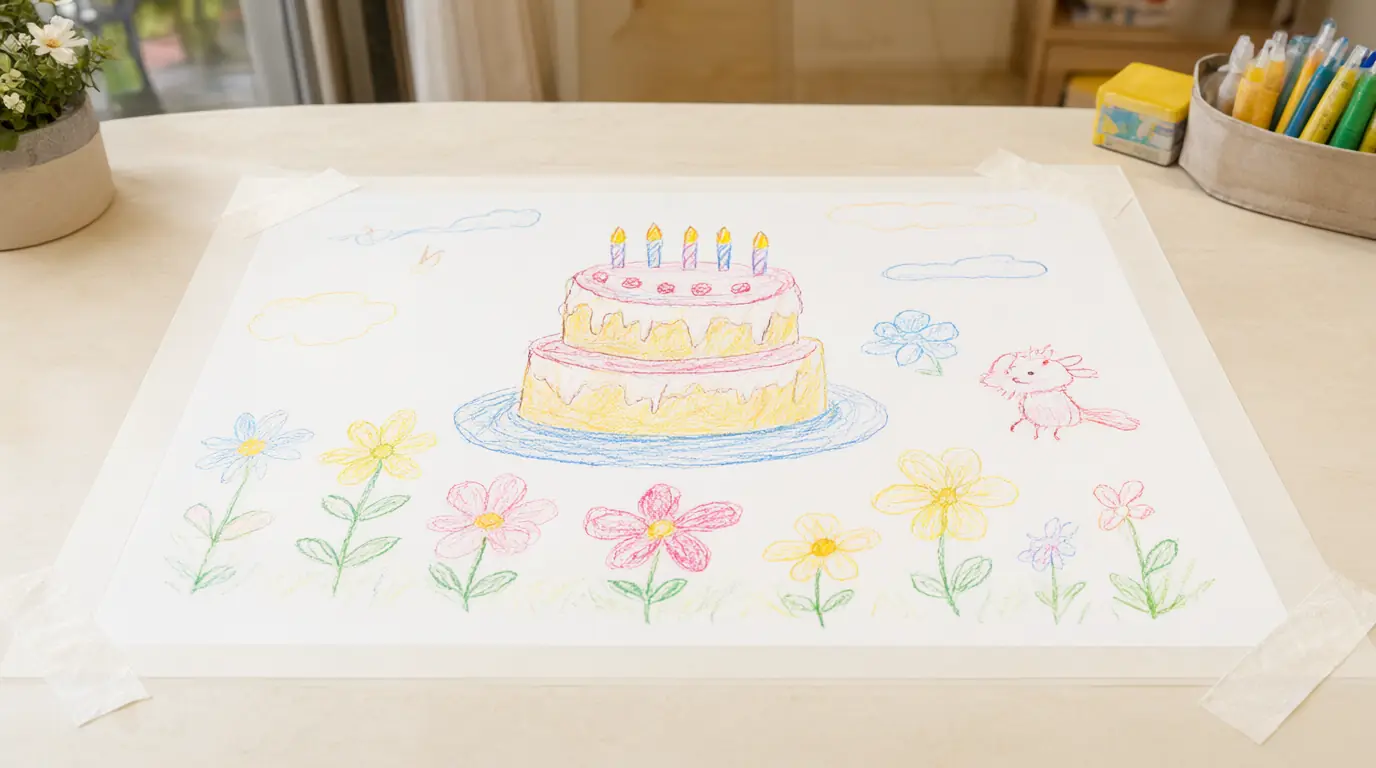
Make it your own: Younger guests can add dots or scribbles and stickers. Older children can plan a scene together, or draw a short comic strip along the bottom.
Picture treasure route
A trail of picture clues sends guests round the room to find a shared surprise rather than a prize that only one child can win. Pictures replace written clues, so children who are not yet reading can follow along and everyone can take part.
You’ll need
- 5 picture cards of ordinary objects, such as a chair or a plant
- Masking tape
- A small box or basket for the final treasure
- Enough small items for each guest, such as stickers
How to do it
- Hide the final basket and place the first picture card in the room.
- Tape each following card where the last one points to.
- Gather guests and show them the first card.
- Let children take turns finding the next card and showing it to the group.
- When the last card is found, open the basket together.
- Share the contents so every guest gets one.
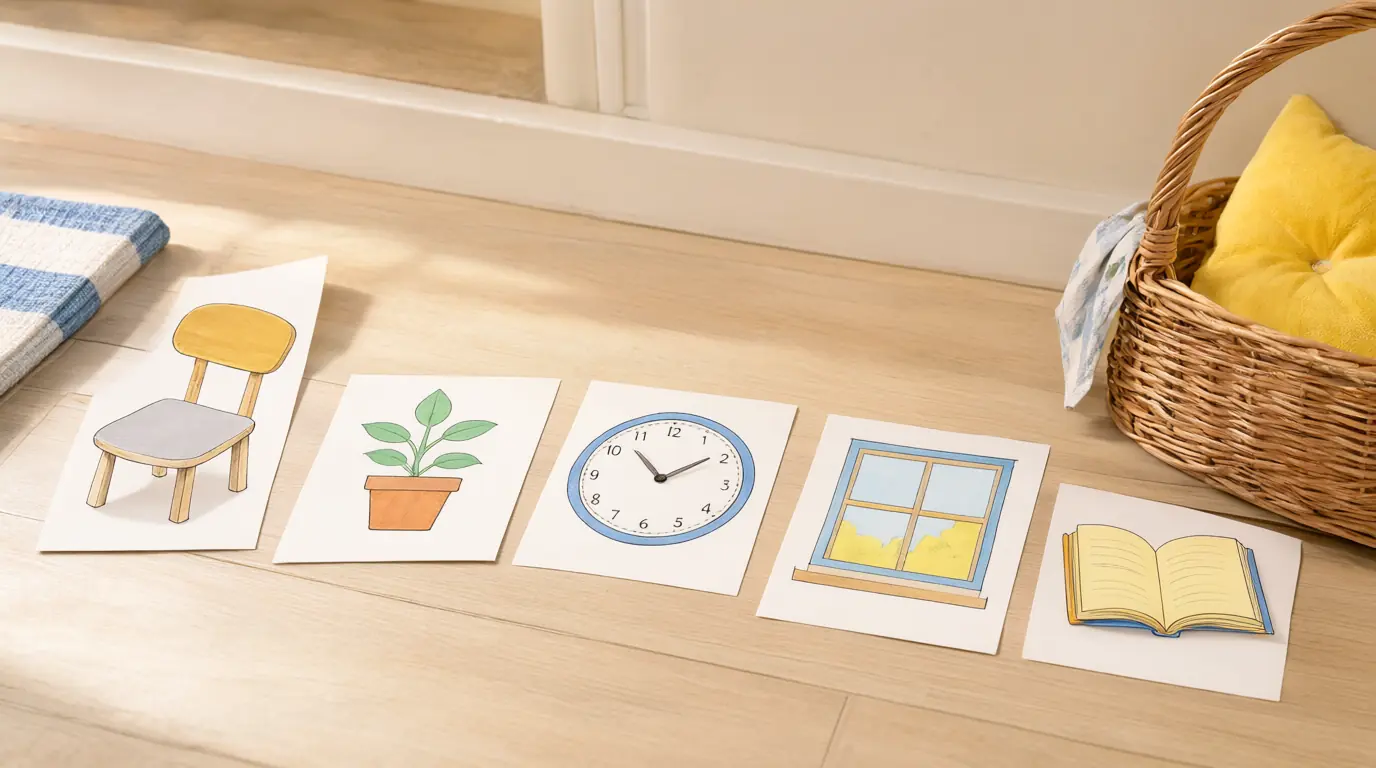
Make it your own: Younger children can search in pairs with an adult. Older children can draw their own clue cards for a second round, or hide the final item for the group to find.
Soft target choices
A line of wide, ground-level targets and soft beanbags lets children choose their own challenge. They can roll, toss or drop a beanbag into a hoop or box, and compare which distance felt best. There are no turns that rush anyone and no one is out.
You’ll need
- 3 large cardboard boxes or hoops
- 6 soft beanbags
- Floor tape for three distance lines
- A basket for retrieved beanbags
How to do it
- Place the boxes in a row and tape three lines at different distances.
- Show how to roll, toss or drop a beanbag into a box.
- Let each guest choose a line and a box.
- Throw or roll one beanbag, then fetch it and put it in the basket.
- Try a different line or a different box on the next turn.
- End with a group count of how many beanbags are in the boxes.
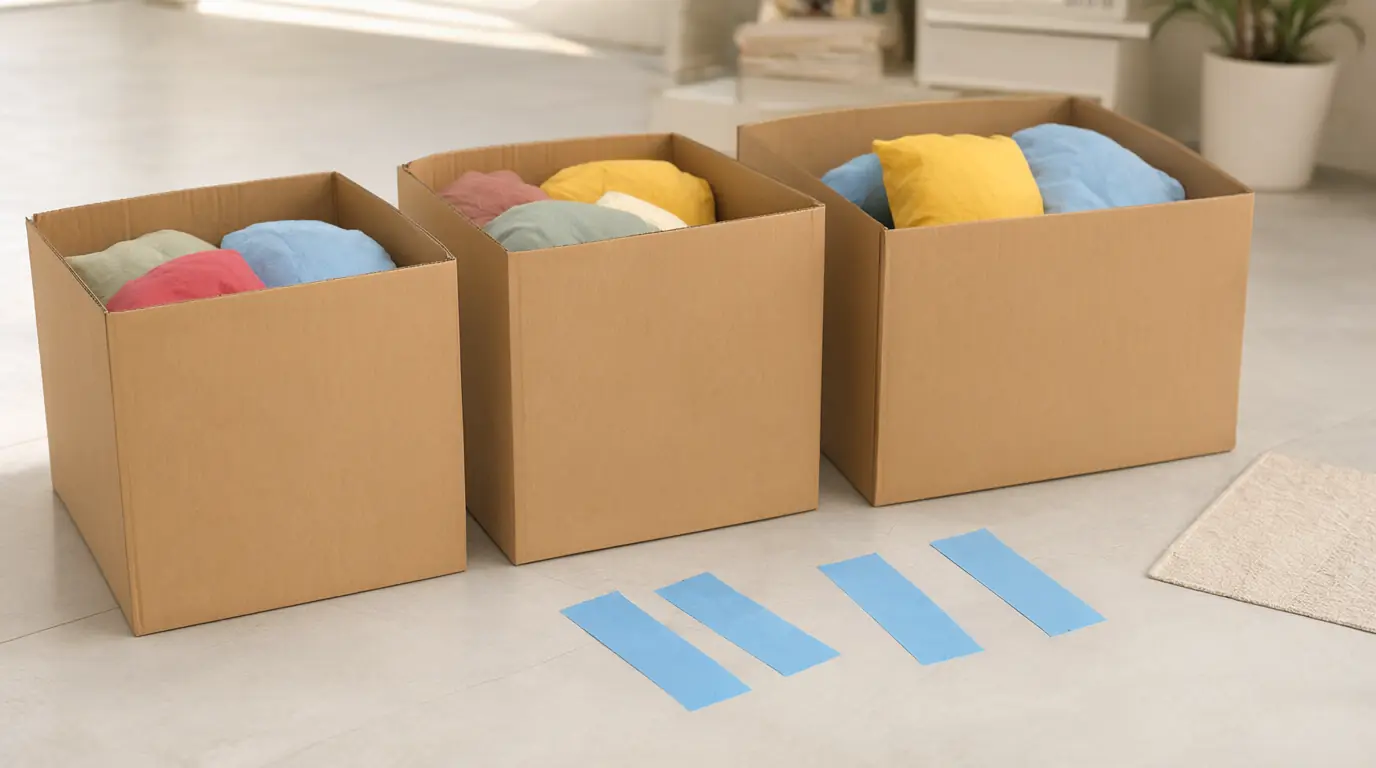
Make it your own: Younger children can stand right next to a box and drop the beanbag in. Older children can try throwing with their other hand, or from behind a farther line.
Celebration story circle
Sitting in a circle and building a story together is a good wind-down. An imaginary character with a birthday problem gives guests a reason to add ideas, and everyone's contribution stays part of the story.
You’ll need
- A circle of floor cushions
- A soft toy as the story character
- A picture of a cake for the middle
How to do it
- Sit guests in a circle and place the soft toy in the middle.
- Say that it is the toy's birthday but its invitations have gone missing.
- Pass a cushion round and let each guest add an idea or say pass.
- Help the group find a friendly ending where the invitations are found.
- Retell the story back in a few short sentences.
- End by giving the toy a group hello.
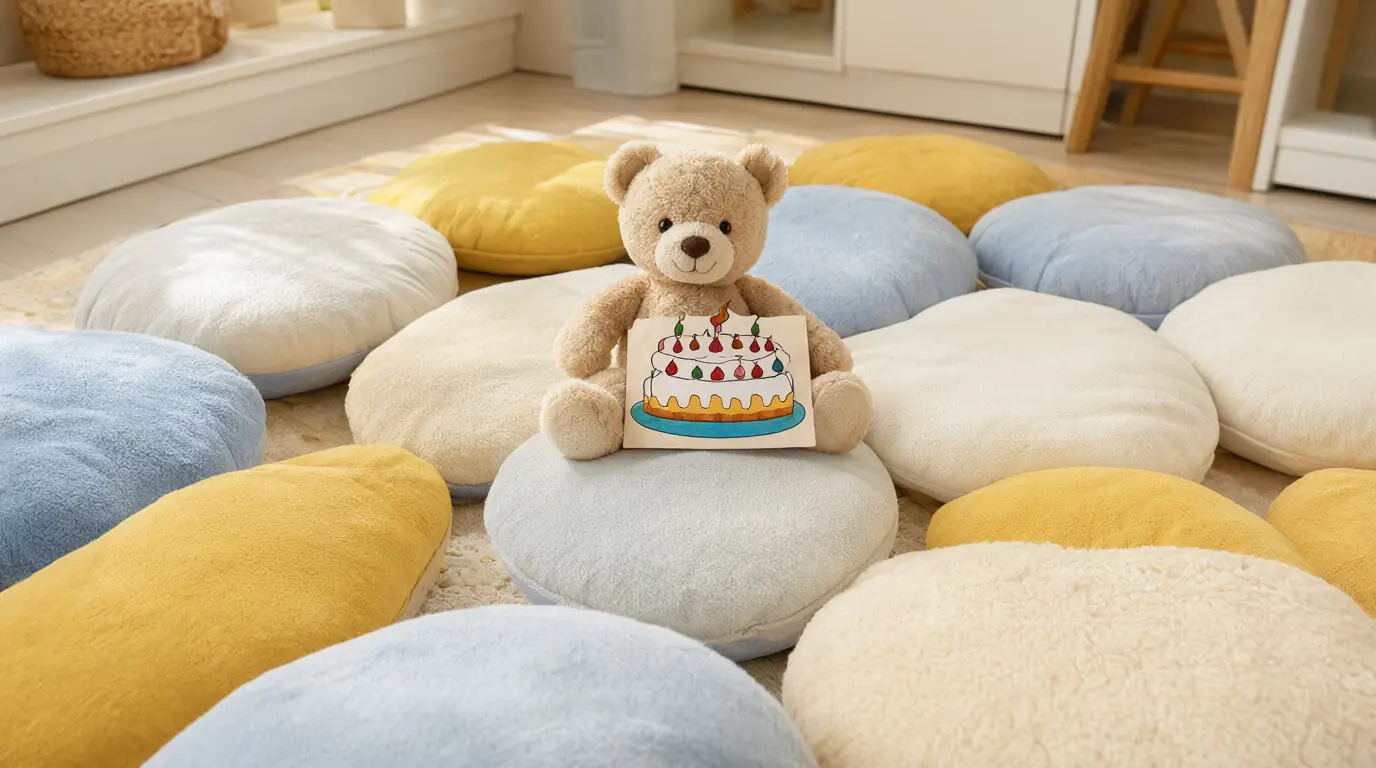
Make it your own: Younger children can make a sound for the character. Older children can invent a second problem or take on a character voice.
Slow-motion party parade
Moving in slow motion is a calm, funny way to burn some energy without chasing or crashing. Children parade round the room as slowly as they can, which develops balance and body control and gives overexcited guests a way to settle.
You’ll need
- A clear floor path
- Music with a gentle beat
- A paper crown or party hat for each child
How to do it
- Mark a parade route round the room with a ribbon of tape on the floor.
- Put on the music and show a slow marching walk.
- Parade round the route as slowly as you can, with knees high.
- Stop the music and freeze like a statue for a count of three.
- Start again, changing the movement to tiptoes or giant steps.
- End with a bow and a round of applause.
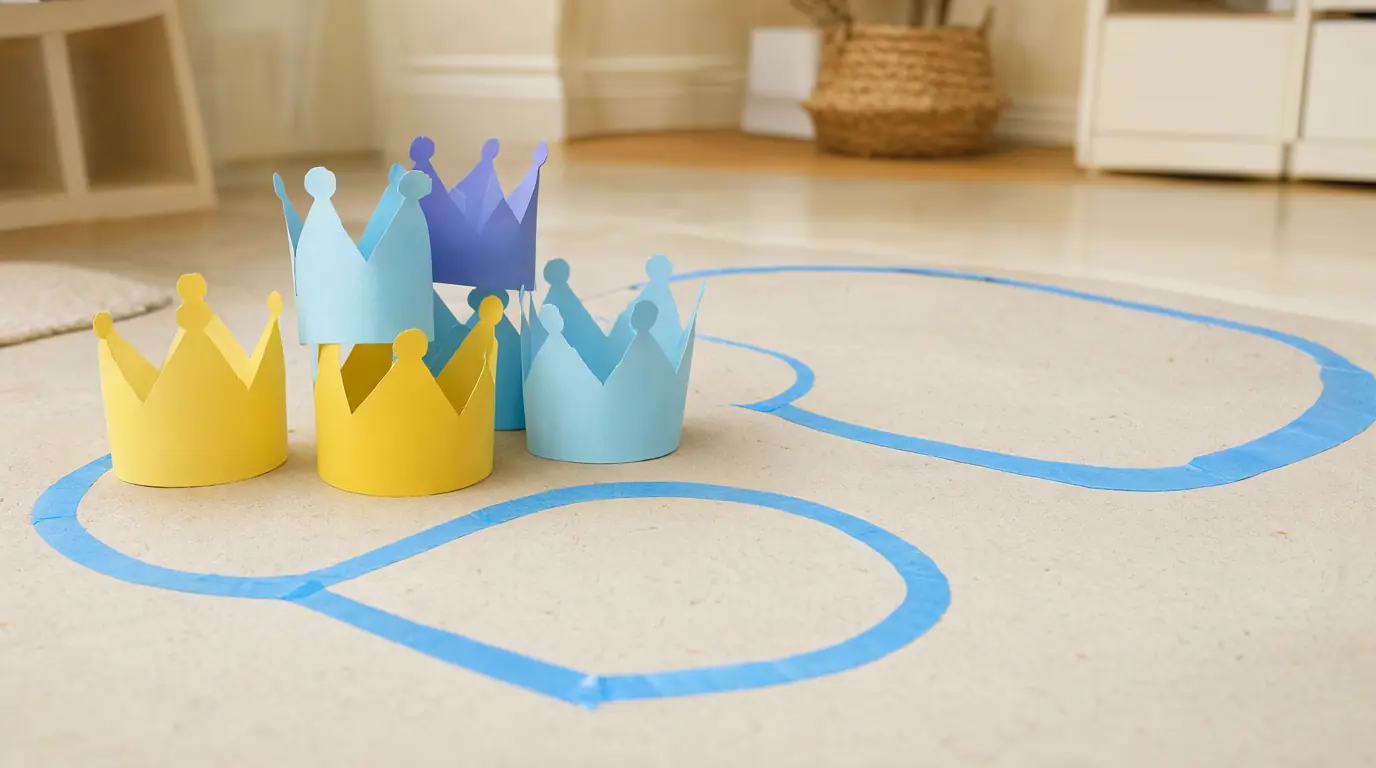
Make it your own: Younger children can walk at their own pace behind a grown-up. Older children can try parading while carrying a soft toy on their head.

Make it work for your family
A child who stands at the edge of a game is not necessarily bored; some children like to watch before they join. Give them a job, such as being the one who holds the basket, calls the next clue or puts the stickers on the mural, and let them step in when they are ready. If a game starts to feel chaotic, stop and change it rather than pushing through.
Prizes are optional. A small party bag at the end for everyone, or a shared treat, avoids a winner and loser. If you want a bigger plan, you can build the party around one of the quieter activities, such as the story circle or the mural, and add one energetic game. For more ideas to mix in, see these group games for kids or a few circle games with clear turns.

Parents also ask
How many games should I plan for a children's birthday party?
Three or four short games, plus a quiet drawing table, is usually plenty for children aged three to seven. Each game needs about ten to fifteen minutes, with breaks for snacks and free play. It is better to stop early than to push on while guests lose interest.
What are good birthday games without elimination?
A shared mural, a picture treasure route, soft target games with chosen distances and a story circle all keep everyone involved. Nobody is out, and each guest can join at their own level.
How do I include a shy child at a birthday party?
Offer a role that does not need performing, such as holding a basket, handing out items or drawing on the mural. Let them watch first and invite, rather than insist, that they join. Arrange a quiet space where they can take a break.
Choose materials and activities that suit your child, supervise as needed and adapt the ideas to their interests and abilities. About our editorial approach