Weebou Editorial Team
 In this article
A little preparation
Gather a world map or globe, a calendar and one or two reliable sources written for children, such as a library picture book or the education pages of a national museum. Read them yourself first so you can decide what to share. Keep the first session short, around 15 to 20 minutes, and let your child's questions decide how far you go.
The Revolution involved real violence, loss and hardship, so it helps to describe the events plainly and without graphic detail: people disagreed about land, work and who should lead the country, and many families were affected for years. If your family has a connection to Mexico, share only the memories you are comfortable with and let your child ask about them in their own time. Avoid asking children to act out fighting or to dress up as a stereotype; drawing, mapping and storytelling give them plenty to do without that.

Ideas to try together
Find Mexico on the map
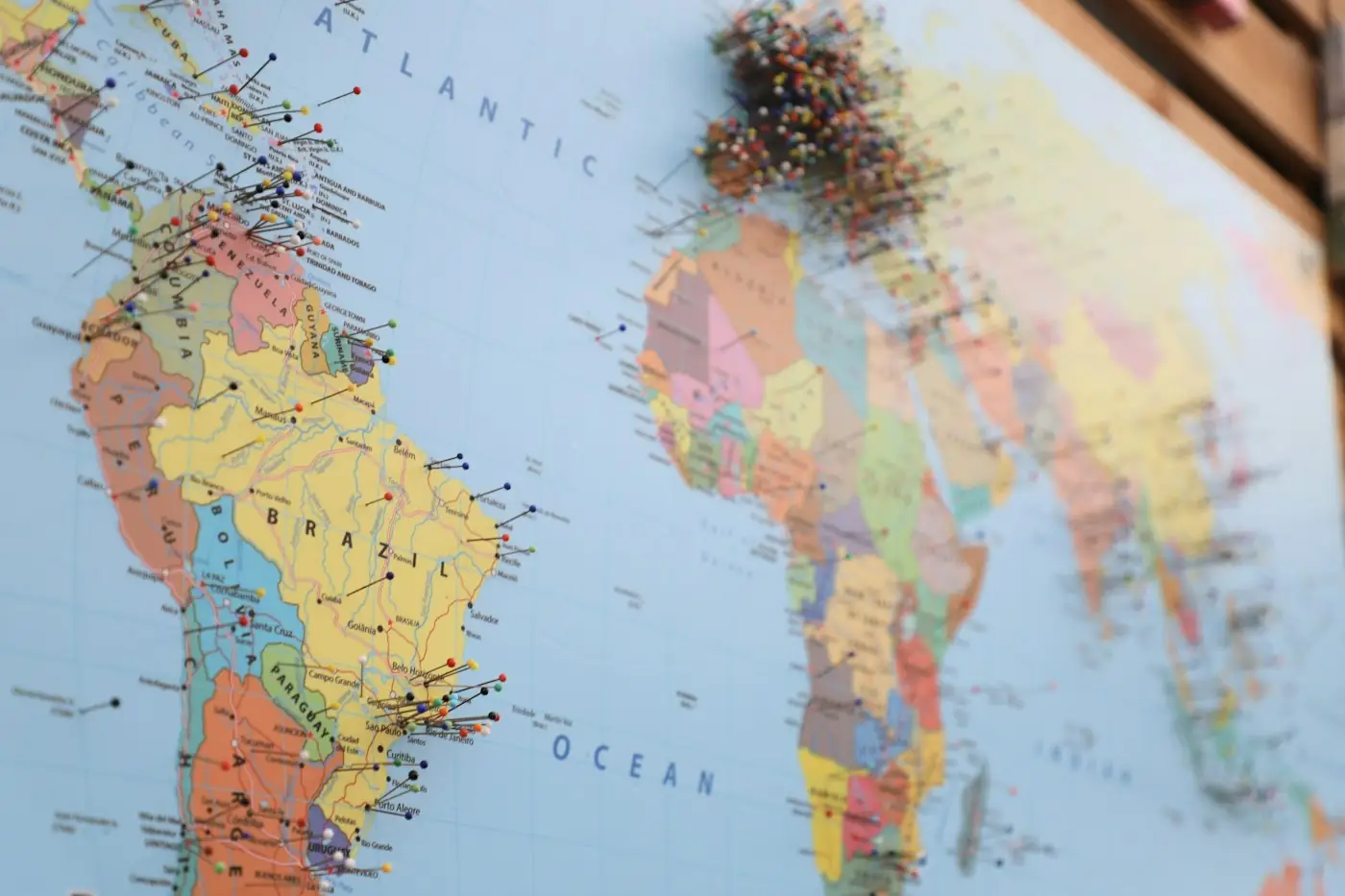
Location helps children hold on to a historical event. Before any dates, they can see where Mexico sits compared with where you live, how big it is and which countries border it. A map also gives the story a place rather than leaving it floating as a name.
 You’ll need
- A world map or globe
- A few small sticky dots
- A pencil
- A picture book set in Mexico (optional)
How to do it
- Ask your child to find where you live and put a sticky dot there.
- Show them Mexico and place a second dot on Mexico City, the capital.
- Trace the route between the two places with a finger.
- Notice which country sits to the north and which body of water is to the east and west.
- Add one more dot for a place named in your book or a relative's hometown.
- Say the names aloud together, practising any new sounds.
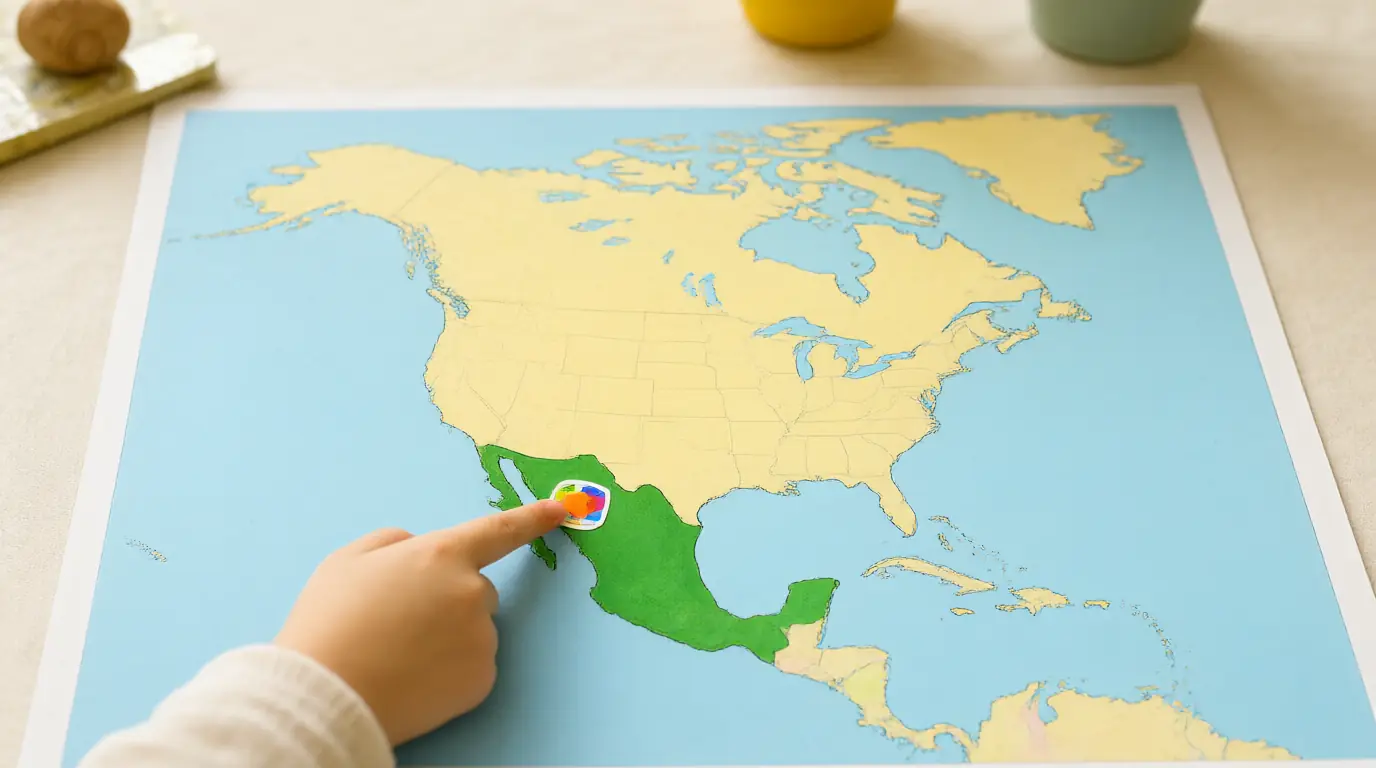
Make it your own: Younger children can simply point and name the colours of the countries. Older children can estimate how long a journey would take by plane, car or bus and compare the answers.
Two Mexican holidays, two stories
Many people mix up Independence Day on 16 September with Revolution Day in November. Putting the two on a paper timeline shows that they remember different events a hundred years apart, and helps children see that countries have many important days, not one.
You’ll need
- Two strips of paper in different colours
- A pencil
- A calendar
- A shared pen for labelling
How to do it
- Open the calendar and find September, then November.
- Draw a small picture on the first strip for Independence: a bell is a good symbol.
- Draw a small picture on the second strip for the Revolution: a train, a tree or a tractor all fit.
- Explain that the first marks the start of the independence movement from Spain in 1810, and the second the uprising that began in 1910.
- Lay the strips side by side and count how many years lie between them.
- Pin both to the wall for the month.
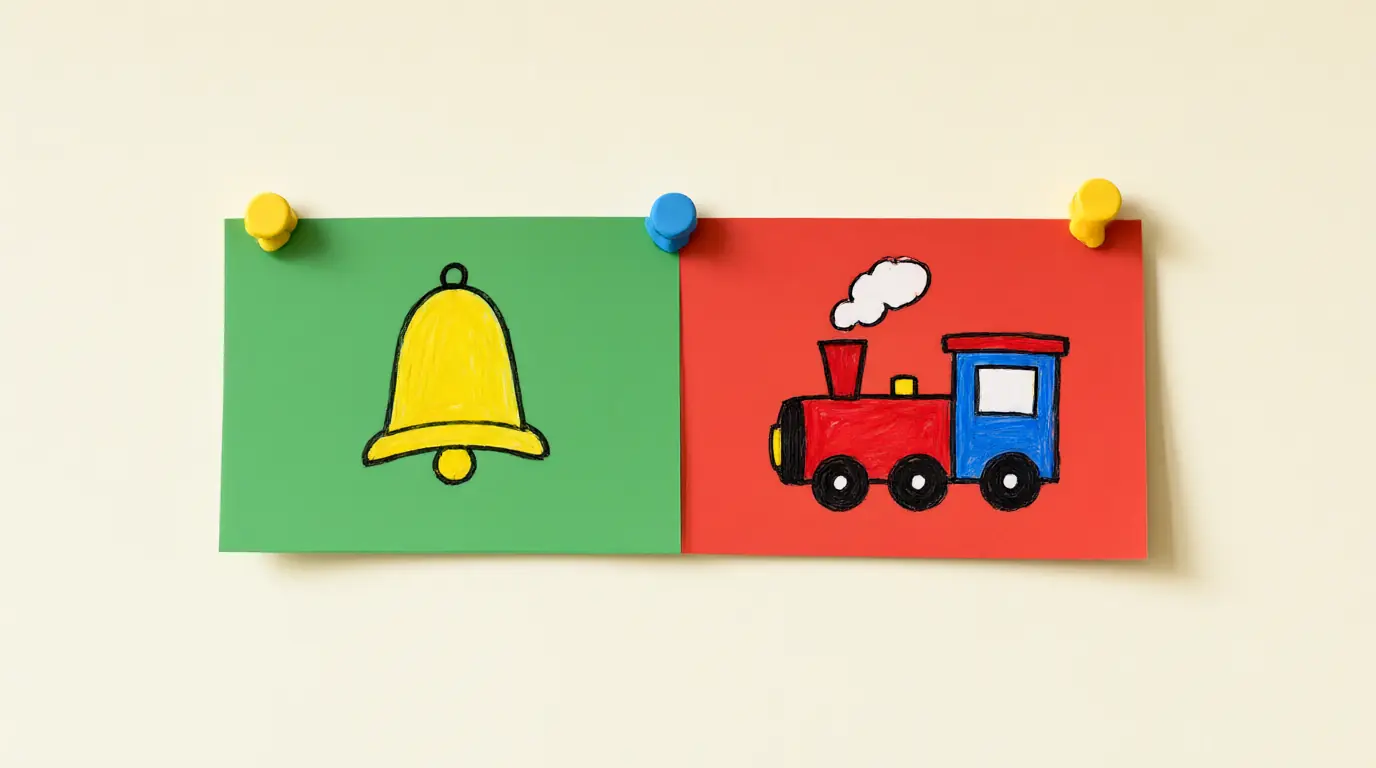
Make it your own: For younger children, use one picture per holiday and skip the dates. Older children can add a third strip for another event you are learning about, such as the 1917 constitution.
Looking closely at a photograph
Historians begin with evidence, and children can too. A photograph from a reliable archive gives them something concrete to describe before anyone explains it. The habit of saying what you see first, and what you wonder second, protects against inventing a story that is not in the picture.
You’ll need
- A printed or on-screen historical photograph from a museum or library archive
- A sheet of paper
- A pencil
How to do it
- Choose a photograph in advance and check that it is suitable for your child.
- Look quietly for 30 seconds before anyone speaks.
- Take turns naming something you can see: clothes, a building, a tool, an animal.
- Write three of the things on the left side of a page.
- On the right, write what you wonder: who, where, why, when.
- Read the caption together and see which wonders it answers.
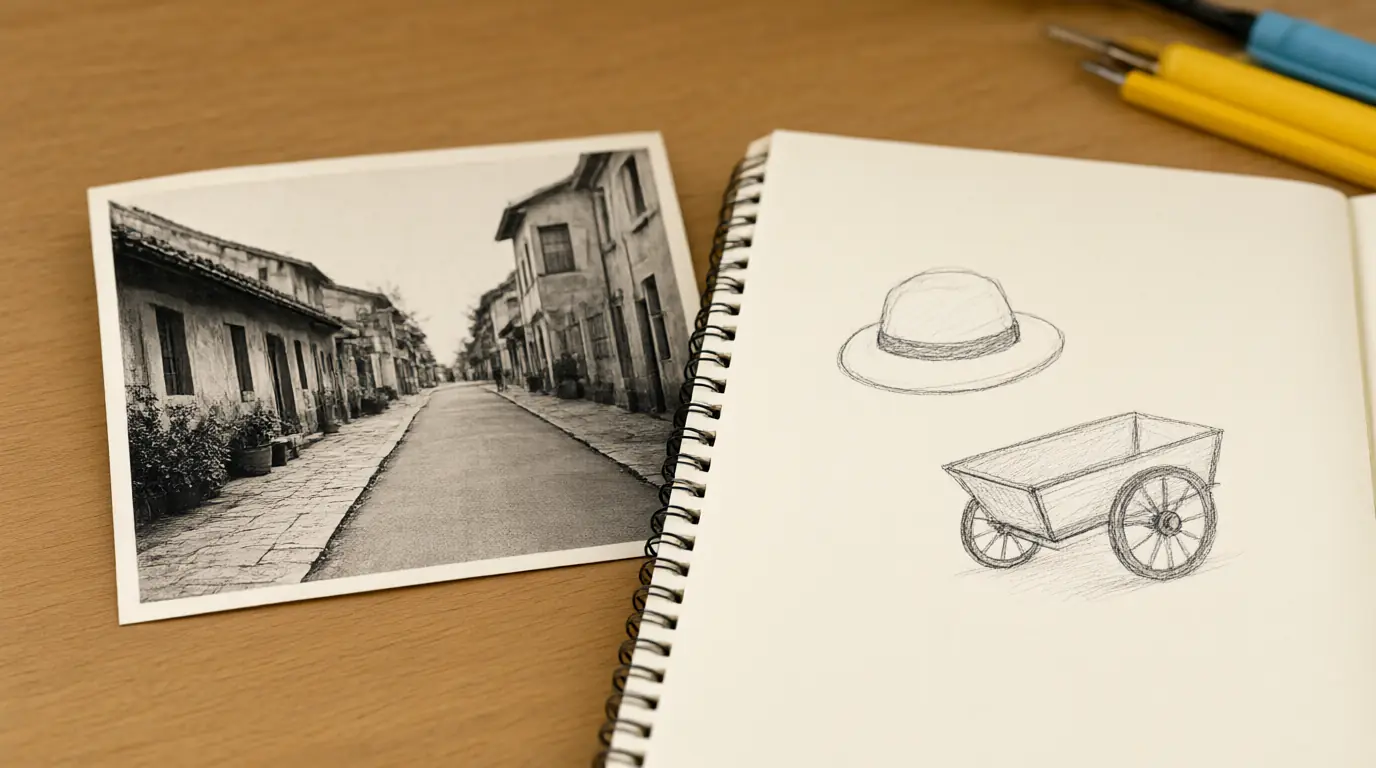
Make it your own: Younger children can point to objects and name colours. Older children can compare the photograph with a modern picture of the same kind of scene and list what has changed.
Why fairness mattered
One reason people took part in the Revolution was a disagreement about who owned land and how workers were treated. A simple sharing game lets children feel why that matters without describing any conflict. Always keep the tone calm and treat the discussion as a question about fairness, not a lesson in who was right.
You’ll need
- A bowl of 20 dried beans or buttons
- Two paper plates
- A small blanket or tea towel
How to do it
- Tell your child the beans are the fields in a village.
- Give most of the beans to one plate and a few to the other, then ask what they notice.
- Ask how the person with only a few might feel and what they could ask for.
- Invite your child to share the beans in a way they think is fair.
- Talk about why different people might have different ideas of fair.
- Explain that people in Mexico in 1910 also disagreed about this, and that is part of the history.
Make it your own: For younger children, keep to two plates and one question. Older children can draw their idea of a fair village and explain it to a family member.
A history question notebook
Children ask the best questions, and a notebook makes them visible. Writing a question down shows that not knowing something is a reason to find out, not a reason to guess. Each question becomes a small research project you can follow up at the library or a museum.
You’ll need
- A small notebook or folded paper booklet
- A pencil
- Sticky notes
- A library card or a museum website
How to do it
- Decorate the cover with a drawing of Mexico or a flag you like.
- Write the first question your child asks in their own words, spelling aside.
- Underline any word you both do not know and look it up together.
- Put a sticky note on the page when you find an answer from a reliable source.
- Choose one question per week to explore, rather than answering all at once.
- Read back the page at the end of the month and add a drawing.
Make it your own: Younger children can dictate while you write. Older children can note the source of each answer, such as a book title or a museum page, to build a habit of checking where information comes from.

Make it work for your family
History is easier to take in when each session has one small goal. Today might be only finding Mexico on the map and saying the name of the holiday aloud; the next might be comparing two photographs. If your child asks something you cannot answer, write it down and say you will look for a good source together: that is a useful habit, not a gap in the lesson.
For children who enjoy movement or stories after a quiet session, bring in some geography games that start with familiar places, or explore Mexican culture through traditional Mexican games and family stories.

Parents also ask
When is Mexican Revolution Day?
The uprising began on 20 November 1910. In Mexico the holiday, Día de la Revolución, is observed on the third Monday of November, so the date changes each year. It is separate from Independence Day on 16 September, which remembers events from 1810.
How do I explain the Mexican Revolution to a young child?
Keep it short and honest: people in Mexico disagreed about land, work and who should lead the country, and the disagreement became a long and painful conflict. Avoid graphic details and answer follow-up questions simply, using a children's book or museum page where you can.
Is it okay for kids to dress up for Revolution Day?
It is best to avoid costumes that copy soldiers or stereotypes. Many Mexican schools hold parades with traditional clothing, but those are chosen by the people who celebrate. Drawing, mapping and reading are respectful ways for children to take part from outside.
Sources & further reading
Explore these primary sources for further context on this topic.
Choose materials and activities that suit your child, supervise as needed and adapt the ideas to their interests and abilities. About our editorial approach