Weebou Editorial Team
 9 min read
 In this article
A little preparation
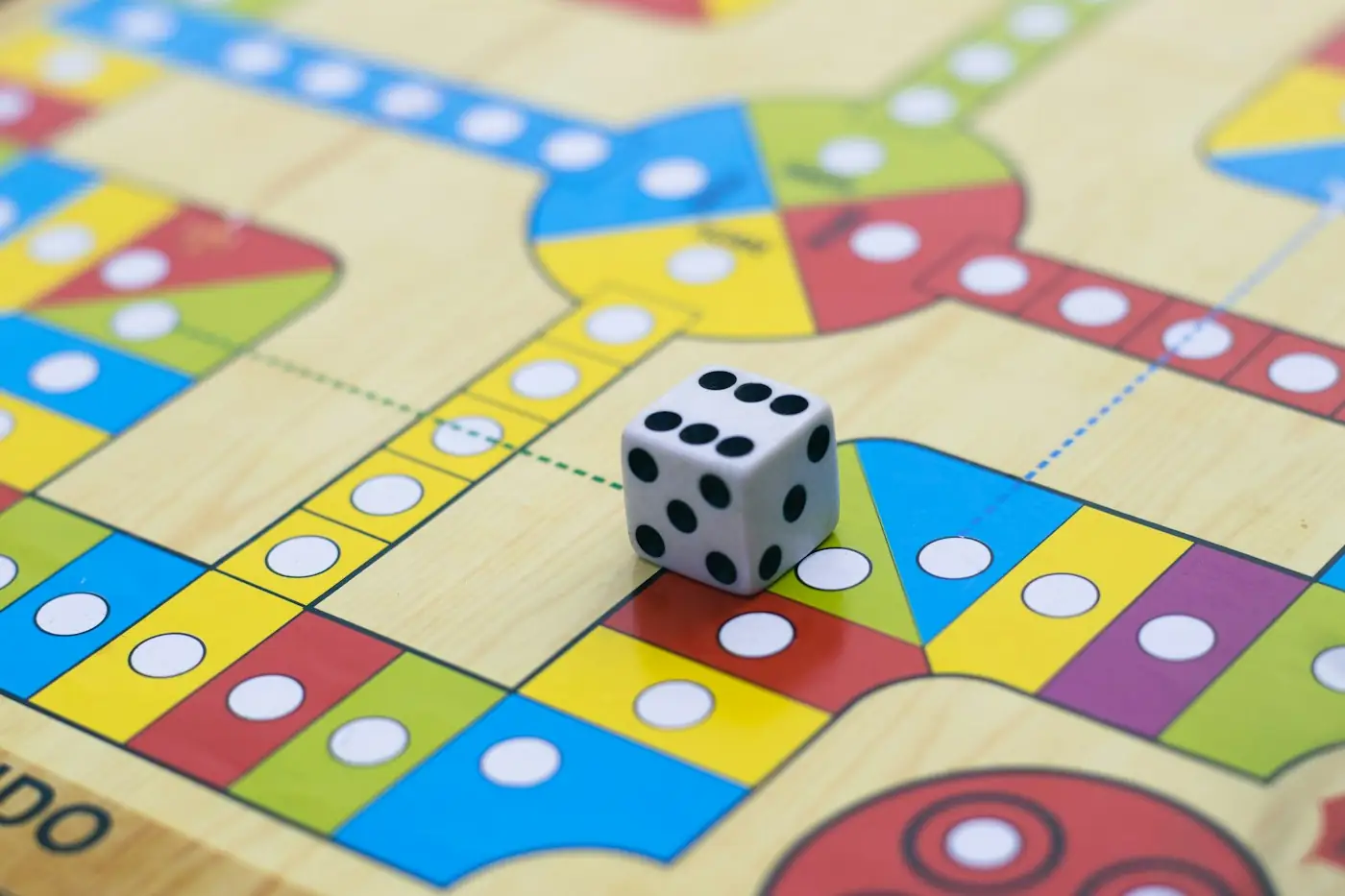
Choose a large die, ideally soft foam or chunky wood, that is too big to fit in a mouth and will not skid off the table. Roll into a shallow box lid or onto a tea towel so the die stays in view and the noise stays low. Children under three, and any child who still mouths objects, should not play without close supervision, and you should put small counters away until you need them.
Before you add any rules, let your child roll a few times and simply say what they see. Many children recognise the patterns for one to three at a glance and count the rest by touching each dot; either way is fine. Then play one demonstration round yourself, saying your thinking aloud: ‘Five dots, so I draw five legs.’ Allow ten to twenty minutes, and stop while the game is still enjoyable. Nobody needs to win, and a shared result, such as a finished picture, works well.

Ideas to try together
Roll and draw a silly creature
Each number is linked to a body part, and the creature grows with every roll. Children practise counting dots, matching the count to a drawn quantity and remembering a small code. The finished drawing is a record of the whole game, which you can look back over together.
 You’ll need
- 1 large die
- A big sheet of paper
- Crayons or felt-tips
- A strip of paper listing the picture code (drawn symbols, not words)
How to do it
- Agree the code together, for example 1 = a head, 2 = eyes, 3 = legs, 4 = arms, 5 = spots, 6 = a tail, and draw a tiny symbol beside each dot pattern.
- Take turns to roll the die and count the dots out loud, touching each one.
- Look at the code and draw that body part on the shared creature, using the number of dots as the quantity where it makes sense, such as three legs.
- If a part has already been drawn, decide as a team whether to add a second one or give the creature a hat instead.
- Stop after eight or ten rolls and ask your child to name the creature and say what it eats.
- Count how many eyes, legs and spots the finished creature has altogether.
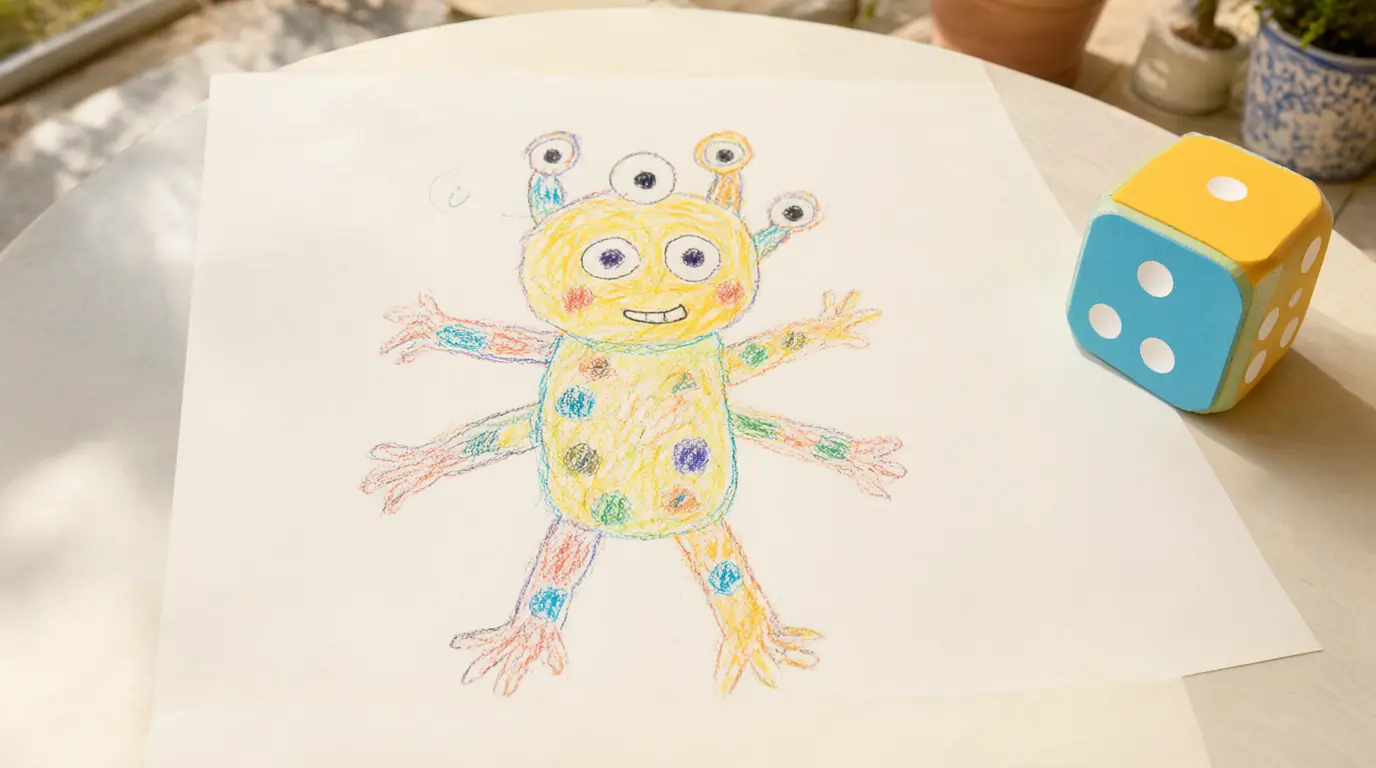
Make it your own: Younger children can use a die showing only three different symbols and draw one feature per roll. Older children can write the total number of legs beside the creature and compare it with a friend's drawing.
Build a block road one roll at a time
A road made of blocks gives each roll a visible result that you can see grow. Children match a number to a quantity they must pick up, place and check. Because the road keeps stretching, the game is about building together rather than racing, and there is plenty to compare along the way.
You’ll need
- 1 large die
- 20 to 30 wooden or plastic blocks of the same size
- A toy car or small figure
- A masking tape start line on the floor
How to do it
- Stick a short strip of masking tape on the floor to mark where the road begins.
- Roll the die and count the dots together.
- Collect that many blocks from the pile and say the count again as you set them down in a line.
- Take turns, adding each new set to the end of the road so that it grows across the floor.
- After six rolls, drive the toy car along the road and count each block it passes.
- Ask: is the road longer than your arm, or shorter? How could we check?
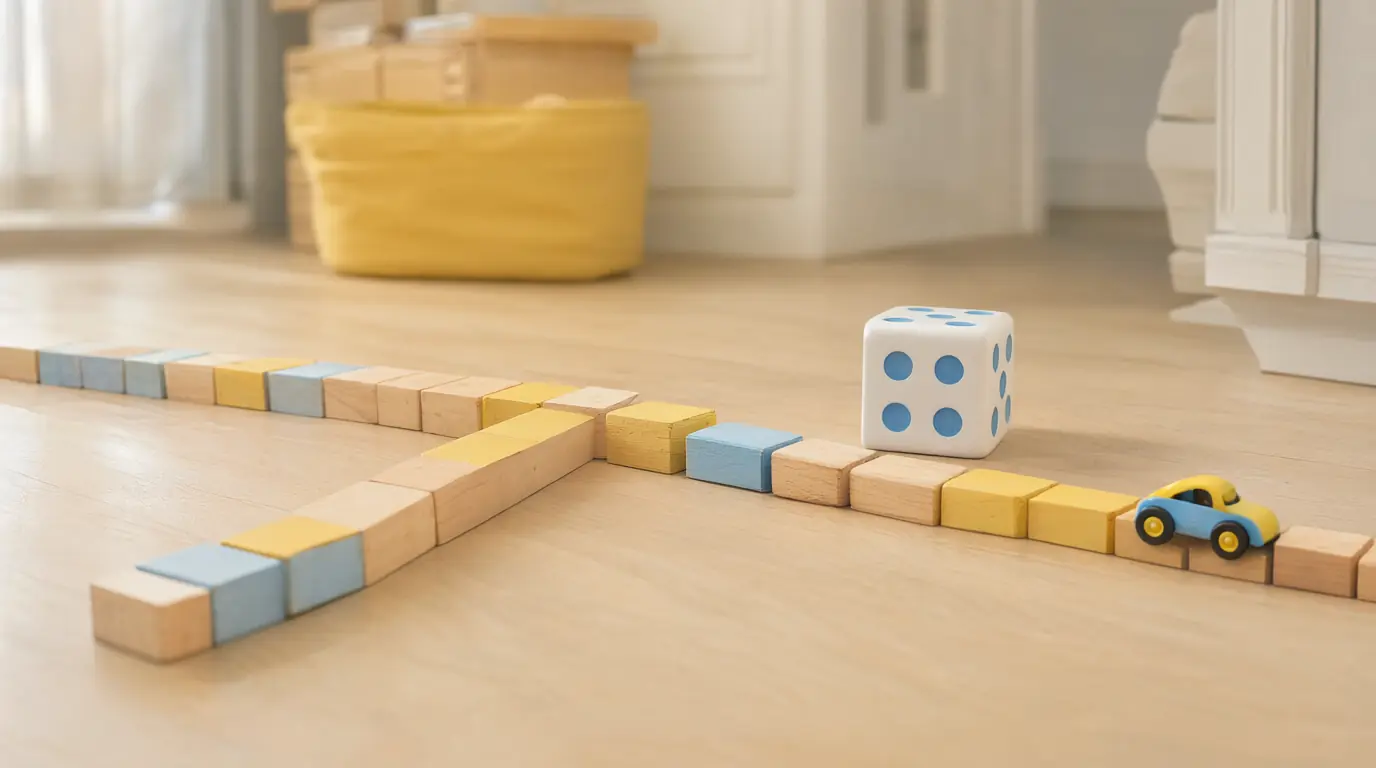
Make it your own: Use a die with only one to three dots for very new counters. Older children can say how many blocks are still in the pile after each roll, or predict how long the road will be after two more turns.
Roll and colour a squares graph
Colouring one square per roll turns chance into a picture of what happened. Children notice that some numbers appear often and others rarely, without being told why. It is a gentle first experience of data, and it can start natural questions about whether a die is ‘fair’ that you can explore together.
You’ll need
- 1 large die
- A sheet of squared paper
- 6 different crayons
- A pencil to draw six columns
How to do it
- Draw six columns on the paper, one for each side of the die, and put the matching dot pattern at the bottom of each.
- Roll the die and count the dots with your finger.
- Colour one square in the column with the same number of dots, starting from the bottom.
- Keep going until one column reaches the top, or for twenty rolls.
- Look at the graph together. Which column is tallest? Which is shortest? Are any the same height?
- Play again on a new sheet and see whether the graph comes out the same way.
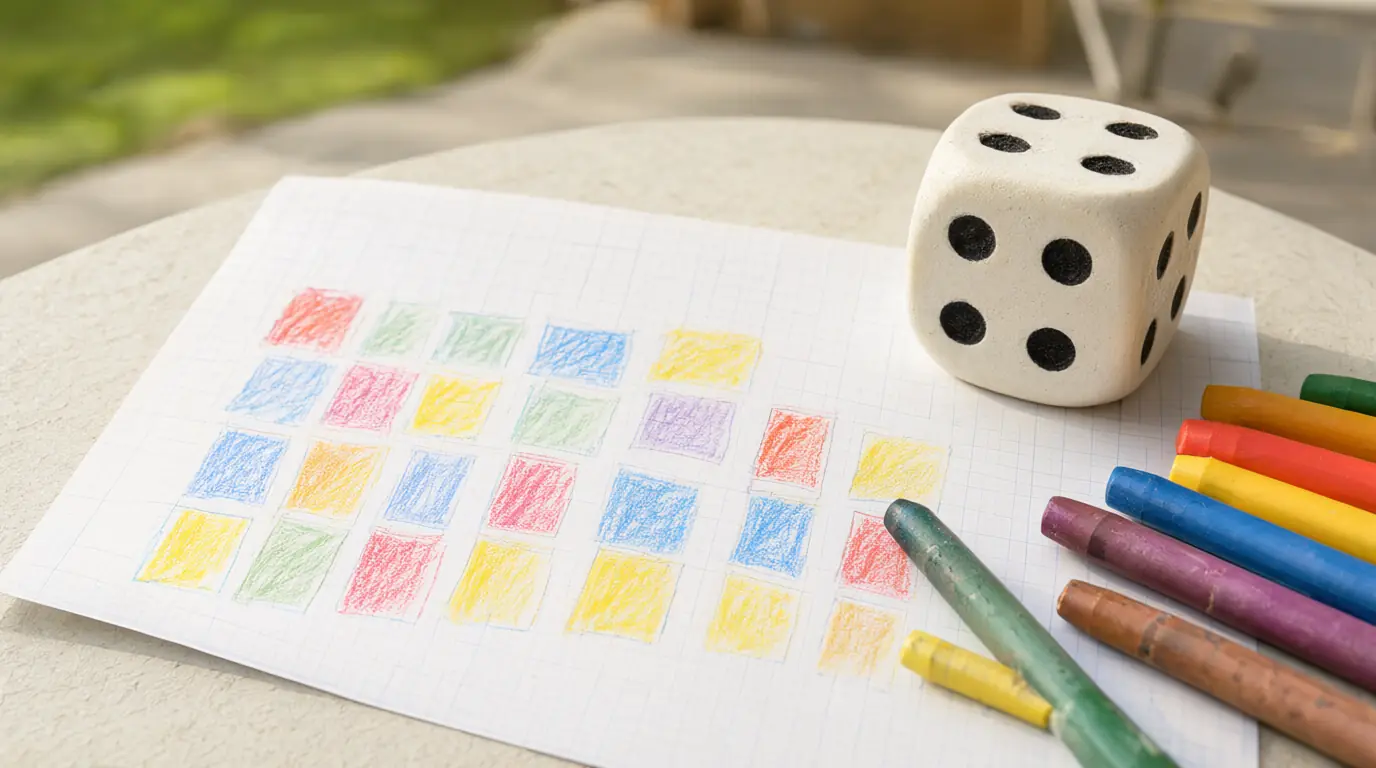
Make it your own: For younger children, use only three columns and a die with three different colours instead of dots. Older children can write how many more squares the tallest column has than the shortest.
Roll to reach exactly ten
A small, friendly target game builds early addition without any written sums. Children add counters to a cup, see the total grow and decide what to do when the next roll would pass the target. It is a good setting for the idea that numbers can be compared and joined.
You’ll need
- 2 large dice (or 1 die rolled twice)
- 20 counters or large buttons
- A small cup
- A paper strip with ten boxes drawn on it
How to do it
- Place the ten-box strip on the table and put a cup beside it.
- Roll one die and count the dots.
- Put that many counters into the boxes, one in each box, starting from the left.
- Count how many boxes are full and how many are empty.
- Take turns, adding to the same strip, until you reach exactly ten.
- If the next roll is too big, agree a rule together: put in as many as fit and leave the rest in the cup, or roll again.
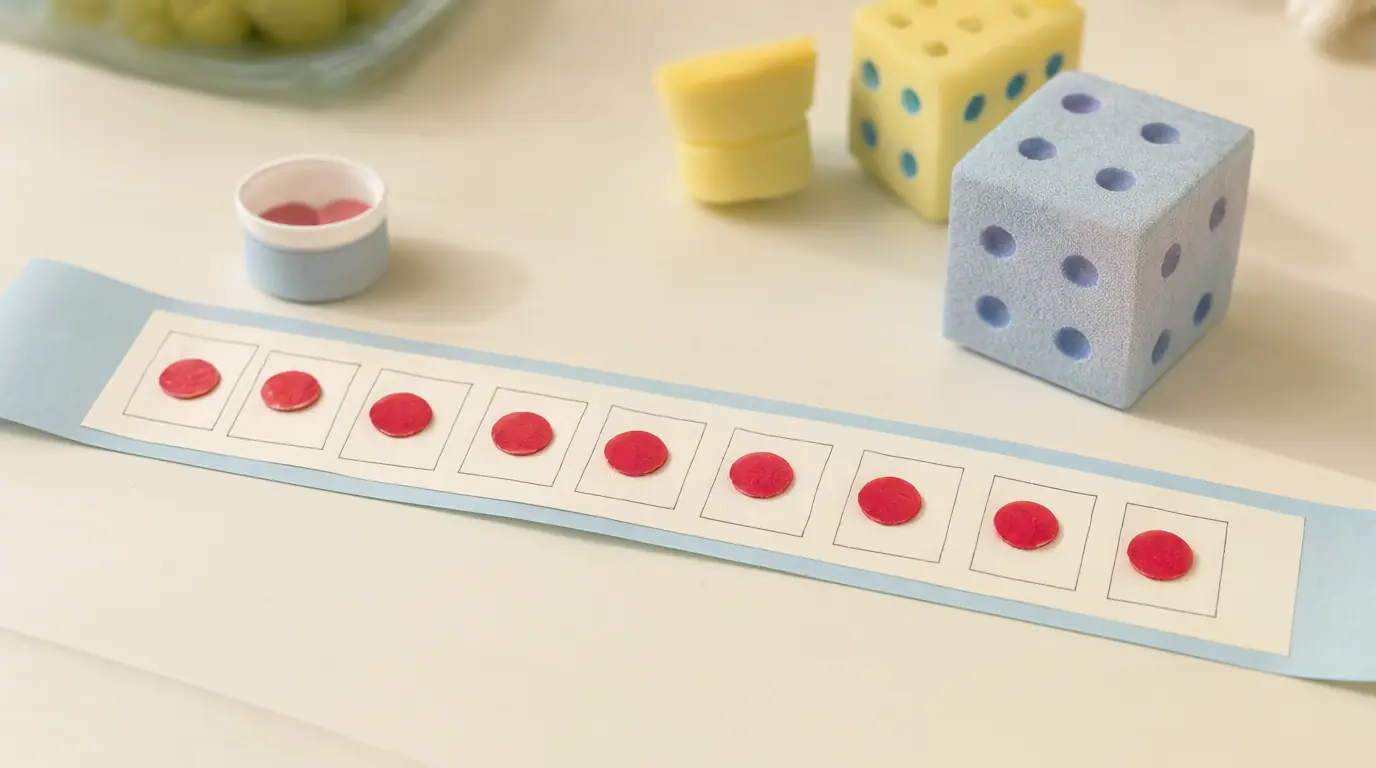
Make it your own: Use a five-box strip for beginners. Older children can predict how many empty boxes will be left before each roll, or switch to a strip of twenty with two dice.
Roll a move and make it yours
Here the dice choose the number of times to do an action, and the child chooses the action. Movement helps children who find it hard to sit through a table game, and it lets them show their understanding with their whole body. Each player can invent a move that is comfortable for them.
You’ll need
- 1 large die
- A clear floor space
- A cushion or soft mat
- A few picture cards of actions, if you like
How to do it
- Clear a space and decide on three or four actions together, such as stamping, clapping, reaching up high or tapping knees.
- Roll the die and count the dots out loud.
- Let the roller pick one of the actions and do it that many times while everyone counts along.
- Next player rolls and picks a new action, with no repeats until all of them have been used.
- After a few rounds, ask whether anyone would like to add a new move to the list.
- Finish with a slow count down from the highest number rolled to one, and a stretch.
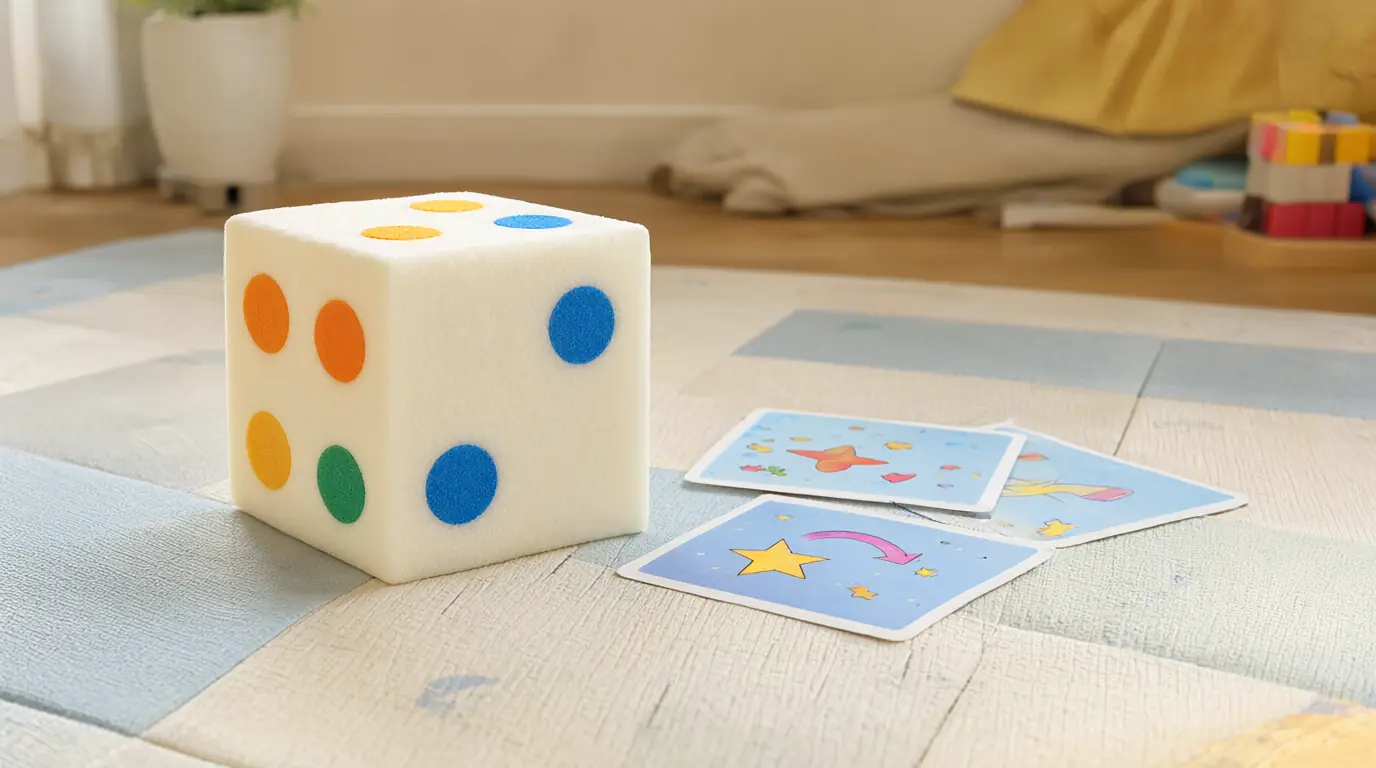
Make it your own: Offer a seated action for every number, such as tapping the table or drawing circles with a finger. Older children can roll twice and do two different actions, adding up the total before they begin.

Make it work for your family
If a child loses interest after a few rolls, shorten the game rather than pushing on. Two or three rolls and a clear finish, such as a completed drawing, are better than a long game that fades. If dice are thrown or dropped, move the play into a box lid so the roll stays in view and a child can focus on the dots.
When counting becomes the main challenge, slow it down: touch each dot once and move it to a ‘counted’ side of the die with your finger. To keep dice rolls fun, choose open-ended rules, as in the squares graph, where every outcome gives a new result. For more number play try math card games or explore the Weebou maths games on screen when the table is busy.
Parents also ask
What age can children start playing dice games?
Many children can enjoy rolling a large die from about three or four, when they can handle the die safely and are starting to count small groups. Keep to one die and small numbers at first, and add a second die when counting to six feels easy.
Why do opposite faces on a die add up to seven?
On a standard six-sided die, the opposite faces always sum to seven: one is opposite six, two is opposite five and three is opposite four. It is a good small discovery for children who want to investigate a die for themselves.
How do I stop a child from losing count of the dots?
Encourage the child to touch each dot once while saying the numbers, or tap each dot with a finger from left to right. For patterns of five and six, grouping them as three and three or four and two can help, and practice makes recognising common patterns at a glance easier.
Sources & further reading
Explore these primary sources for further context on this topic.
Choose materials and activities that suit your child, supervise as needed and adapt the ideas to their interests and abilities. About our editorial approach