Weebou Editorial Team
 8 min read
 In this article
A little preparation
Before play, check the age guidance on any magnetic toy and inspect every piece for cracks, missing parts or loose magnets. Throw away or put away toys that are damaged or incomplete, and keep all small magnets, such as those from other toys, fridge decorations or office items, out of reach. Swallowed magnets can cause serious internal injury, so if you think a child has swallowed one, seek urgent medical help rather than waiting for symptoms.
Play at a clear table with an adult beside the child, and keep magnetic toys away from mouths, phones, bank cards and medical devices such as pacemakers. Count the pieces before and after play, and store them together in a closed box. If your family has no suitable magnetic toy, or you are unsure about one, skip to the block idea at the end: the design questions work equally well with wood. Short sessions of about fifteen minutes suit most children, who can then rest and talk about what they found.

Ideas to try together
Does it stick? A fridge hunt
Children love testing which household things a magnet will pull. Using a large, sturdy toy magnet or magnetic wand, they predict before they test, which turns a simple game into early science. They discover that many metal things stick and others do not, which surprises many adults too.
 You’ll need
- A large age-rated magnetic wand or toy magnet
- A steel spoon, a baking tin, a wooden spoon, a plastic cup, a paper napkin
- A tray
- Paper with two circles: 'sticks' and 'does not stick' drawn as pictures
How to do it
- Draw one circle with a smiley face and one with a straight line on the paper.
- Place one object at a time in front of your child and ask whether they think it will stick.
- Hold the magnet near the object and watch what happens.
- Put the object into the matching circle.
- After five objects, look at the groups and ask what the sticky ones have in common.
- Check the fridge door: which parts of the kitchen are magnetic?
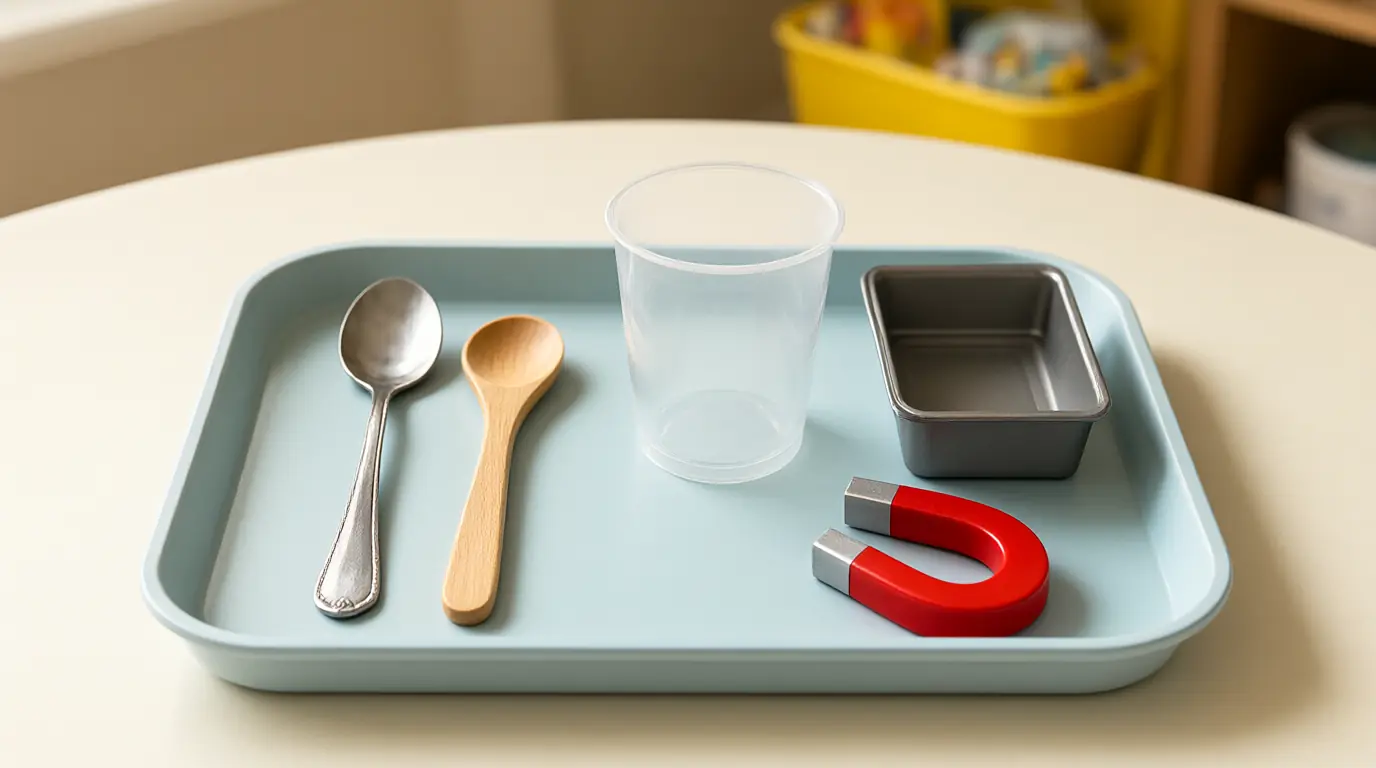
Make it your own: Offer only three objects for younger children and let them just feel the pull. Older children can predict before testing and record each result with a tick or a cross on paper.
Magnetic fishing game
A toy fishing set uses a magnet on a rod to catch fish with a metal plate. The sealed, large-piece design of a good fishing toy makes it safer for young children, and aiming and lifting give practice in hand-eye coordination.
You’ll need
- An intact age-rated magnetic fishing toy with sealed fish
- A shallow tub or blue blanket as a pond
- A bucket
- A paper chart with fish pictures
How to do it
- Spread the fish in the pond, with the pictures facing up.
- Give your child the rod and ask them to catch a fish by lowering the magnet.
- Lift it into the bucket and look at the picture on it.
- Count how many fish are caught, taking turns if more than one child plays.
- Sort the fish by colour or picture after a round.
- Try the rod without the fish touching to see how close the magnet has to be.
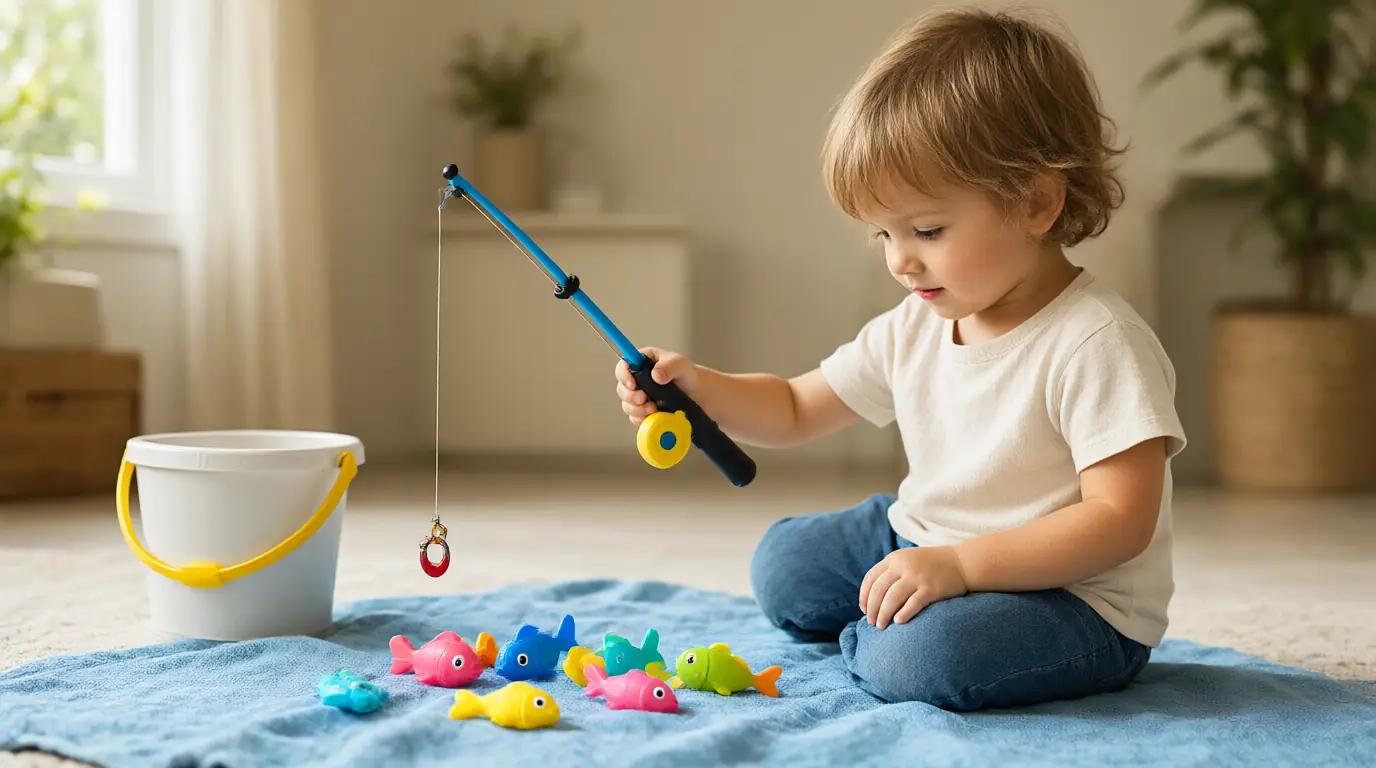
Make it your own: Spread the fish out for a younger child so they are easy to catch. Older children can fish for a specific colour, or catch three fish in a row with fewer moves.
Build it, sketch it, change it
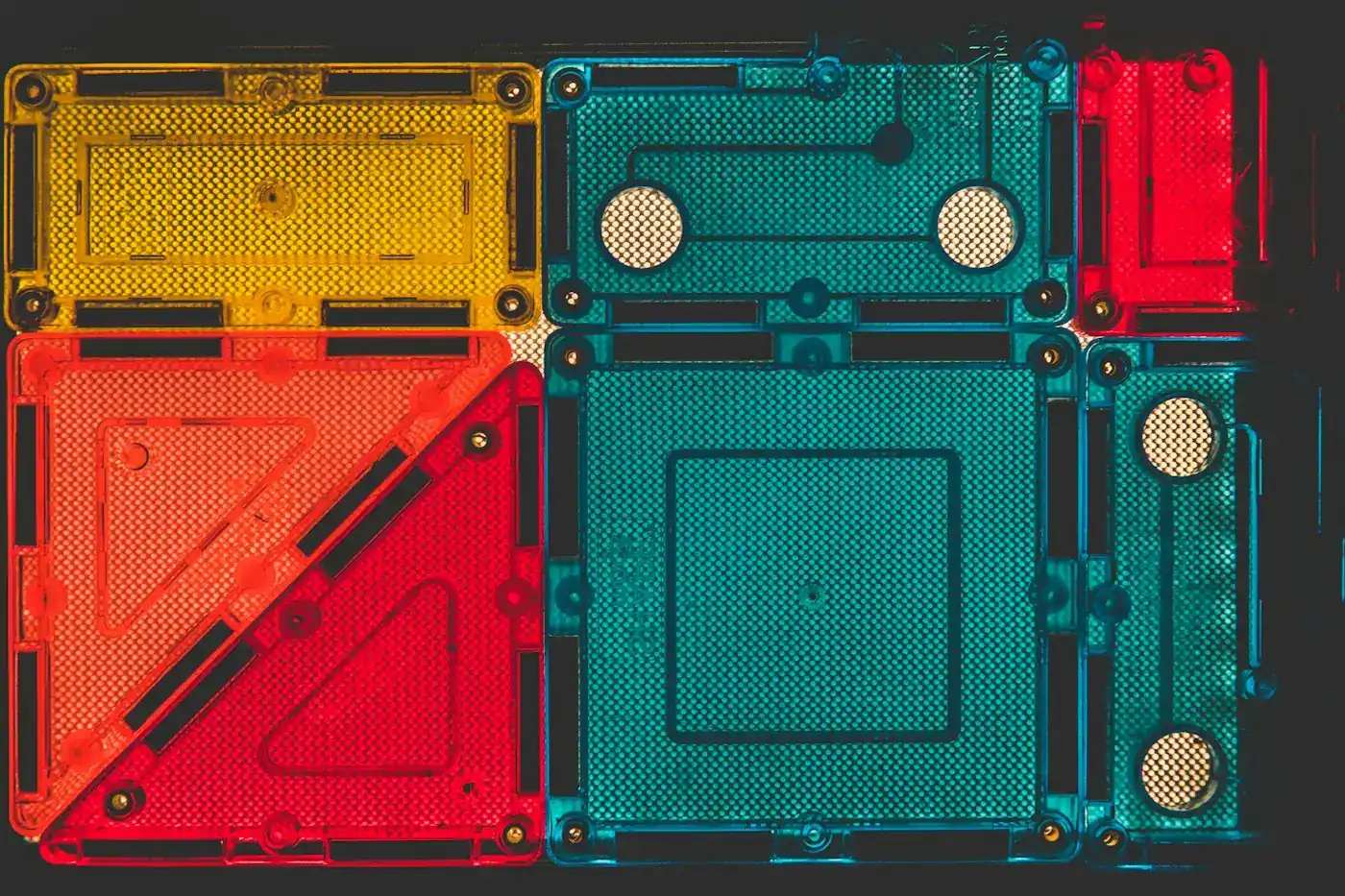
Large, intact magnetic construction pieces let children make shapes that snap together. Taking a quick sketch before changing the design shows them that ideas can be saved, compared and improved. It also builds planning skills without any extra pieces being added.
You’ll need
- A set of intact age-rated magnetic building pieces, counted before play
- A large tray
- Paper and crayons
- A phone or camera held by an adult
How to do it
- Count the pieces together and lay them on the tray.
- Let your child build a flat shape and name it.
- Photograph or sketch the shape.
- Take it apart gently and try a different shape with the same pieces.
- Compare the two designs: which has more corners? Which is taller?
- Count the pieces back into their box before finishing.
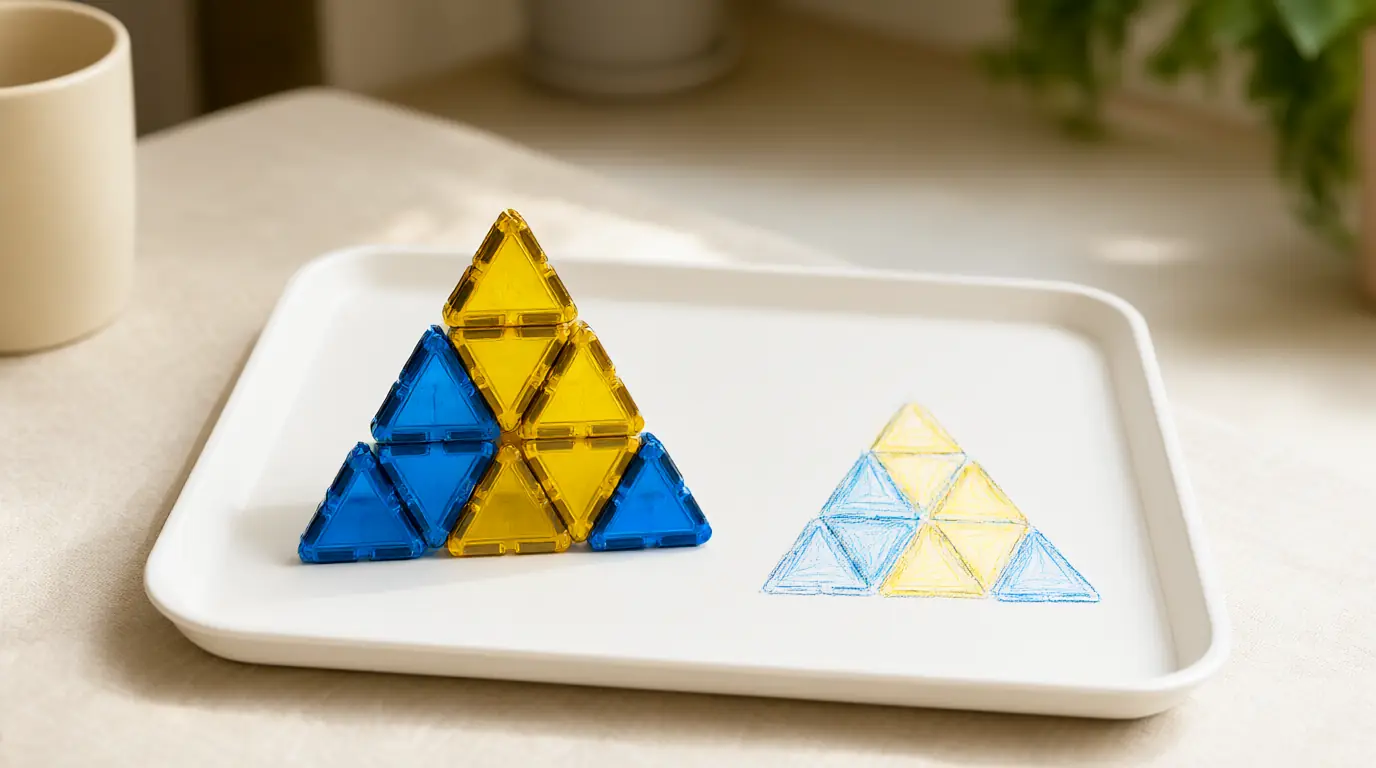
Make it your own: Give fewer pieces to a younger child and build one big shape together. Older children can try to copy a shape from a drawing or build the same shape in two sizes.
A magnet maze under a card
A magnet held beneath a piece of cardboard can pull a large steel object across the top, which feels a little like magic. Children follow a path drawn on the card, learning that magnets work through thin materials and that control comes from slow, steady movement.
You’ll need
- A large age-rated magnet wand or sealed toy magnet
- A sheet of thin cardboard
- A large steel item, such as a big steel spoon
- Crayons
- 2 books to rest the card on
How to do it
- Draw a winding path on the cardboard with a start and a finish.
- Rest the card across two books so there is a gap beneath it.
- Place the steel spoon at the start of the path.
- An adult or child holds the magnet under the card and moves it slowly to pull the spoon along.
- Follow the path to the finish and celebrate.
- Try a thicker card and see if the magnet still works.
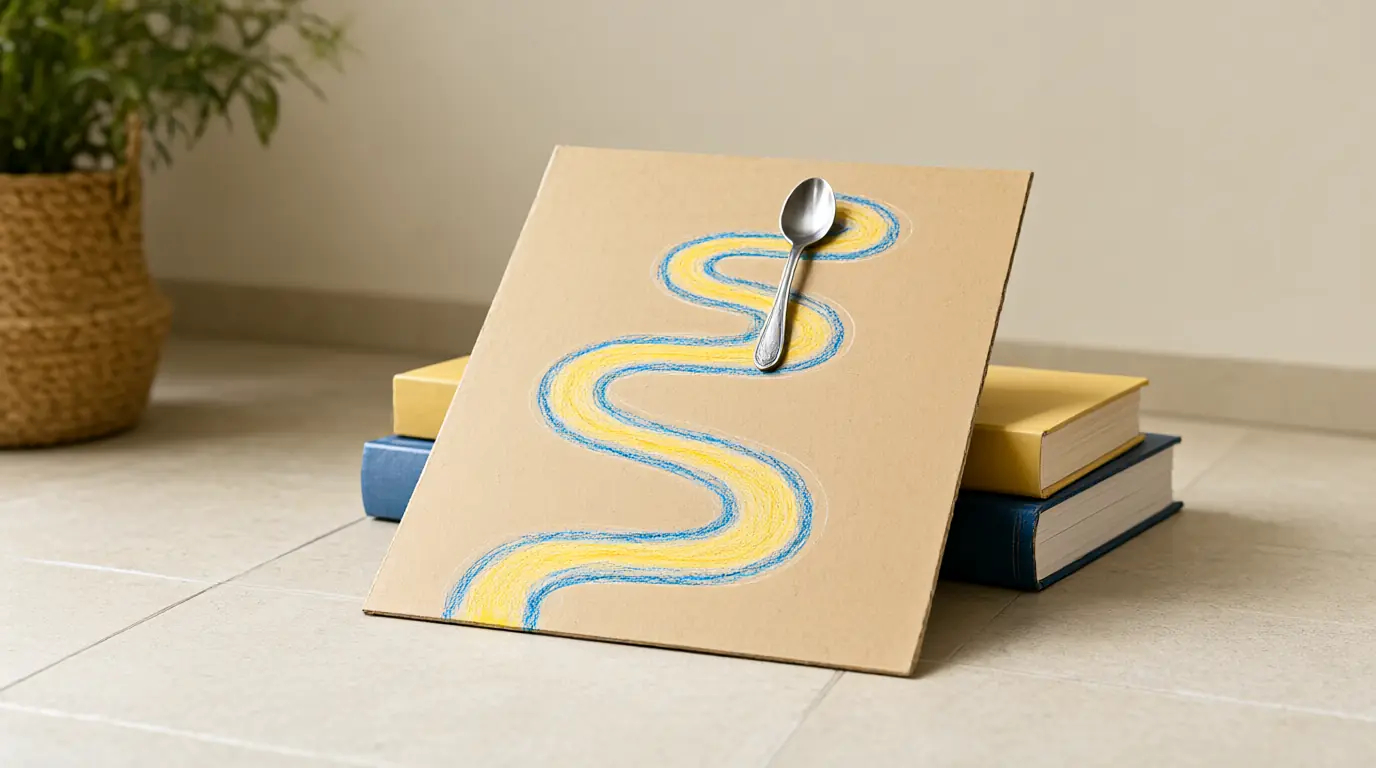
Make it your own: Use a wide, simple path for younger children and let them hold the magnet. Older children can draw their own maze with turns and dead ends.
No-magnet block challenge
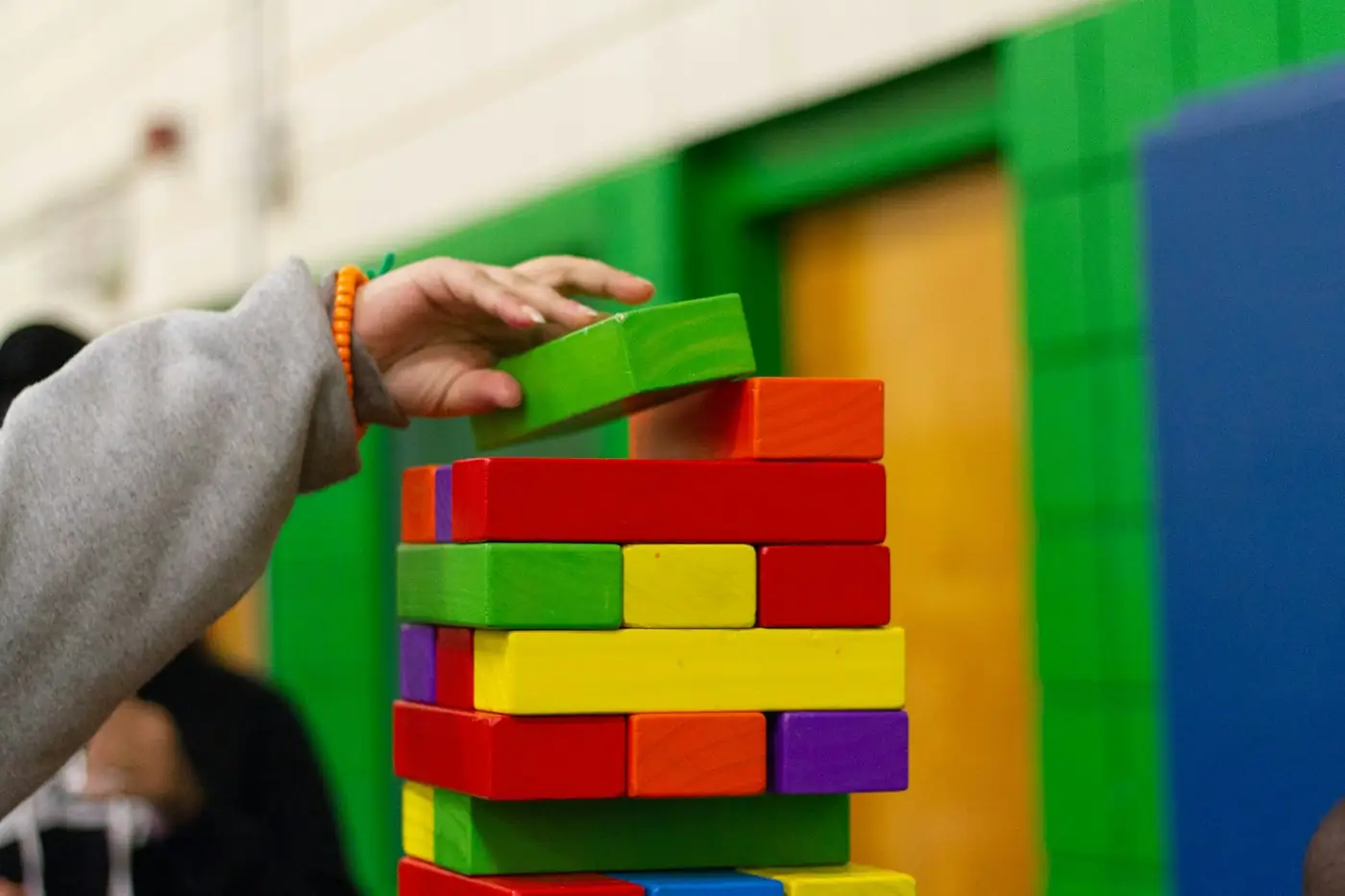
When magnetic toys are not suitable, large wooden blocks let you ask the same design questions about joining, balancing and making spaces. Children explore stability and structure without introducing any magnets, and the activity works for every age.
You’ll need
- 10 to 20 large wooden blocks
- A flat table or rug
- Paper and a pencil
- A small toy figure
How to do it
- Lay out a handful of blocks and ask your child to make a low shape.
- Ask which pieces sit well next to one another and which tip over.
- Make a doorway the toy figure can walk through.
- Draw the structure and compare it with the original.
- Change one thing, such as making it wider, and see what happens.
- Return the blocks to their box and count them.
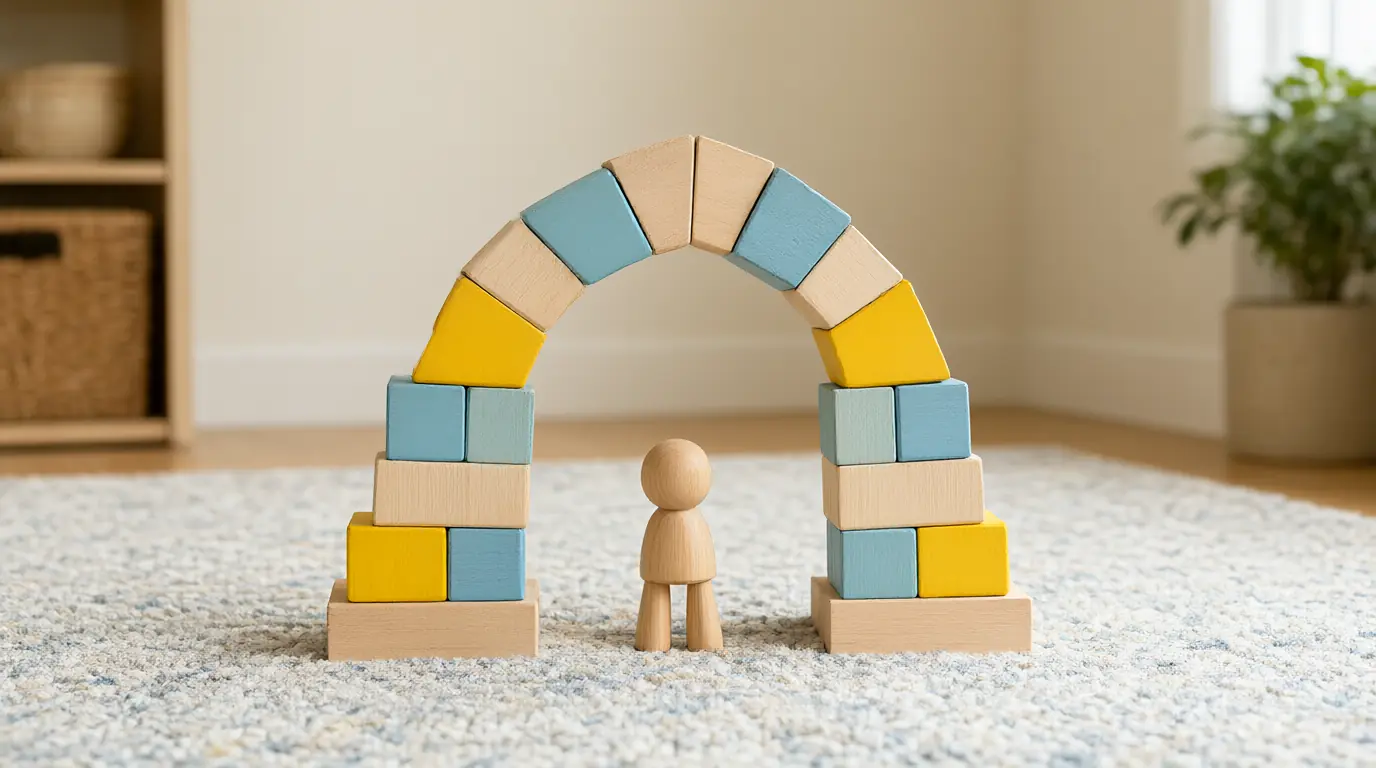
Make it your own: Use fewer blocks for younger children and let them stack freely. Older ones can build to a set height or make something that can carry a book.

Make it work for your family
Safety is the main rule: use only intact, age-rated toys, never loose magnets, and put them away after each session. Count pieces as part of the game so it feels natural. If a piece goes missing, stop play and search the area; if you suspect a child has swallowed a magnet, go for urgent medical help straight away. Keep magnets away from screens and from people with medical devices.
When the conversation moves from what to why, keep the explanations simple: some metals are pulled and others are not. If your child asks for more, follow with simple science games for kids or the building games that use blocks and cardboard.

Parents also ask
Are magnets safe for toddlers and preschoolers?
Only large, intact, age-rated magnetic toys are suitable, and always with adult supervision. Small or loose magnets are dangerous if swallowed because they can damage the intestine. Keep all other magnets out of reach and seek urgent medical help if you suspect one has been swallowed.
What can a magnet pick up?
Magnets attract objects made of iron, steel, nickel or cobalt, such as steel spoons and some tins. They do not attract wood, plastic, paper or most coins and aluminium foil. Testing different objects is the best way for children to see the difference.
What do I do if a magnetic toy breaks?
Stop play, collect every piece you can find and put the toy out of reach or throw it away. A broken toy can expose small magnets that are a swallowing risk. Contact the manufacturer if the toy is still under guarantee.
Sources & further reading
Explore these primary sources for further context on this topic.
Choose materials and activities that suit your child, supervise as needed and adapt the ideas to their interests and abilities. About our editorial approach