8 min read

 In this article
A little preparation
Choose one routine that already happens most days, and look at it from your child's height. What can they reach, see or open? Move a hook, a low shelf or a stool so one step becomes possible, and decide which step is theirs. Show it slowly, name each action in short phrases and let them copy rather than correcting every detail.
Keep tasks involving heat, medicines, cleaning products, sharp items or deep water firmly with you; a child can take part by choosing, passing or pressing a button, but adults stay in charge. Allow extra time, as everything takes longer when a four-year-old does it. Work on one routine for a week or two before adding another. If your child has a disability or sensory sensitivity, adjust the task rather than the child, and ask an occupational therapist or paediatric professional if you need specific advice.

What to know and try
Set up a getting-ready station
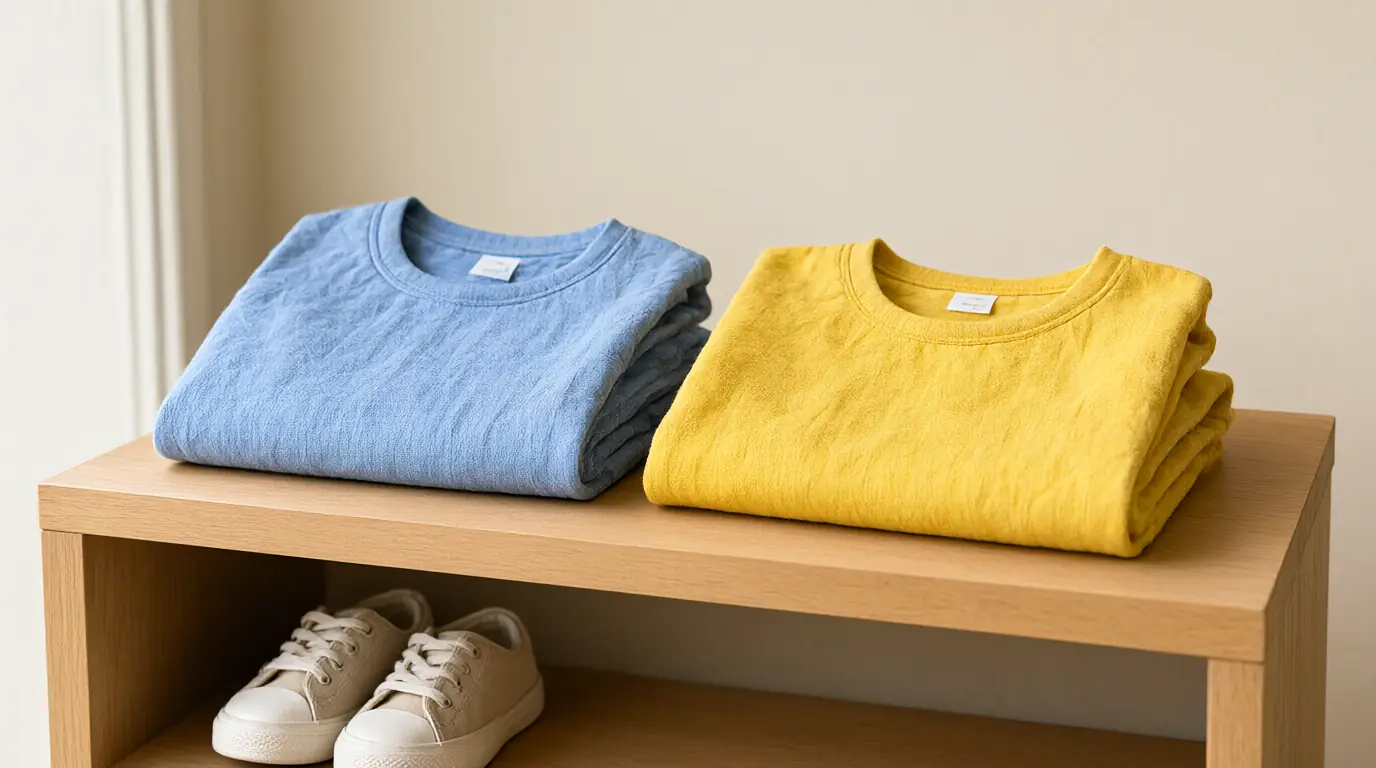
A low shelf or basket with two clothing choices gives children real control over a daily task. Choosing between two weather-appropriate options makes dressing a decision, not a battle, and the single step they can finish builds confidence. You finish any fiddly parts quietly and keep the pace relaxed.
 You’ll need
- A low basket or shelf at child height
- 2 clothing outfits laid out in order
- A chair or stool for sitting
- A picture of the weather
How to do it
- The night before, lay out two outfits that suit tomorrow's weather, with the vest or pants first.
- Let your child choose one, saying why if they want to.
- Pick one step for them: pulling the top over the head, pushing a leg into trousers or straightening a sleeve.
- Help with buttons and zips by holding the fabric while they push or pull.
- Name what they did: 'You found the sleeve all by yourself.'
- Leave the other outfit for another day without comment.
Make it your own: Younger children can simply pick between two socks. Older ones can pack a spare layer for school or choose clothes for the weather after looking out of the window.
Draw a picture sequence of a routine
A picture strip shows the order of a routine so a child can follow it without constant reminders. It works for tooth-brushing, getting ready for bed or leaving the house, and it turns 'what next?' into something they can point to rather than ask.
You’ll need
- 4 or 5 index cards or squares of paper
- Crayons
- A strip of card or string to line them up
- Reusable putty
How to do it
- Pick one routine and talk through its steps, such as undress, wash, pyjamas, book.
- Let your child draw each step on its own card in their own style.
- Line the cards on the wall at child height in the order you do them.
- Each evening, ask them to point to the first card and say what to do.
- Move a small clothes peg along as each step is done.
- Change the cards when the routine changes, and let your child redraw them.
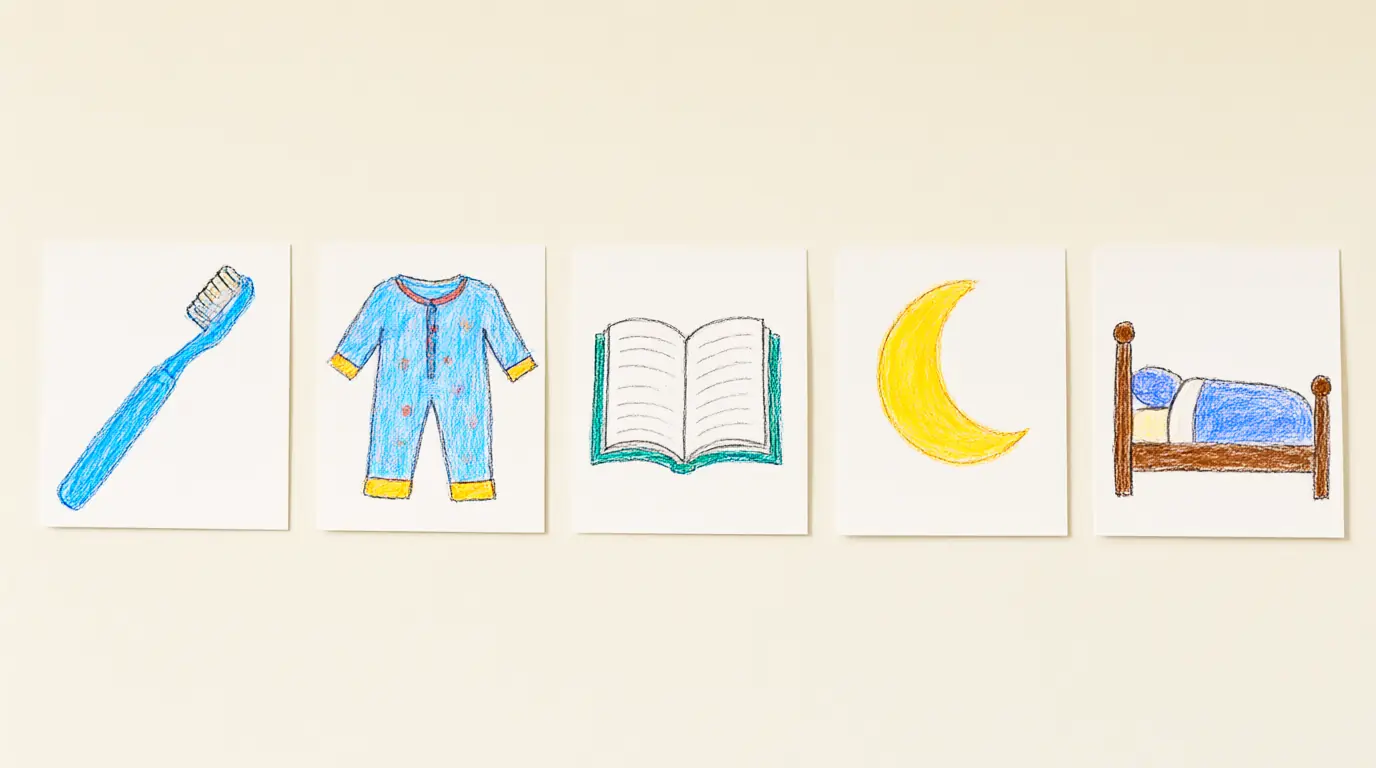
Make it your own: Use photos of your child instead of drawings for a younger one. Older children can write a word under each picture or design a version for a sibling.
Give the towel a home
A clear, reachable place for a towel makes a routine something a child can take part in without asking. Hanging it up becomes the last step, and a consistent location removes the need for reminders. Small physical tasks like this build the habit before the skills.
You’ll need
- A low hook or a small basket
- A hand towel with a loop
- A picture of a towel taped near the hook
How to do it
- Fix a hook at your child's shoulder height, or place a basket on a low shelf.
- Show how the loop slides over the hook and let your child try it.
- After washing hands, ask your child to find the towel using the picture as a clue.
- You dry their hands together, with them rubbing the front and you checking the gaps.
- Hang it back together, with your hand on theirs if needed.
- Say thank you for returning it, and let it be enough.
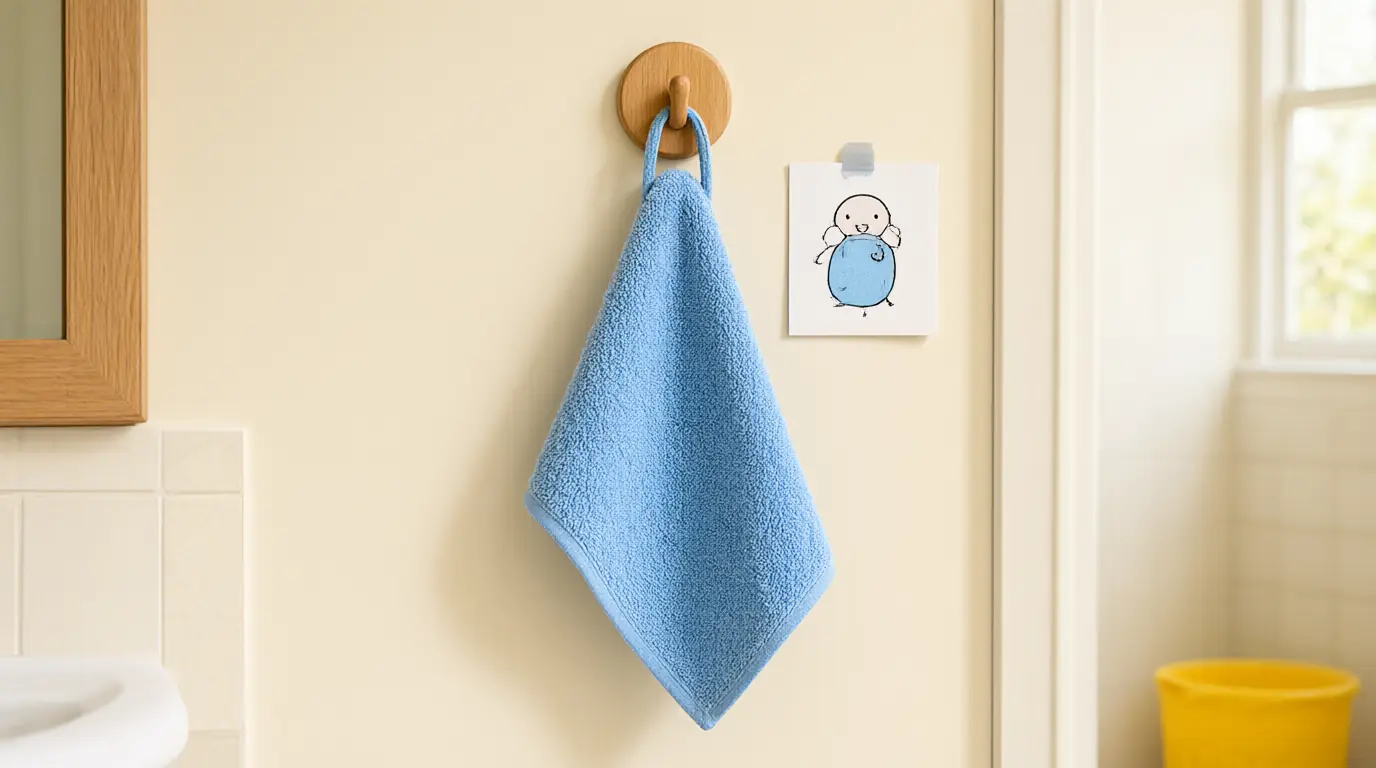
Make it your own: If looping is hard, use a basket instead of a hook. Older children can learn to hang a bath towel or fold a hand towel in half.
Pack a personal comfort kit
A small bag a child can pack and carry gives them ownership of their own comfort when you are out. They choose a few things that help them feel calm, you add the essentials, and checking the list together makes preparation a shared habit.
You’ll need
- A small bag or pouch
- A spare layer
- A comfort object such as a soft toy
- A small drink bottle
- A picture checklist
How to do it
- Draw or print four simple pictures: spare layer, drink, comfort object, tissue.
- Lay out the items and let your child tick each picture as they put the item in.
- Add essentials that stay your responsibility, such as any medication or spare clothes for accidents.
- Practise opening and closing the bag by themselves.
- Use the kit on a short outing and check what was useful.
- Change the contents together afterwards.
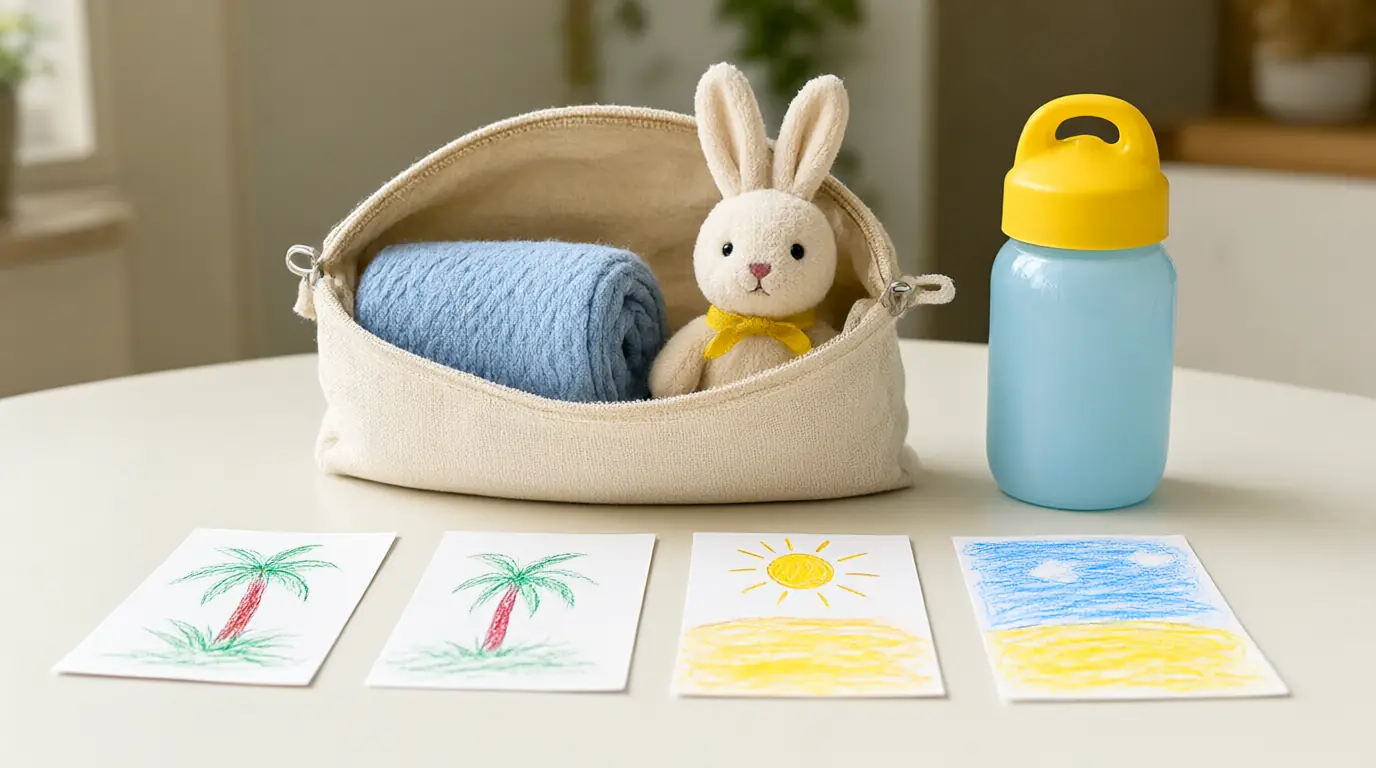
Make it your own: Younger children can choose one comfort item and carry it to the car. For older children, add a small notebook and crayons, and ask them to repack after each trip.
A short calm-down body check
Learning to notice what the body needs is part of self-care. A brief check, such as 'Are you hungry, tired, thirsty or too hot?', helps children link feelings to causes and ask for help. Done together, it becomes a habit rather than a lecture.
You’ll need
- A cushion
- 4 simple picture cards for hungry, tired, thirsty, too hot
- A cup of water
How to do it
- Choose a quiet moment and spread the four picture cards in front of your child.
- Ask them to put a hand on their tummy and notice what it says.
- Point to each card in turn and wait for a yes or no; do not guess for them.
- Offer the matching action: a drink, a snack, a rest or taking off a layer.
- Say, 'Your body told us what it needed.'
- Use the cards again during a wobble and leave them where your child can reach them.
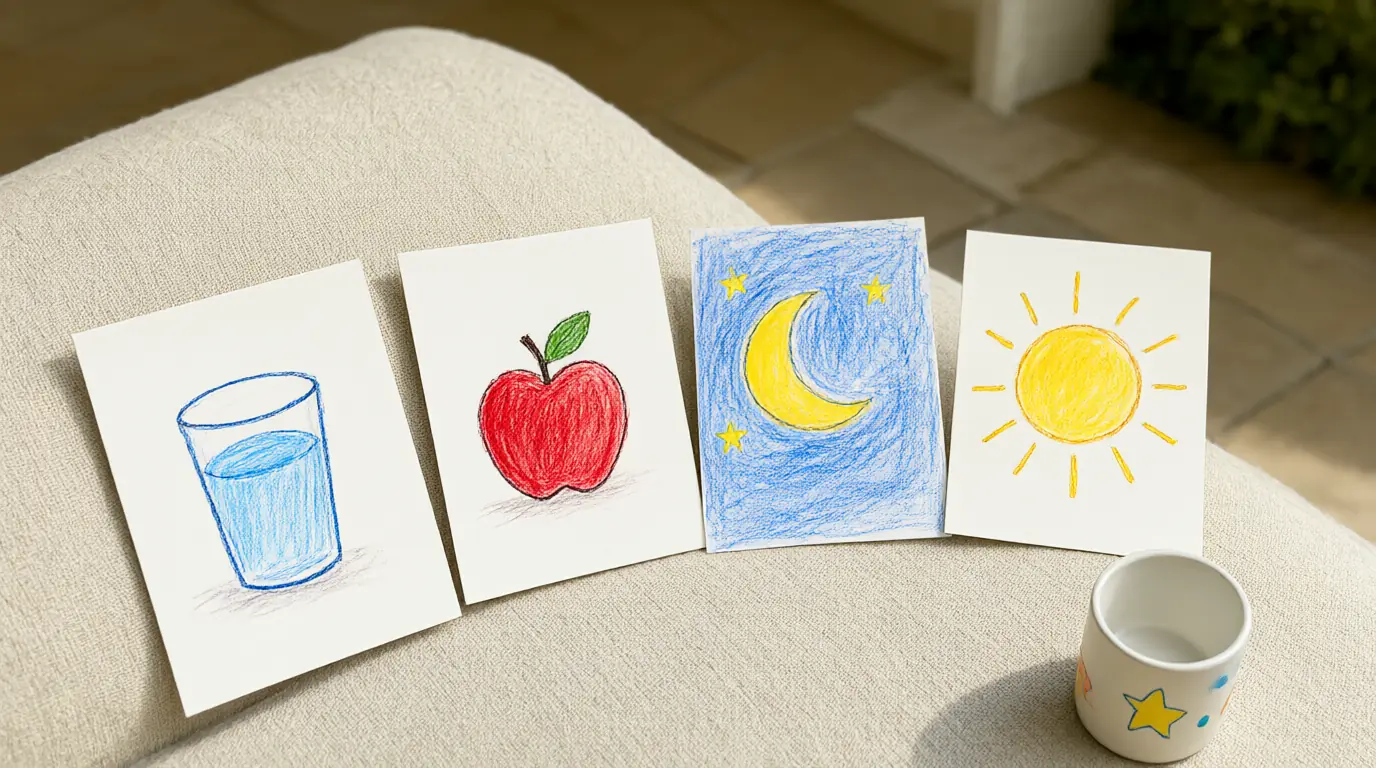
Make it your own: Offer only two cards to a two-year-old. Older children can add their own card for a feeling, such as worried, and decide what helps.

Make it work for your family
Resist the urge to redo the task as soon as your child finishes it. A jumper on back to front still counts as a jumper put on, and a quiet 'Shall we turn it round together?' keeps their effort intact. Expect regressions when your child is tired, ill or excited; go back to the earlier step without comment. Independence also looks different for children with physical or sensory needs, so judge it by participation, not by doing everything alone.
Routines work best when they are predictable and calm, which is why a picture strip helps. If mornings feel rushed, start ten minutes earlier instead of speeding your child up. You can pair the routines with cleaning games for kids for tidying jobs, or try gentle emotional regulation activities when feelings run high.

Parents also ask
At what age can children start self-care routines?
Toddlers can take part from about two, for example by choosing socks, pulling off a hat or putting a towel in a basket. By four or five many children can dress with help and manage most of a routine. Children develop at different speeds, so follow your child's ability rather than a fixed age.
How do I teach self-care to a child who resists?
Offer a choice between two options, make the step small and keep your tone calm. Using a picture strip can help because the routine becomes the rule instead of you. If resistance continues, look for a cause such as texture, tiredness or timing, and speak to your health visitor or doctor if worried.
Should I let my child brush their own teeth?
Young children need adult help to brush properly, and a dentist or health professional can advise on technique and timing. Let them hold the brush and have a turn first, then you finish. This lets them practise the habit while you make sure every tooth is cleaned.
Choose materials and activities that suit your child, supervise as needed and adapt the ideas to their interests and abilities. About our editorial approach