8 min read

 In this article
A little preparation
Choose one job and one area, such as the box of toy cars or the low shelf by the door. Clear away cleaning sprays, sharp objects, glass and anything an adult would normally handle. Keep wipes, polish and dishwashing liquid out of reach, and use only water and a soft cloth for children's own wiping. Before you start, show your child what finished looks like, either by pointing to a tidy shelf or by taking a quick photo of it.
Aim for five to ten minutes, and begin when your child has energy rather than just before a meal or bedtime. Offer picture labels on baskets, which help children who cannot yet read to find where things belong, and make sure the baskets are low enough to reach. Decide who does which part: it is perfectly fine for an adult to do the heavy or complicated bits, and for the child to be in charge of the cars, the soft toys or the books. Agree one signal for stopping, such as a song ending.

Ideas to try together
Toy delivery routes
Giving one kind of toy a clear destination turns tidying into delivering. Children understand sorting by type before they can handle a whole room, and a single category means there is an obvious finish. It also builds the habit that things have a home.
 You’ll need
- A pile of one kind of toy, such as toy cars or soft animals
- A basket with a picture label
- A toy truck or a wheeled cart
- Masking tape for a delivery road
How to do it
- Choose one category of toy and put it in the middle of the floor.
- Stick a masking tape road from the pile to the basket.
- Load a few toys onto the truck and drive them along the road.
- Unload each toy into the basket, saying delivered as each arrives.
- Count how many toys are left and repeat until none remain.
- Look together at the clear floor and say that the route is finished.
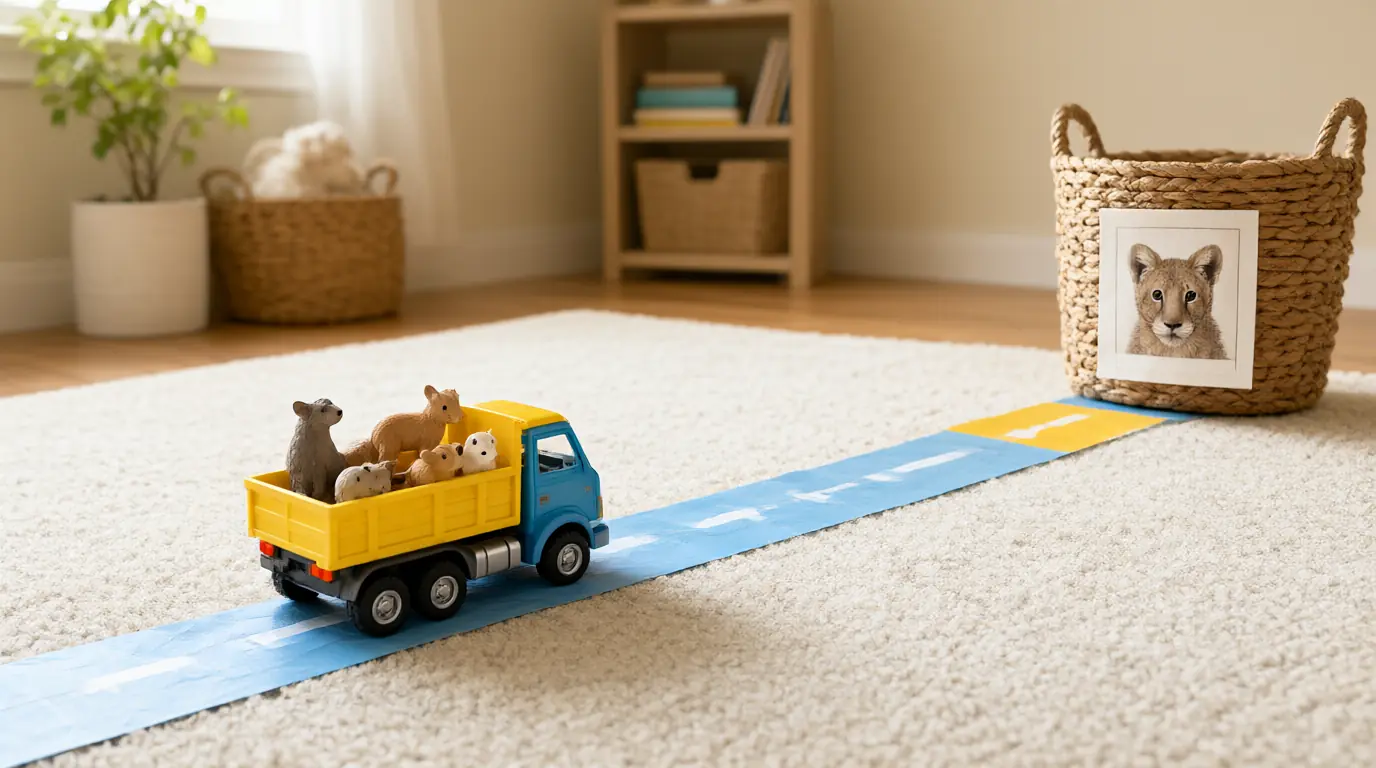
Make it your own: For toddlers, use a very short road and just three toys. Older children can organise two categories at once, using two trucks and two baskets, or time themselves against a favourite short song.
Find the matching home
Matching an object to its storage place is a simple sorting game with a real purpose. Picture labels give children the clue they need, and talking about how the label helps shows that tidiness is about being able to find things again, not about being neat for its own sake.
You’ll need
- 3 baskets or boxes at child height
- Picture labels showing blocks, books and soft toys
- A few matching objects for each basket
How to do it
- Tape one picture label to each basket and place the baskets in a row.
- Put a small mixed pile of belongings in front of your child.
- Ask them to pick up one item and say which basket it belongs in.
- Place it together and point to the matching picture on the label.
- Continue until the pile is gone and the baskets are full.
- Ask where you would look tomorrow if you wanted a book.
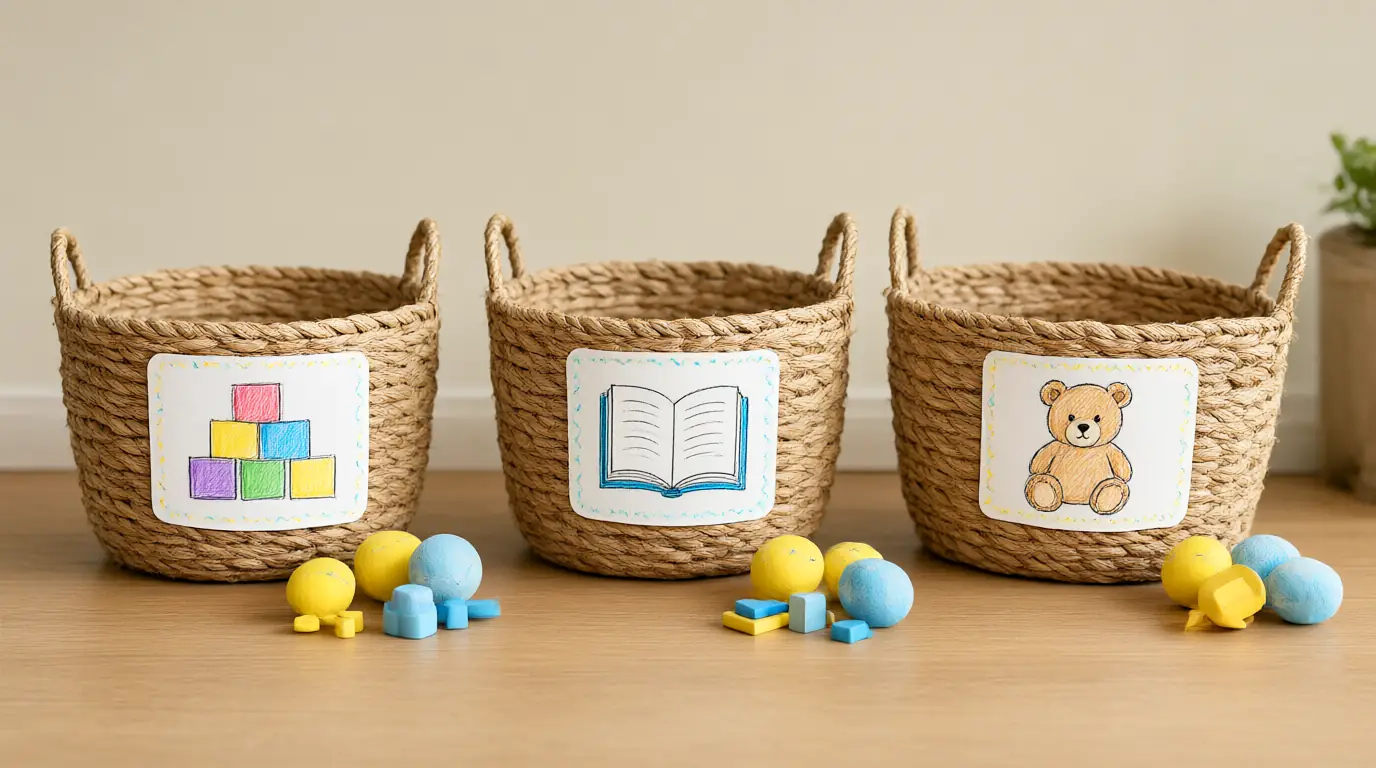
Make it your own: For younger children, begin with only two baskets. Older children can design and draw the picture labels themselves, or add a fourth basket for odd items that need a new home.
Soft-cloth parking space
Wiping a safe surface with a damp cloth is a satisfying first cleaning job, and a pretend parking space gives it a clear purpose. The child sees an immediate result: a clean patch where a toy can park. It helps develop wrist movements and a sense of taking care of a shared place.
You’ll need
- A soft cloth, dry or lightly damp with plain water
- A low washable table or tray
- Toy cars or animals
- A small bowl of water for wetting the cloth
How to do it
- Choose a safe, washable surface at the child's height and clear it with them.
- Show how to wipe in big circles or from one side to the other.
- Let your child wipe a patch as big as a toy car.
- Park a toy in the clean space and say that it is ready.
- Wipe another space for the next toy and keep going for as many as they like.
- Wring out the cloth and hang it to dry together.
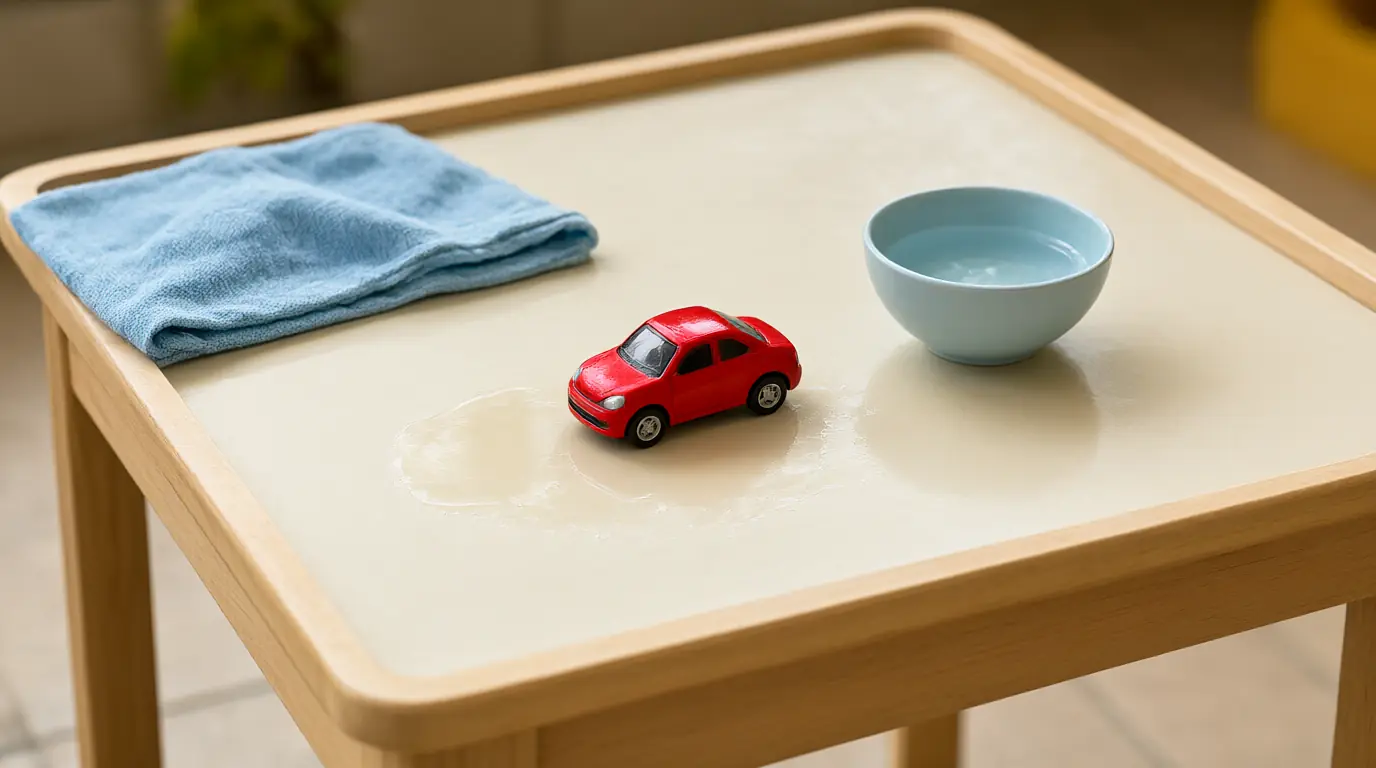
Make it your own: For younger children, use a dry cloth and a smaller patch. Older children can wipe a longer road and draw lines with a finger in the damp patch, or take turns wiping while you carry the toys.
Before-and-after helpers
A drawn before-and-after picture shows what a job looks like at each end, which makes it easier to start and easier to know when to stop. Children also learn to break down a task by deciding what they can do and what needs a grown-up, which builds a sense of responsibility and honest asking for help.
You’ll need
- Two sheets of paper
- Crayons
- A sticky note or counter for each helper
- The area you are going to tidy
How to do it
- Look at the area together and draw a quick picture of how it looks now.
- Draw a second picture of how it will look when it is finished.
- List with your child the small jobs between the two pictures, such as books on the shelf and cars in the box.
- Decide which job each person will do and place a sticky note beside it.
- Do the jobs, then compare the area with the after picture.
- Stick the two drawings on the wall or fridge as a reminder for next time.
Make it your own: Younger children can colour a tick on the picture when each job is done. Older children can number the jobs in order, or write a few words on the plan, and take responsibility for ticking off the list.
Towel and sock sort
Folding and sorting laundry is a real household task that needs no special equipment, and it is great for matching and sizing. Children can make piles for towels, socks and clothes, and the finished stacks are plain to see. Because the items are soft, it is a safe job for even very young helpers.
You’ll need
- A basket of clean laundry
- A large, clear surface such as a bed or a rug
- 3 smaller baskets or boxes
- Pairs of socks of different colours
How to do it
- Tip the clean laundry onto the bed or rug and sit with your child.
- Find the socks and spread them out, looking for matching colours.
- Pair them up and place each pair in a small basket.
- Put the towels in a second pile, with the largest at the bottom.
- Carry the baskets to where they belong together.
- Admire the empty bed and say that the job is finished.
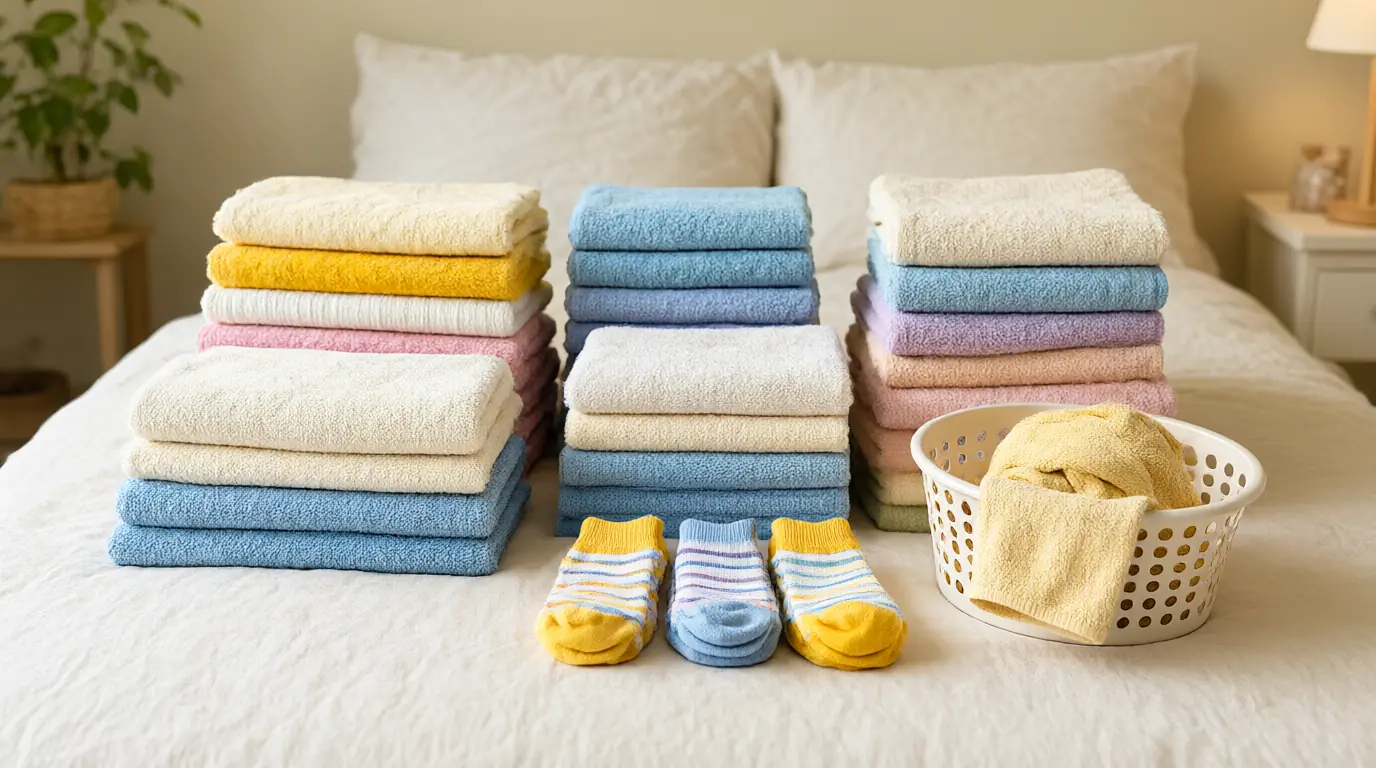
Make it your own: For younger children, offer just five socks to match. Older children can try folding a small cloth in half and then in half again, or sorting laundry by family member.

Make it work for your family
Tidying often fails when the task is too large or too vague. Saying clean your room is a very big request for a four-year-old, whereas put the cars in the blue basket is something they can do and finish. Break big jobs into single categories, do the job beside them for the first few weeks and use the same words each time so the routine becomes familiar.
Avoid turning cleaning into a punishment or a race that creates a winner and a loser. Instead of general praise, say what you noticed: you found a home for every one of the animals. If a child does not want to join in, ask whether they would like to choose the music or hold the basket. For more everyday routines, see these self-care routines children can practise with you and the Weebou life skills games.

Parents also ask
At what age can children start helping with cleaning?
Many children can take part from around age 2 by putting toys into a basket or wiping a surface with a cloth. Keep jobs small, show how to do them and stay close. Increase the responsibility gradually as your child shows interest and skill.
How do I get my child to tidy up without a fight?
Use one small job at a time, show what finished looks like, give a clear signal when it starts and ends, and join in. Pointing out what the child has done, rather than what is left, usually helps. Avoid using cleaning as a punishment.
Are cleaning products safe for children to use?
Children should not use spray cleaners, bleach or strong chemicals, and these should be stored out of reach. For children's own jobs, use a soft cloth with plain water, supervised by an adult. Follow the label on any product you use yourself.
Choose materials and activities that suit your child, supervise as needed and adapt the ideas to their interests and abilities. About our editorial approach