Weebou Editorial Team
 7 min read

 In this article
A little preparation
Gather about 40 identical small objects such as buttons, dried pasta shapes or counters, plus four or five paper plates and a muffin tray. Choose a table where you can lay things out in rows. Begin with small numbers: two, three, four and five groups, with up to six in each, so children can count everything without losing track.
Say the structure aloud each time: how many groups, and how many in each? Pointing to the plates and then to the objects connects the words to what the child sees. Keep sessions to about 15 minutes, because careful counting is tiring. Written multiplication, such as 3 × 4 = 12, is a shorthand for what the child has already built, so show it only after they have described the groups in their own words. Mistakes are useful here: a miscounted plate is a chance to check, not a failure.

Ideas to try together
Picnic plates
Plates give children an immediate picture of groups: each plate is a group, and each object on it is one of the items. They can see that three plates with four on each is the same as twelve, and that adding another plate means adding another four.
 You’ll need
- 4 paper plates
- 24 small objects such as buttons or counters
- A pencil and paper
How to do it
- Place three plates on the table.
- Put four counters on each plate and ask how many plates and how many on each.
- Count all the counters together to find the total.
- Add a fourth plate and four more counters, and predict the new total before counting.
- Write the total for each number of plates in a column.
- Look at the column and say what pattern you notice.
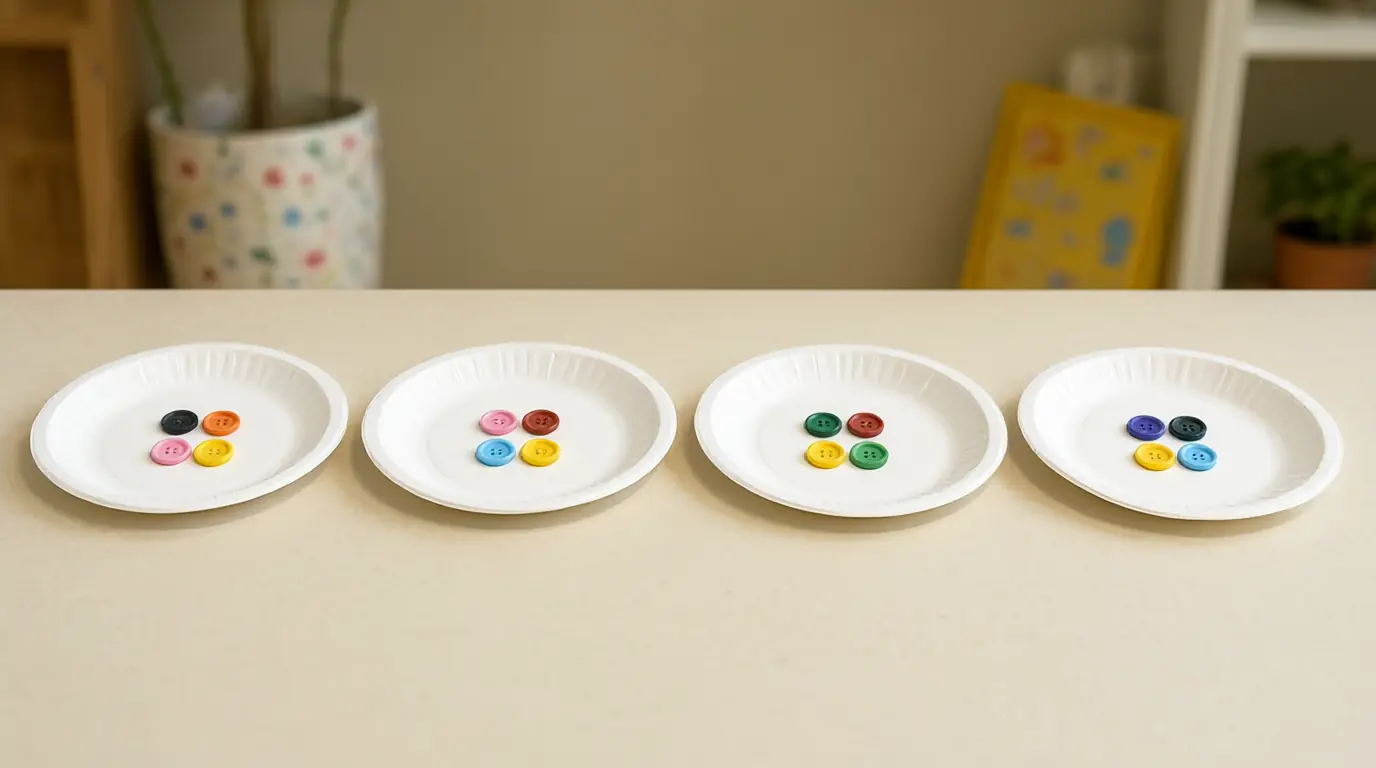
Make it your own: Younger children can use two plates and two counters on each. Older children can try five plates with five counters on each and spot the pattern of counting in fives.
Muffin tray arrays
A muffin tray is a ready-made grid. Filling a few rows with the same number of counters turns the tray into an array, a picture that shows multiplication as rows and columns. Children can see that three rows of four is the same as four rows of three, which is a big discovery.
You’ll need
- A 12-hole muffin tray
- 12 small counters
- A small card to cover part of the tray
How to do it
- Fill one row of four holes and ask how many counters there are.
- Fill a second and a third row so every row has four.
- Count rows and then counters in each row.
- Turn the tray a quarter turn and look again at the rows.
- Ask what has changed and what has stayed the same.
- Cover one row with the card and work out the total without counting.
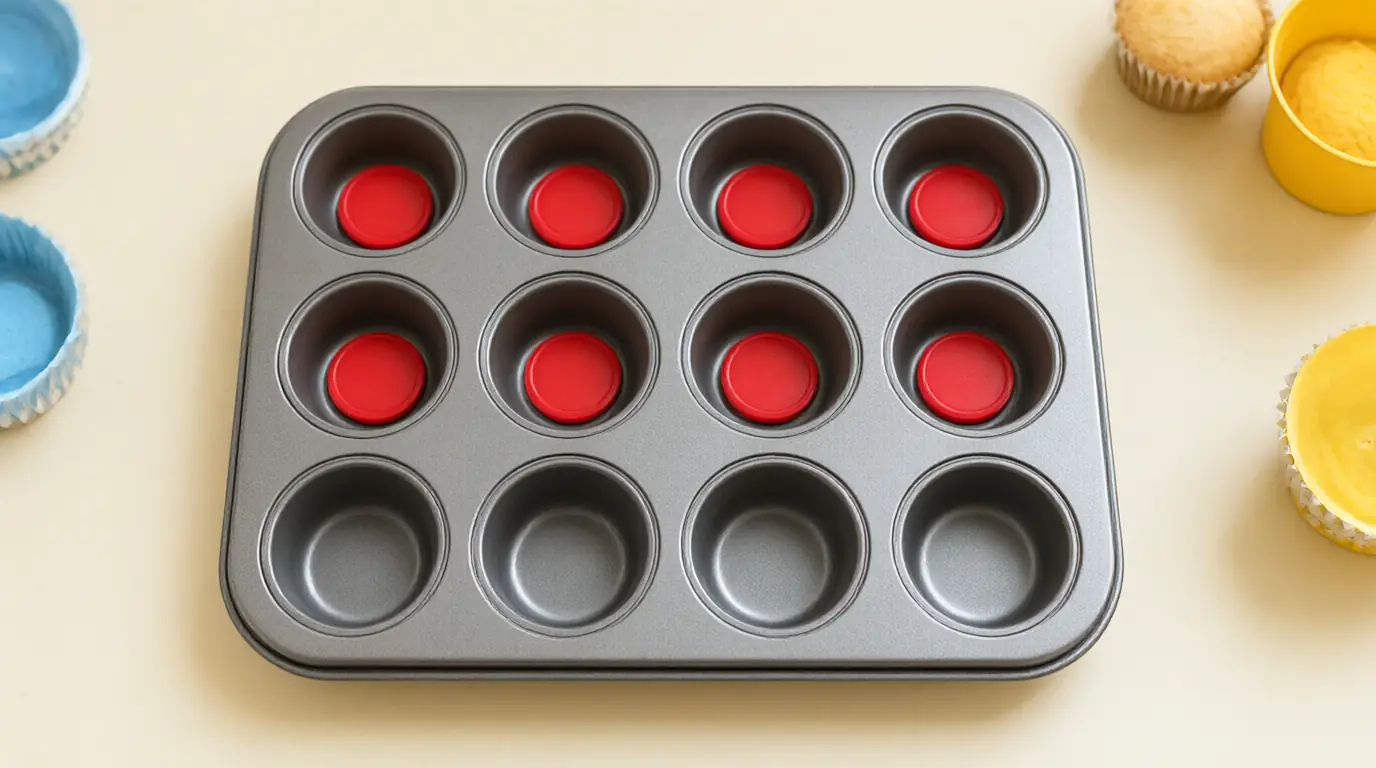
Make it your own: Younger children can use a six-hole tray with two rows of three. Older children can build bigger arrays on squared paper and shade them in.
Roll and group
Dice add chance and turn-taking to equal groups. One die tells you how many groups, and the other how many in each, so every roll creates a new multiplication problem. Children draw or build the groups, then count the total, which keeps the game about meaning rather than recall.
You’ll need
- 2 dice
- A bowl of 30 small counters
- A sheet of paper
- A pencil for scoring
How to do it
- Roll the first die to decide the number of groups.
- Roll the second to decide how many go in each.
- Build the groups with counters or draw circles with dots.
- Count the total and write the sentence: groups of, making.
- Let the other player check by counting a different way.
- Play ten rounds and circle your favourite roll.
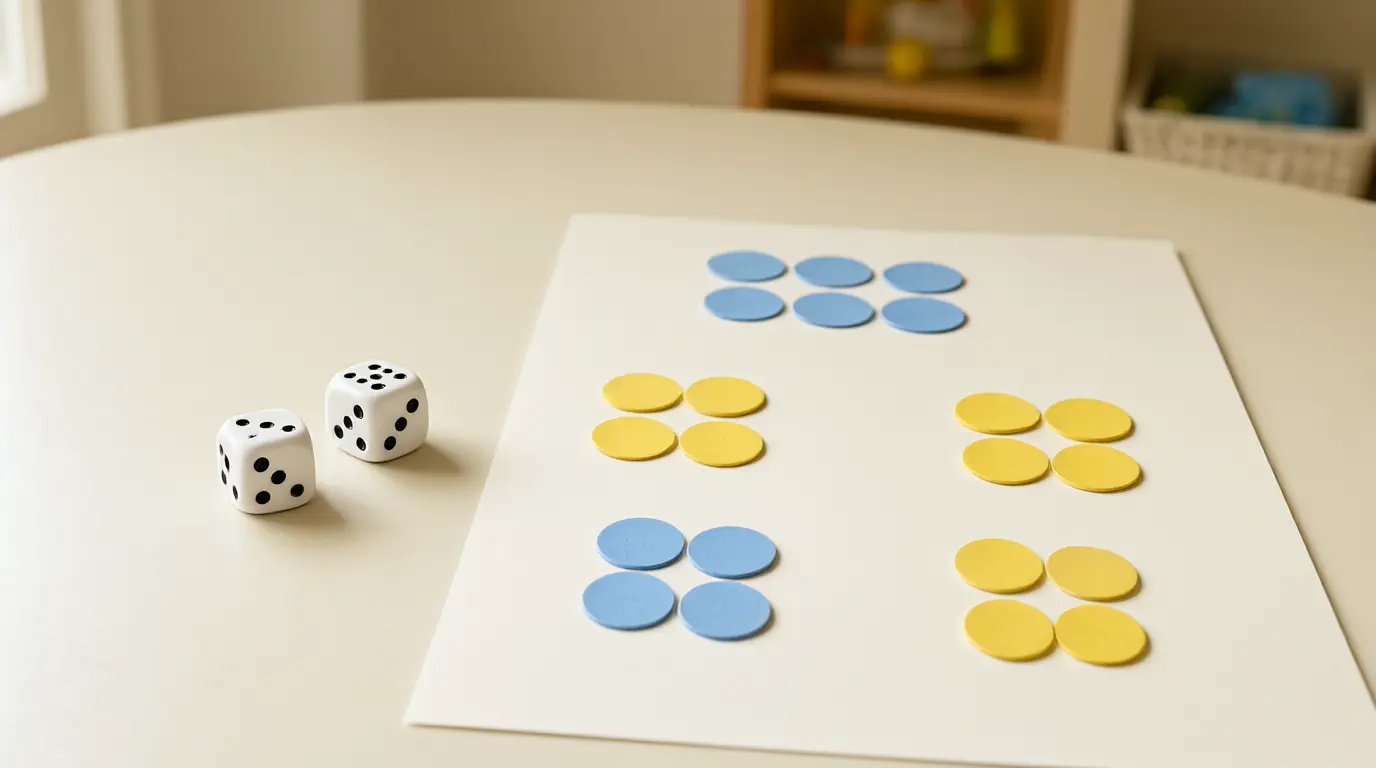
Make it your own: Younger children can use a die marked one to three on each face. Older children can roll three dice, treat the third as a multiplier, and talk about what happens to the total.
A shop order for equal bags
A shopkeeper packing the same number of items into several bags uses multiplication without knowing it. This game gives the idea a story: every bag is the same, so you can work out the total by counting a bag and then the bags. It also practises drawing a picture before calculating.
You’ll need
- 5 small paper bags or envelopes
- 20 small objects as items
- Paper for orders
- A pencil
How to do it
- Write an order for three bags with five apples in each.
- Draw the three bags and five dots in each before packing.
- Pack the real objects into the bags and check each bag.
- Count the total items and compare with a prediction.
- Write a new order and swap with your child to pack.
- Check the packing and see if any bag has a different number.
Make it your own: Younger children can pack two bags of three. Older children can choose their own orders and write the total as a repeated addition and a multiplication sentence.
Find the odd group
Spotting the group that does not match is a quick way to see what equal means. Children look for what needs to change, whether that is adding, removing or moving an item. It builds the habit of checking each group and gives a reason to say the rule out loud.
You’ll need
- 6 paper cups
- 24 counters
- A sheet of paper
How to do it
- Put four counters in five of the cups and a different number in one.
- Ask your child to find the odd cup without counting every cup.
- Let them explain how they know and what they would change.
- Fix the cup and check that all six are equal.
- Swap roles and let your child hide a different cup.
- Write down the total number for equal cups.
Make it your own: Younger children can use three cups. Older children can make two odd cups and work out how many counters to move between them.

Make it work for your family
If your child can answer a fact but cannot show it with objects, go back to the plates for a moment. Understanding the structure makes memorising easier later, because facts such as 4 × 3 and 3 × 4 are linked by the same array turned on its side. Short, regular play is much more effective than a long session: five minutes at the table most evenings is a good rhythm.
When the equal-group idea is secure, you can move on to the tables and to math card games using small numbers or practise explaining answers in these second-grade math games.
Parents also ask
What age should kids start learning multiplication?
Many children meet multiplication as equal groups at around six or seven, and learn tables later. Before that, they can count in twos and fives and share objects equally. Readiness varies, so follow your child's interest and what school is teaching.
What is the best way to teach multiplication?
Start with objects arranged in equal groups and rows, then move to drawings and finally to numbers. Ask your child to explain each step in words, and only then introduce times-table facts. Short, regular play works better than long drills.
How can I help my child remember times tables?
Link each fact to a picture or an array first, then practise patterns such as counting in fives or doubling. Short games, a minute or two at a time, help more than long sessions. Celebrate facts they know and revisit the tricky ones later.
Sources & further reading
Explore these primary sources for further context on this topic.
Choose materials and activities that suit your child, supervise as needed and adapt the ideas to their interests and abilities. About our editorial approach