Weebou Editorial Team
 7 min read
 In this article
A little preparation
Choose one fact at a time and gather what you need before you begin. Clear pictures from a library book work well for animals; a few drawn shapes and everyday objects are enough for the others. An adult handles the flashlight and its batteries, and keep light away from eyes. Avoid collecting live animals or unknown natural objects; photographs are safer and easier to study.
Sit side by side so you can both see the paper and the objects. Say the fact out loud once, then ask your child how you could check it. Draw what you notice rather than writing it, and keep a pile for things you are not sure about. Separating a fact from a guess is the heart of this article: a fact can be checked by looking or measuring; a guess is an idea that still needs evidence. If you want more investigations to try next, see these science games for kids.

Questions to explore together
Triangle fact hunt: three sides, always
A triangle always has three straight sides and three corners, however big it is or whichever way it is turned. Drawing triangles in different sizes and positions lets children test this for themselves and discover that shape does not depend on size or direction.
 You’ll need
- Paper and a thick crayon
- A ruler or card strip as a straight edge
- A few safe objects with triangles, such as a sandwich slice or a road sign picture
- A different coloured crayon for counting
How to do it
- Say the fact: a triangle has three sides. Ask how you could check this.
- Draw one big and one small triangle with the ruler.
- Turn the paper so a triangle points down and count the sides again.
- Trace each side with a finger as you count one, two, three.
- Hunt around the room for triangle shapes in pictures or objects and check each one.
- Draw one shape that looks a bit like a triangle but has four sides and decide why it is different.
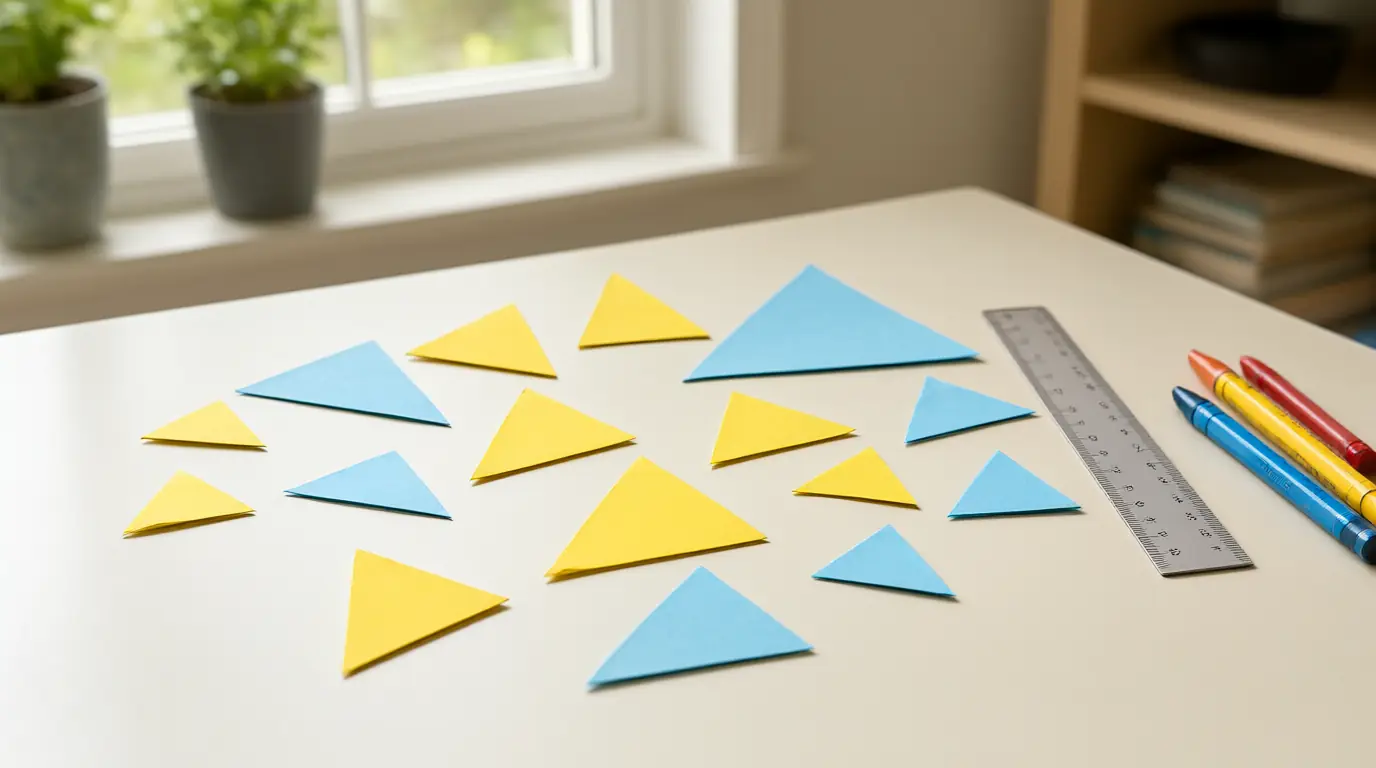
Make it your own: Younger children can cut or tear paper triangles and count the sides by touch. Older children can sort shapes into three-sided and not three-sided and explain their rule.
Insect picture check: six legs
Adult insects have six legs, but in photographs some of them may be hidden or blurred. Counting from a clear picture teaches children to look carefully, and marking unseen legs as unseen rather than guessing is a very good habit of mind.
You’ll need
- A clear photograph of a beetle, ant or bee from a library book
- A sheet of tracing paper or plain paper
- Crayons or a pencil
- Small stickers or coloured dots
How to do it
- Say the fact: insects have six legs. Look at the picture and find the head and the body.
- Point to the legs one at a time and count them aloud.
- Put a sticker on each leg you have counted so you do not count it twice.
- Notice any leg you cannot see and mark it with a question mark instead of a guess.
- Look at a second insect photo and count again.
- Draw your own insect with six legs and compare it with the picture.
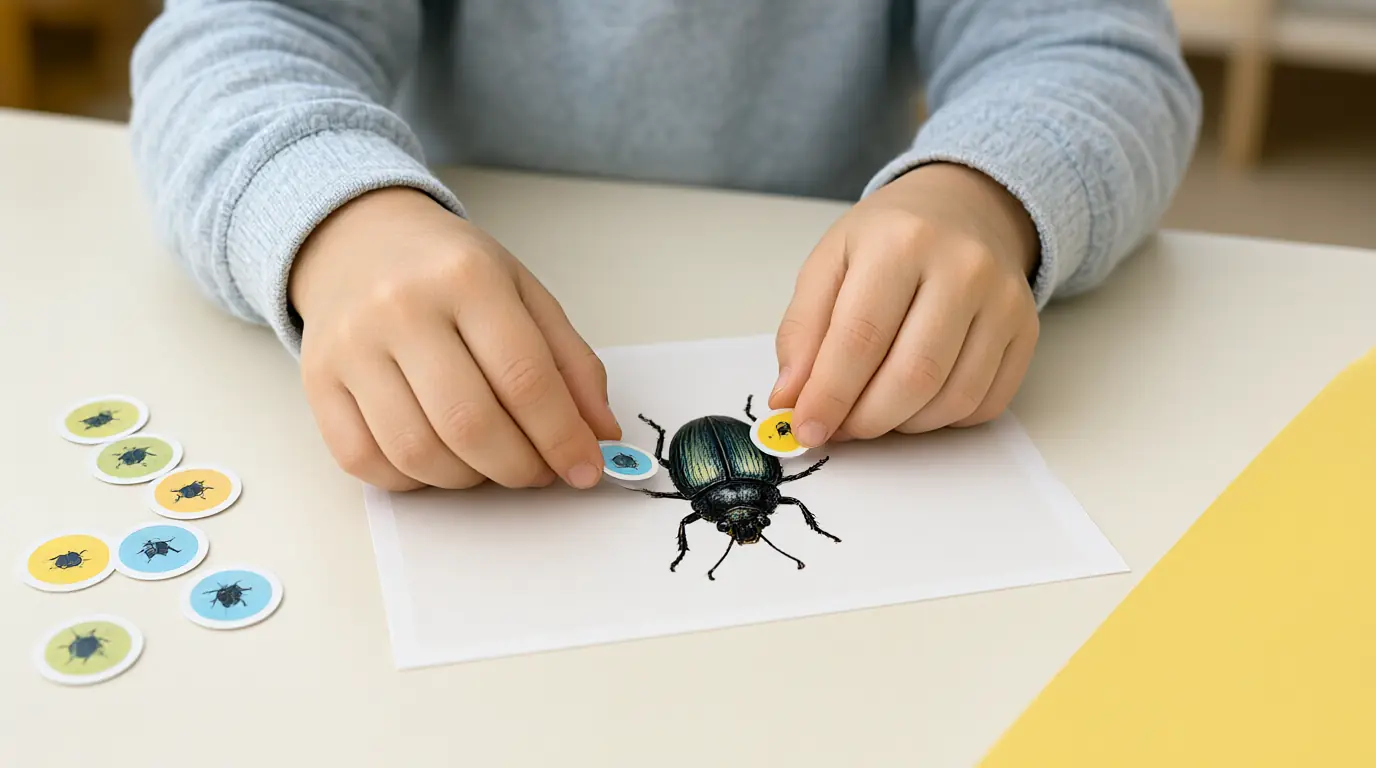
Make it your own: For younger children, use a big, clear picture and count only on one side. Older children can compare an insect with a spider picture and ask how the leg count differs, checking with a book.
Shadow and light: an object blocks the light
When something blocks light, a shadow appears on the other side. Children can make shadows on a wall and test what changes when the light or the object moves, which is a first step from fact to experiment.
You’ll need
- A handheld flashlight, held by an adult
- A large toy animal or a plastic cup
- A pale wall or a sheet of paper taped up
- A dim room
How to do it
- Say the fact: an object that blocks light can make a shadow.
- Dim the room slightly and let an adult shine the flashlight at the wall, away from anyone's eyes.
- Hold the toy between the light and the wall and watch the shadow appear.
- Move the toy closer to the wall and notice whether the shadow gets bigger or smaller.
- Keep the toy still and move the light, then describe only what you can see.
- Draw the shadow you liked best on paper.
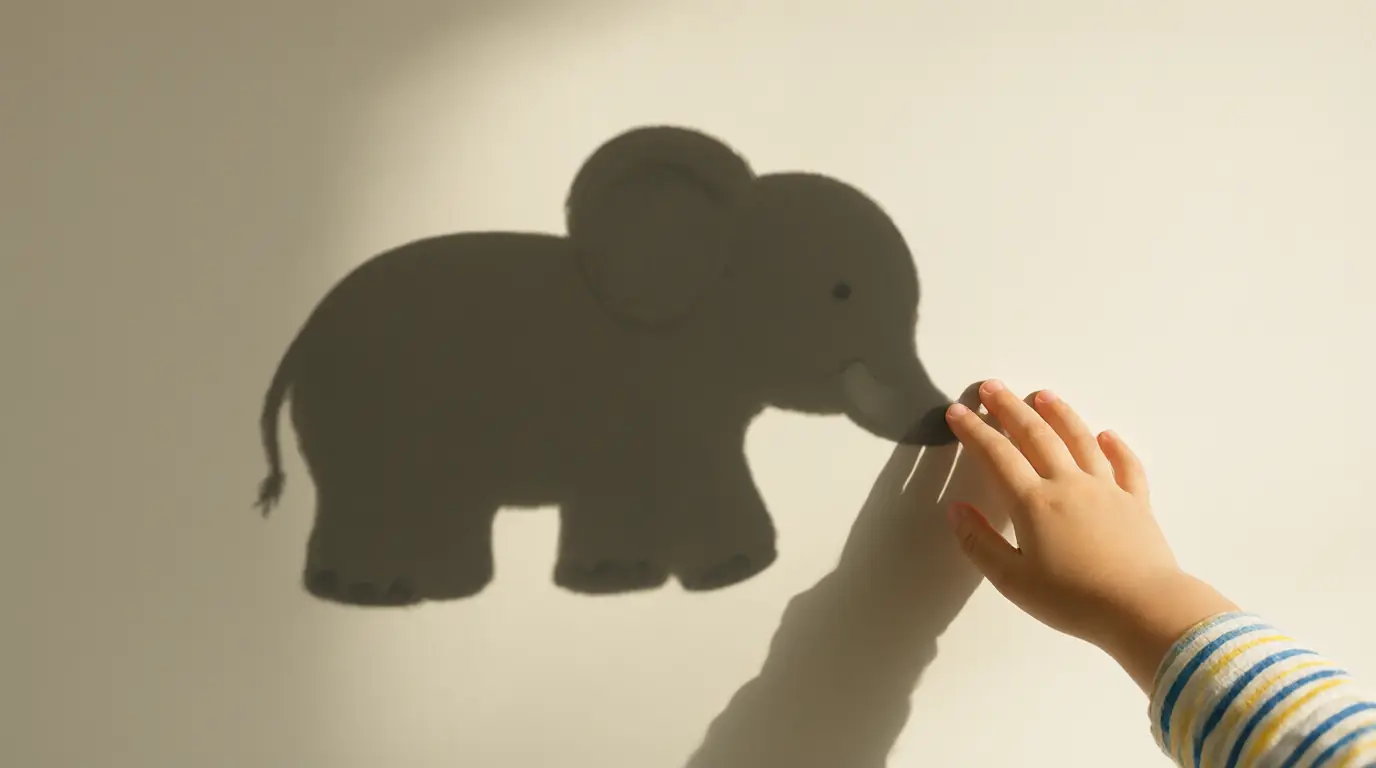
Make it your own: Younger children can use hand shadows in sunlight by a window. Older children can predict whether the shadow will be bigger or smaller before moving the toy, then check.
Bird feather noticing: birds have feathers
All birds have feathers, and birds are the only living animals that do. Looking at clear photographs lets children study colour, pattern and shape without disturbing any real bird, and drawing what they see trains the eye to notice detail.
You’ll need
- 2 or 3 clear photographs of different birds
- Paper and crayons
- A magnifying glass for the pictures (optional)
- A small basket for the picture cards
How to do it
- Say the fact: birds have feathers. Look at the first picture and find them.
- Point to the longest feathers and the shortest, and notice where they grow.
- Draw the outline of one feather and colour it the way you see it.
- Look at a second bird and compare colours and patterns with the first.
- Ask which details you can see and which would need a closer photograph.
- Choose a favourite bird picture and tell one thing about its feathers.
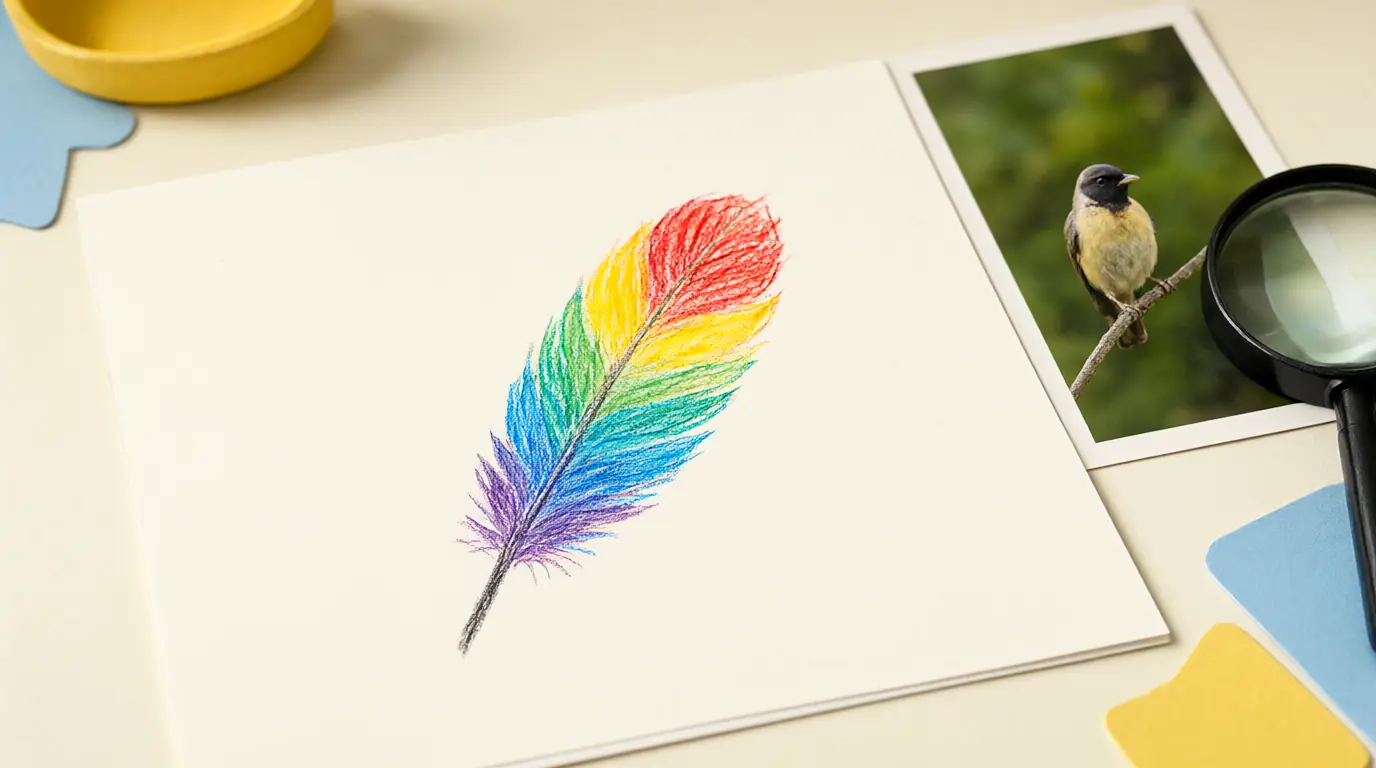
Make it your own: Younger children can match two feather colours between pictures. Older children can sort birds by pattern, such as striped, spotted or plain, and explain each group.

Make it work for your family
After each activity, ask what you actually saw, and what you still need a trusted source to tell you. A model can show an idea without proving every detail: a shadow on the wall shows that light is blocked, but it does not explain how light travels. Say so out loud, because it teaches children that evidence has limits.
If your child asks something you cannot answer, write the question on a sticky note and look it up in a library book later. Check facts in at least two sources before you pass them on. Children also enjoy hearing that scientists change their minds when they find better evidence. For more questions to explore, try these trivia questions for kids or some nature activities.

Parents also ask
How can I tell whether a fun fact is true?
Check it in at least two reliable sources, such as a library book, a museum site or a science encyclopedia, and see whether they agree. If a fact sounds surprising, that is a good reason to look it up before passing it on.
How many fun facts should a young child learn at once?
One at a time is plenty. Pick a single fact, test it in a small activity and let your child talk about it afterwards. Children remember facts they have used or seen far better than ones they simply hear.
What if my child asks a question I cannot answer?
Say you do not know and write the question down. Then look it up together in a library book or a trusted children's reference. Showing how to find an answer teaches more than having a ready one.
Choose materials and activities that suit your child, supervise as needed and adapt the ideas to their interests and abilities. About our editorial approach