Weebou Editorial Team

 In this article
A little preparation
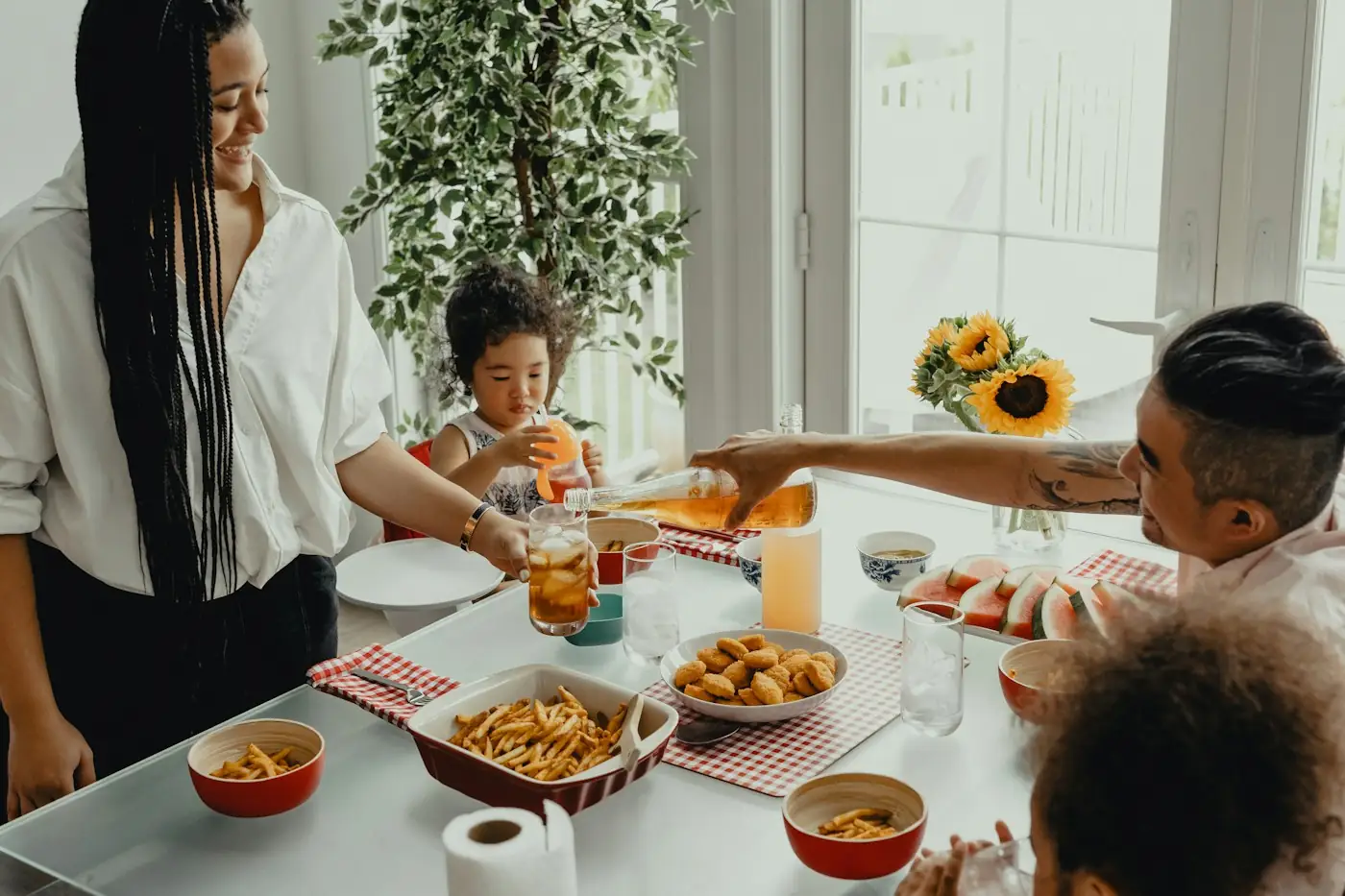
Choose a quiet moment before the food arrives, or the lull after the plates are cleared, rather than the busiest minute of serving. Ten minutes is plenty. Sit at the same level as your child so the jokes travel around the table rather than over their head, and let the youngest guest go first if they want to. Have paper and crayons within reach for anyone who would rather draw the joke than tell it.
Keep the humour about imaginary objects — a nervous spoon, a proud pumpkin — and away from who ate what, who is a fussy eater or how much anyone took. A joke that lands badly can simply be left; nobody has to laugh. If a child repeats the same joke all evening, that is a sign they are enjoying the shape of it, so let them. Tell one joke yourself first so everyone hears how it works, then hand the turn over.

Questions to explore together
Napkins, spoons and other talking table things
Table objects are the safest place to start because everyone can see the napkin, the spoon and the plate in front of them. These jokes are silly rather than clever, which suits a mixed table where a four-year-old and a grandparent are listening at the same time. After each one, ask what the object would say next — that question usually produces a better joke than the original.
How to do it
- Q: Why did the napkin write a thank-you note? A: It wanted to wipe away any doubt that it was grateful.
- Q: Why did the spoon offer directions? A: It knew every corner of the bowl.
- Q: Why did the fork stay quiet at dinner? A: It didn't want to stick its tines in.
- Q: Why did the plate get the biggest compliment? A: It held everything together.
- Q: Why did the cup never complain? A: It was always half full of something good.
- Q: Why did the chair get invited to every dinner? A: It always saved a seat for someone.
Make it your own: For a two- or three-year-old, act the joke out with the real napkin and spoon instead of telling it. Older children can write a new table-object joke and test it on the next guest.
The pumpkin's very busy calendar
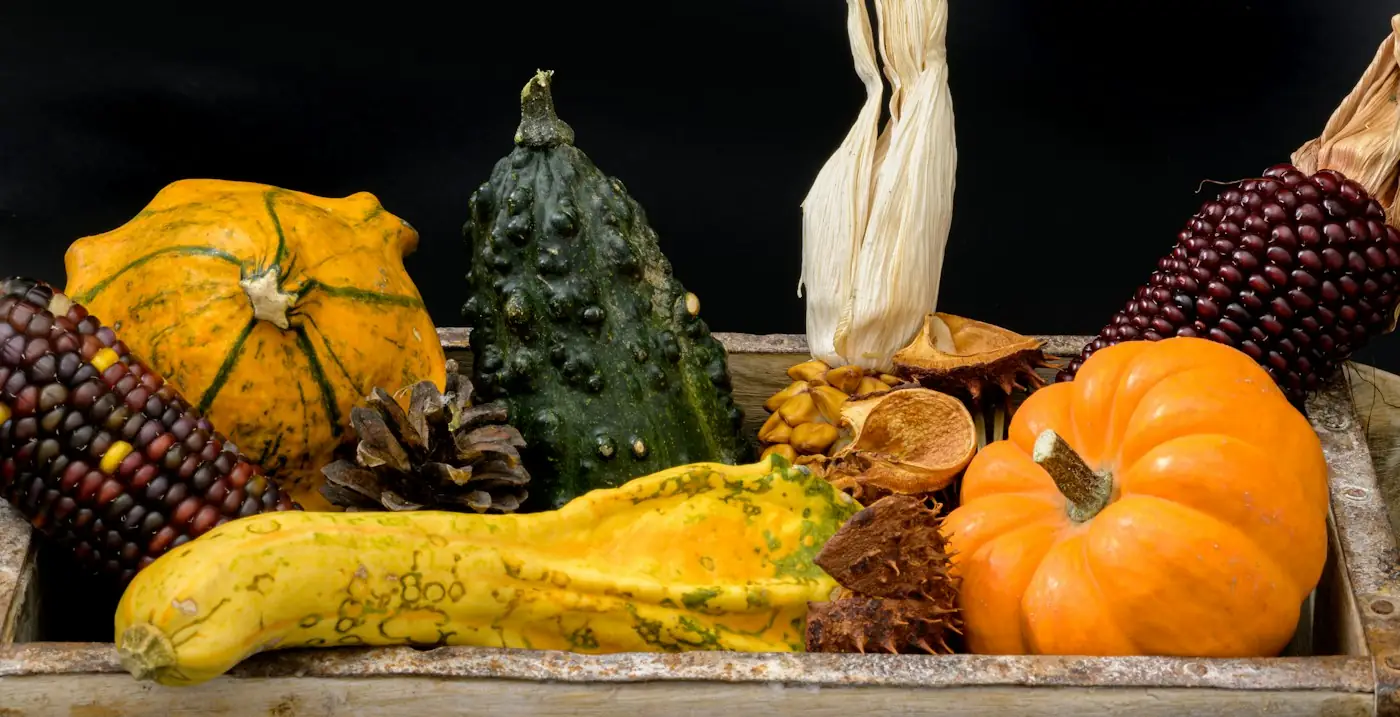
Pumpkin jokes suit the season and need no props beyond a real squash on the table if you happen to have one. The humour comes from treating the pumpkin as a guest with its own plans and opinions. Children who have helped choose or carry a pumpkin often want to add a line of their own, so leave a pause after each joke rather than rushing to the next.
How to do it
- Q: Why did the pumpkin bring a calendar to dinner? A: It wanted to make a date with the pie.
- Q: What did the pumpkin wear to the table? A: Its orange best.
- Q: How do pumpkins say goodbye? A: See you round.
- Q: What did the pumpkin say after the meal? A: I'm stuffed.
- Q: Why did the little pumpkin feel proud? A: It had grown from a tiny seed all by itself.
- Q: Why did the pumpkin get the last slice of pie? A: Nobody could say no to that smile.
Make it your own: Younger children can answer 'what does the pumpkin say?' with a sound rather than words. Older ones can invent a pumpkin with a job, such as a pumpkin that drives the bus, and build three jokes around it.
Food with surprising jobs
Food jokes give children a way to be playful about dinner without anyone commenting on what is on a plate. The puns are gentle, the food stays imaginary, and the turkey and cranberry sauce become characters rather than things to eat. That can help a child who is cautious about new dishes, because the plate is suddenly a stage instead of a test.
How to do it
- Q: Why did the turkey get a place in the band? A: It already had two drumsticks.
- Q: Why did the mashed potato stay so calm? A: It had been under pressure and came out smooth.
- Q: Why did the cranberry sauce wobble? A: It was nervous about sharing a plate with the turkey.
- Q: Why did the peas roll off the table? A: They wanted to see the rest of the room.
- Q: Why did the bread get a round of applause? A: It was on a roll.
- Q: Why was the pie so generous? A: It always gave everyone a slice of what it had.
Make it your own: Toddlers can point to the food mentioned and copy the sound at the end of the punchline. Older children can turn one joke into a two-line story about the turkey's evening, adding where it sat and who it spoke to.
Place cards, salt and pepper
Place cards and seating give every guest a small part in the joke, which helps a child who feels shy in a big group. It also gives you a reason to make simple folded cards together beforehand, which you can read about in these paper games for kids. Reading a name aloud as part of a punchline turns a wobbly moment of attention into something the whole table shares.
How to do it
- Q: Why did the place card hum at dinner? A: It was helping everyone find their seat in the choir.
- Q: What did the salt say to the pepper? A: You really shake me up.
- Q: Why did the chair save a spot for the napkin? A: It wanted a soft landing.
- Q: Why did the table feel so important? A: Everyone came to it for support.
- Q: Why did the two cups get on so well? A: They saw things the same way — half full.
- Q: Why did the plate refuse to gossip? A: It was afraid of spilling the beans.
Make it your own: Skip the name reading for a child who dislikes being looked at; let them hum the punchline instead. Older children can design folded place cards with a joke hidden inside for each guest to open.
Jokes with two endings to choose from
Some children prefer to choose an ending rather than remember one, and this set is built for that. Read the question, offer both answers and let your child pick whichever sounds funnier, or invent a third. There is no correct punchline, which takes the pressure off a child who is still working out how jokes are supposed to work.
How to do it
- Q: Why did the bread sit at the head of the table? A: It was on a roll — or it wanted to be toast.
- Q: Why did the carrot stay so quiet? A: It didn't want to be grated — or it was saving its crunch.
- Q: Why did the little potato hide under the napkin? A: It was a mashed potato in disguise — or it needed a quiet place to think.
- Q: Why did the cranberries start singing? A: They were in a jam — or they wanted to be the sauce of the party.
- Q: Why did the pie take a bow? A: It had a lovely filling — or it was the crust of the show.
- Q: Why did the cup clap? A: It wanted to raise the mood — or it was simply full of cheer.
Make it your own: Offer just one ending to a younger child and ask whether it is funny. Older children can write both endings on folded paper, let the table vote, then explain which one worked and why.

Make it work for your family
If a joke falls flat, say the funny part out loud yourself — 'imagine a pumpkin checking its calendar' — and move on. Children often laugh at the second hearing, once they know where the sentence is going. A child who misremembers a punchline is not getting it wrong; the new version is worth repeating exactly as they told it. Stop when attention drifts, even if there are jokes left.
Keep the jokes away from food judgement, appearance and accents, and let a guest say 'I don't get it' without being teased. If your family enjoys this turn-taking shape, these Thanksgiving riddles and Thanksgiving would you rather questions work the same way around a table.

Parents also ask
What are some good Thanksgiving jokes for kids?
Simple puns about food and table things work best: why the pumpkin brought a calendar, why the spoon gave directions, what the salt said to the pepper. They use objects a child can see at the table, so the joke makes sense the first time. Keep the punchline short and let your child repeat it.
How do you explain a joke to a child who doesn't understand it?
Say what the picture is: 'The pumpkin is checking its calendar because it wants to meet the pie.' Then explain the word doing the work — a date can be a day on a calendar or a plan to meet someone. Skip it if interest has gone; a joke explained twice stops being funny.
Are these jokes suitable for a preschooler?
Preschoolers usually enjoy the silliness without catching every pun, and that is fine. Three- and four-year-olds often laugh because you are laughing and because a spoon is talking. Choose the shortest jokes, act them out with real objects, and let your child add their own nonsense ending.
Sources & further reading
Explore these primary sources for further context on this topic.
Choose materials and activities that suit your child, supervise as needed and adapt the ideas to their interests and abilities. About our editorial approach