Weebou Editorial Team
 In this article
A little preparation
Pick a moment when nobody is rushing: a car journey, a lull after lunch or the last few minutes before bed. Jokes work best in short bursts, so plan to tell three or four rather than the whole list. Read the question slowly, pause, and let your child try an answer before you give the punchline. A wrong guess is often funnier than the joke, and it shows you that your child is listening to the words rather than waiting for your voice to stop.
Keep the language gentle. These jokes are about friendly ghosts, polite monsters and pumpkins that take naps, and none of them needs a spooky voice or a dark room. If a pun depends on a word your child may not know, such as patch, squashed or wrap, explain it in one short sentence and carry on. Children who dislike being put on the spot can listen while you tell the joke to a toy, then join in when they have a punchline ready. A pencil and a few scraps of paper are useful for catching the versions they invent.

Questions to explore together
Pumpkin jokes with a squishy punchline
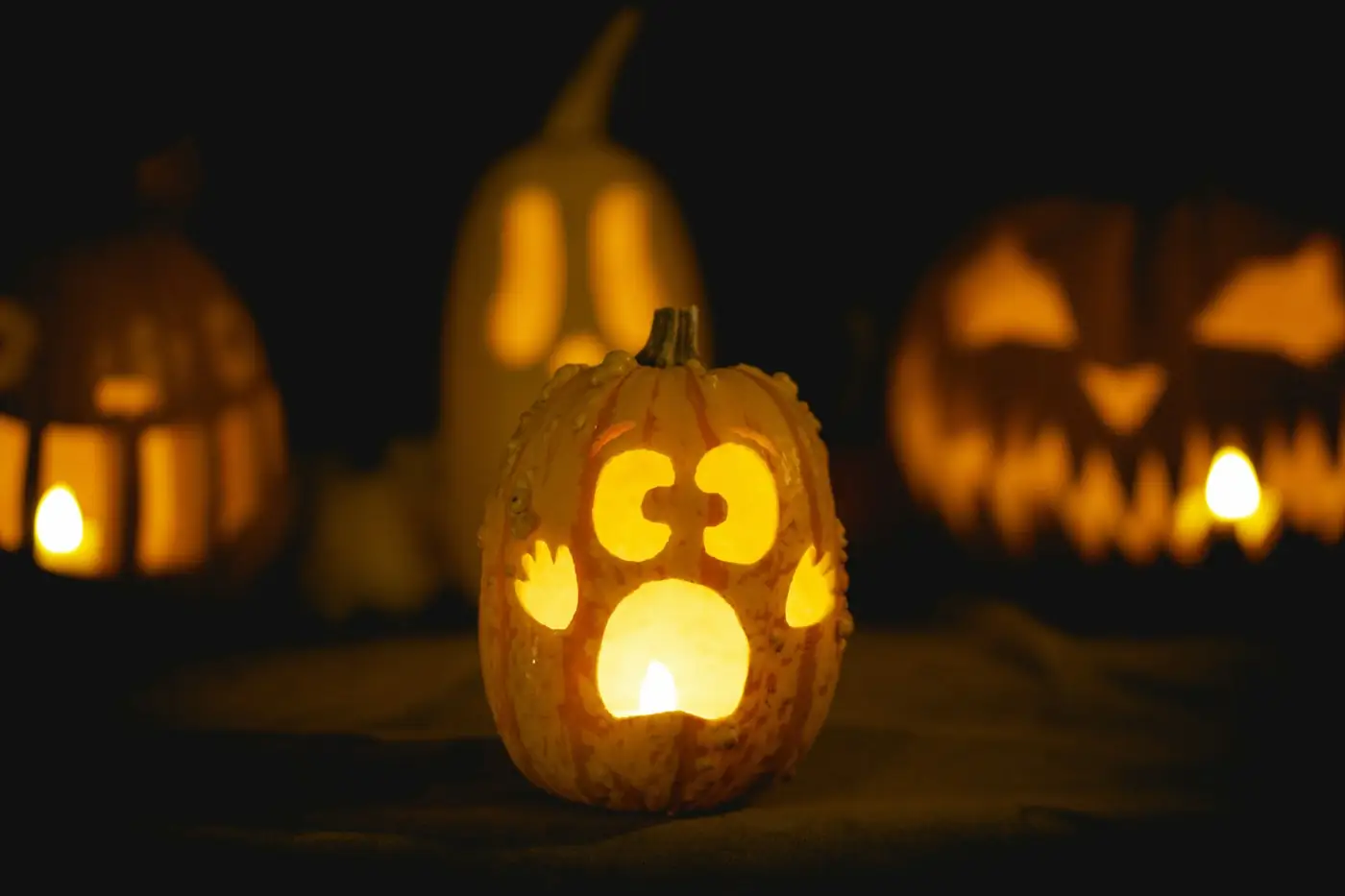
Pumpkins are the easiest place to start because every child has seen one and knows how heavy and bumpy they are. The wordplay leans on familiar ideas such as patches, seeds and squash, so the joke still lands when the reasoning is a bit loose. Read the question, pause for a guess, then finish it. Guessing is where the language work really happens.
How to do it
- Q: Why did the pumpkin take a nap? A: It was feeling a little squashed.
- Q: What did the pumpkin say at the end of the party? A: I had a smashing time.
- Q: How do you mend a broken pumpkin? A: With a pumpkin patch.
- Q: What did the little pumpkin say to the big pumpkin? A: You're growing on me.
- Q: Why was the pumpkin bad at hiding? A: It always stood out in the patch.
- Q: Why did the pumpkin cross the road? A: To get to the other side of the patch.
Make it your own: Younger children can answer with a picture or a single word, and you supply the punchline. Older ones can invent a seventh pumpkin joke and decide whether it needs the word patch to work.
Polite ghost jokes for brave listeners
Ghost jokes let a child practise a very ordinary skill, saying hello and goodbye, inside a slightly silly situation. The ghosts here are not frightening; they are tired, hungry or shy, which turns a seasonal character into someone a small child can feel a bit sorry for. That shift is often what makes a nervous child relax about Halloween decorations.
How to do it
- Q: What did the little ghost say when it knocked on the door? A: Boo you mind if I come in?
- Q: Why was the ghost so tired? A: It had been up all night saying boo.
- Q: What is a ghost's favourite pudding? A: Boo-berry pie.
- Q: Why did the ghost whisper? A: It did not want to wake the cat.
- Q: How does a ghost say goodbye? A: It simply vanishes, very politely.
- Q: What did one ghost say to the other? A: Do you boo-lieve how quiet it is tonight?
Make it your own: For a child who finds ghosts unsettling, swap in a different character, such as a sleepy owl, and keep the same jokes. Older children enjoy adding a second line where the ghost explains itself.
Bat and spider jokes about hanging around
Bats and spiders are the animals children actually meet in Halloween books, so jokes about them connect to something real. These puns hang on words like flap, web and hang, all of which describe what the animal genuinely does. That makes them easy to act out with two hands or a paper shape, and the movement helps the joke stick.
How to do it
- Q: Why did the paper bat practise folding? A: It wanted a good first flap.
- Q: What does a bat say when it wakes up? A: Time to hang around.
- Q: Where do spiders go on holiday? A: Somewhere with a good web.
- Q: Why did the spider take a ruler? A: To check the width of its web.
- Q: Why did the spider invite the fly for tea? A: It wanted company, not a snack.
- Q: What did the bat order at the café? A: A fruit smoothie, because it was a fruit bat.
Make it your own: Toddlers can flap or wiggle fingers at the right moment instead of answering. Older children can make a paper bat, hide it somewhere in the room and write a joke for wherever it lands.
Friendly monster jokes for the dinner table
Monster jokes give children permission to be a bit greedy and a bit clumsy in a safe, imaginary way. This set is deliberately domestic: the monsters are brushing teeth, wearing hats and passing plates. That everyday setting is what makes the exaggeration funny, and it lets a child retell the joke later as a small story about a monster who came to tea.
How to do it
- Q: Why did the tiny monster bring two sandwiches? A: One was for its enormous imaginary friend.
- Q: What does a polite monster say at dinner? A: Please pass the peas, and the table too.
- Q: Why did the monster brush its teeth twice? A: It wanted a very friendly smile for the party.
- Q: Why did the monster wear two hats? A: Because two heads are better than one.
- Q: Why did the monster tiptoe through the kitchen? A: It did not want to wake the spider.
- Q: What did the monster say after breakfast? A: Thank you, and may I help with the washing up?
Make it your own: Younger children can choose which monster is hungriest and feed it from a toy plate. Older ones can build a whole tea party story and decide what each monster refuses to eat.
Costume and trick-or-treat jokes
The last set is about the parts of Halloween a child actually takes part in: choosing a costume, knocking on a door, saying thank you. These jokes are useful practice for the real evening because they rehearse the same short lines in a playful way. A child who has said thank you as a punchline ten times will find it much easier at a neighbour's door.
How to do it
- Q: Why did the costume need a rest? A: It was completely worn out.
- Q: What did the little witch do when her broom took a wrong turn? A: She checked the map and swept back.
- Q: What is a mummy's favourite music? A: Wrap.
- Q: How do you know a vampire is friendly? A: It only wants to borrow a cup of juice.
- Q: Why did the trick-or-treater practise knocking? A: So the door would know who was there.
- Q: What do you say when someone gives you a treat? A: Thank you, and then a joke if they ask for one.
Make it your own: Younger children can act out the knocking and the thank you while you say the joke. Older ones can write their own joke on a card and keep it in a costume pocket to tell at the door. If your child likes guessing before the answer, these friendly Halloween riddles use the same pause-and-think pattern.

Make it work for your family
If a joke falls flat, do not repeat it louder. Ask what your child thought the answer would be, then offer the real one and explain the sound or meaning that makes it work. Some children need to hear a pun five or six times before it clicks, and plenty prefer their own sillier version. Write those versions on scraps of paper and keep them in a jar, so the next telling starts with a joke the family made. When the jokes run out, swap to a few friendly Halloween riddles and let your child guess the answer before you say it.

Parents also ask
What are easy Halloween jokes for young children?
Short question-and-answer jokes about familiar things work best, such as why the pumpkin took a nap or what the ghost said at the door. Keep the setup under ten words, pause before the punchline and be ready to explain the pun in one sentence.
How do I explain a joke my child does not understand?
Name the word the joke plays with and say what it usually means, then what it means in the joke. For example, a pumpkin patch is both a place where pumpkins grow and a way to mend something. Then tell the joke again slowly so your child can hear the link.
Are Halloween jokes suitable for a three-year-old?
Gentle ones are, especially jokes about pumpkins, sleepy ghosts and polite monsters with no scary voice or dark room. A three-year-old may not follow the wordplay yet, but will enjoy the rhythm, the pause and the chance to shout a silly answer.
Choose materials and activities that suit your child, supervise as needed and adapt the ideas to their interests and abilities. About our editorial approach