7 min read
 In this article
A little preparation
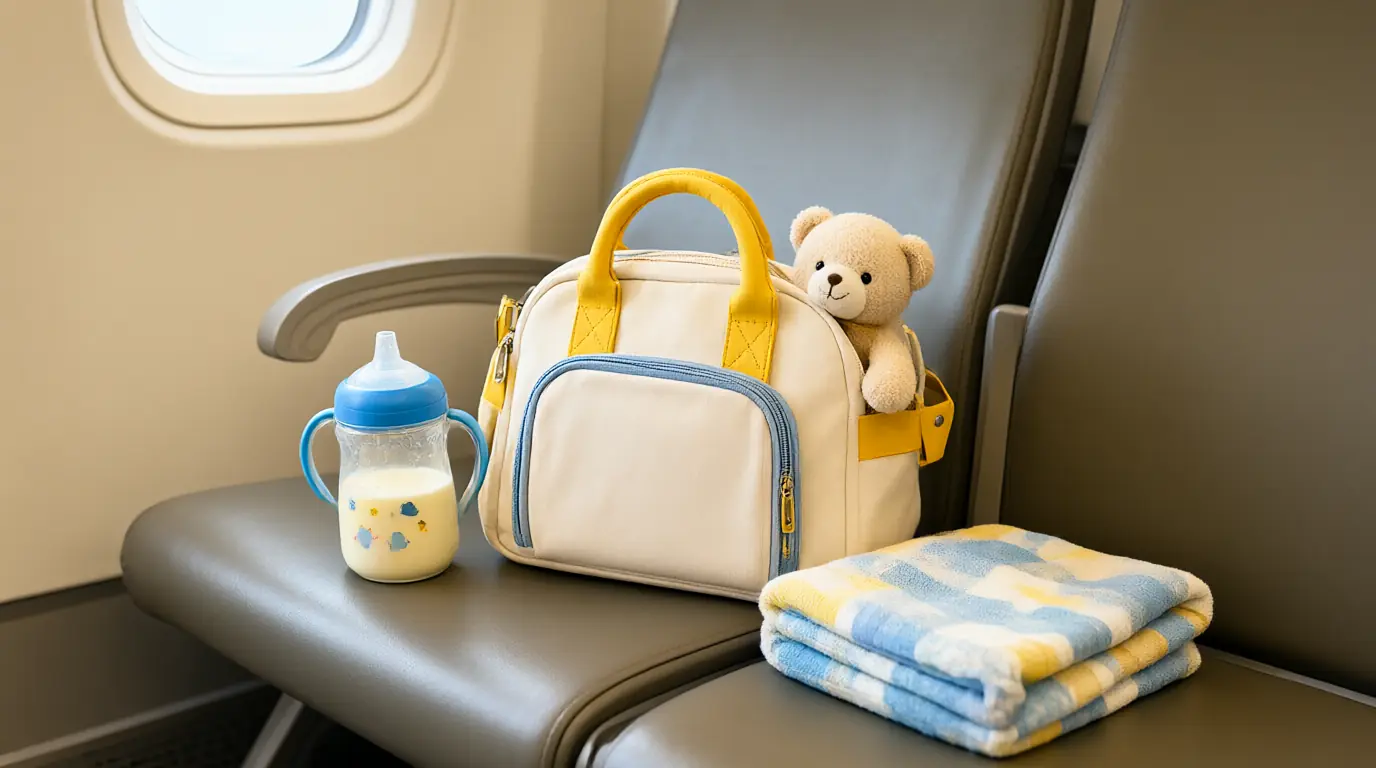
Check your airline's current rules on child fares, car seats, strollers, liquids for children and baby food directly with them, as these change. Pack essentials within reach rather than in the overhead locker: nappies, wipes, a spare outfit, any medicine your child needs, a drink for take-off and a familiar comfort item. Plan who carries what, who handles passports and who stays with the toddler at each stage.
Build in more time than seems necessary, because a toddler walking is slower than a toddler carried and wants to stop. If you can, choose flight times that fit your child's usual sleep, though that is not always possible. Keep new toys for the journey rather than opening them in advance, and keep play items small, soft and secured so they do not drop into the cabin floor. If you have questions about ear discomfort or health needs, ask your child's doctor before travelling.

Ideas to try together
A simple journey picture board
Toddlers cope better when they know what comes next. A few pictures glued to a card can show the stages of the day, and you reveal only the next stage. This keeps the whole journey from feeling endless and gives your child something to point to.
 You’ll need
- A sheet of stiff card
- Four to six simple drawings or stickers: car, airport, plane, snack, sleep, arrival
- Removable putty or Velcro dots
- A small pouch to carry it
How to do it
- Before the day, make the cards together by drawing or sticking on pictures.
- Show the sequence once and name each stage with a short phrase: 'First car, then airport.'
- At the airport, point to the next picture only, such as 'Now we wait for the plane.'
- Let your child move the finished picture to a 'done' pocket if they like.
- Praise noticing: 'You saw the plane picture!'
- Keep the card in reach for the cabin so you can show 'snack time' or 'landing' soon.
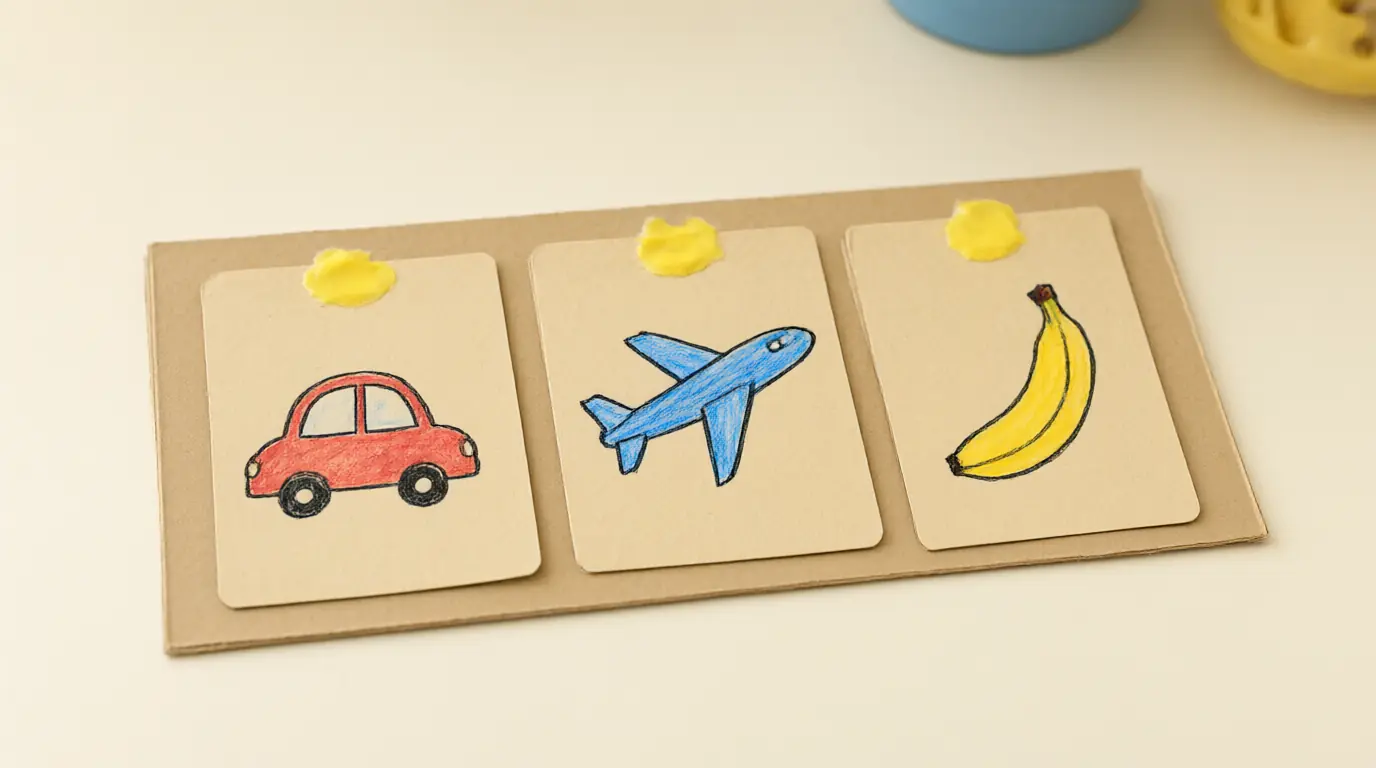
Make it your own: For under two, use only two pictures and say them aloud. For three-year-olds, add a space for them to draw what they saw at each stage.
Two small choices at calm moments
A toddler on a trip has few chances to decide anything, which can fuel protest. Offering two acceptable choices at calm moments gives a sense of control without opening a long negotiation, and it keeps you from bargaining while standing in a queue.
You’ll need
- Two quiet activities, such as stickers and a board book
- Two snack options
- A small bag to hold the choices
- A soft toy or comfort item
How to do it
- Choose the moment: before you board, not in the middle of a tantrum.
- Hold up both choices and say each name clearly.
- Wait a few seconds for your child to point or reach.
- Accept the answer, even if it is 'neither', and put the other choice away.
- If your child wants something else, say 'That is not in the bag today. Which one now?'
- Return the unused option later as a second choice, so it feels fair.
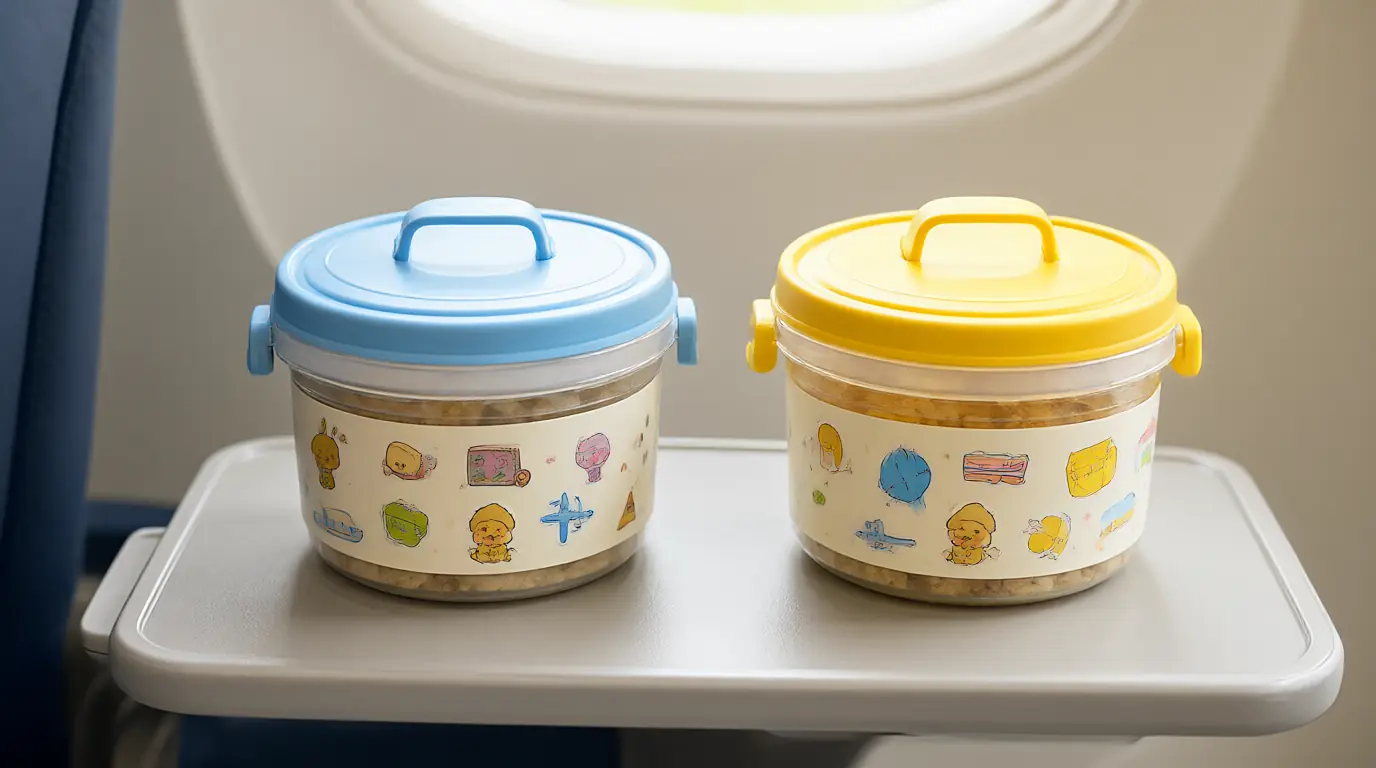
Make it your own: For a younger toddler, offer a choice by holding objects in each hand. For older toddlers, let them place the chosen item in the seat pocket as their own job.
A familiar book pause
A favourite sturdy book brings home into an unfamiliar place. Following your child's attention matters more than reading the text: they may want to look at one page for several minutes, name a picture or hear a repeated phrase.
You’ll need
- One or two sturdy board books your child knows
- A small soft toy to hold
- A light blanket
- Your voice, kept low
How to do it
- Find a quiet corner of the gate area or your seat once you are settled.
- Hold the book where your child can see and pat the page.
- Name one picture or repeat the line they know best.
- Pause and wait for them to fill in the sound or word.
- If your child turns the page back, follow them without insisting on the order.
- Close the book when attention drifts and put it within reach for later.
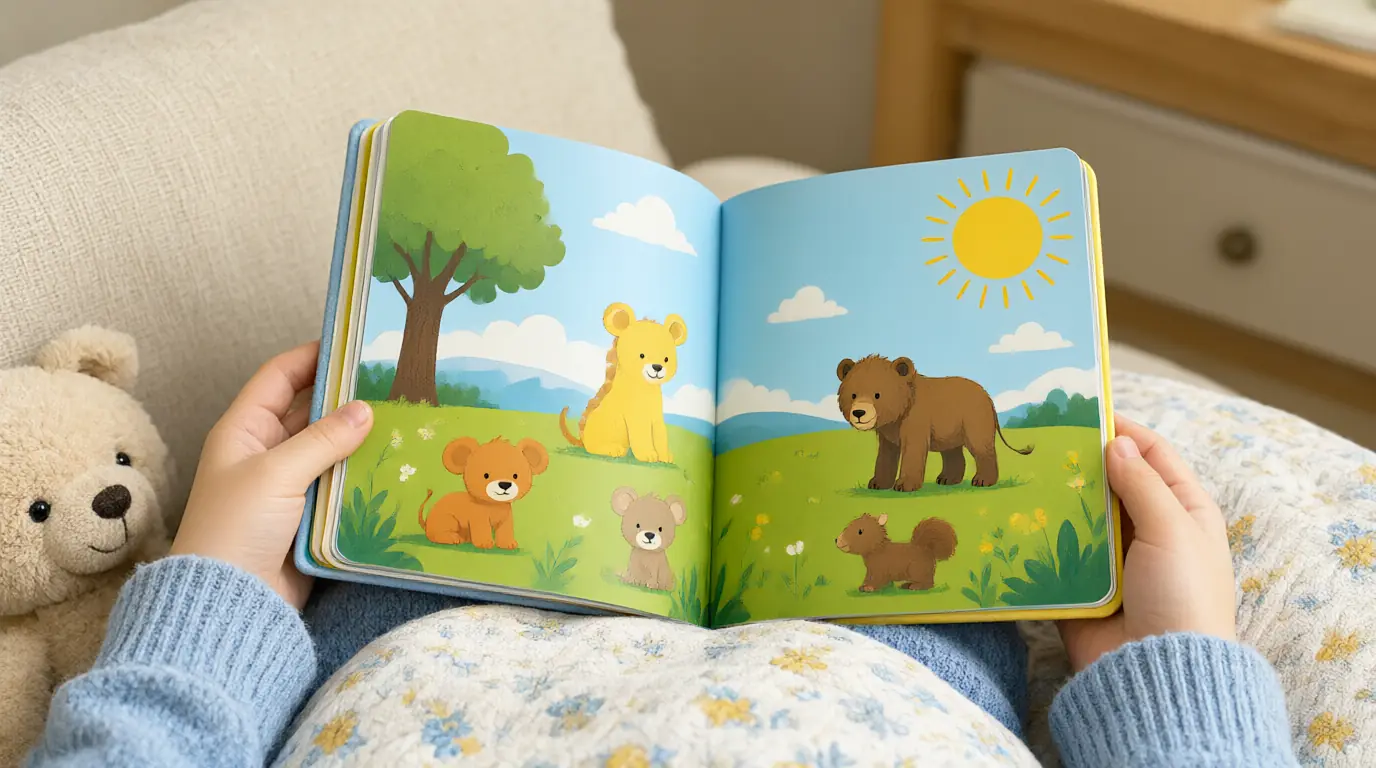
Make it your own: Under two, simple pictures of faces or animals are enough. Older toddlers might enjoy a lift-the-flap book or finding a hidden character on each page.
A caregiver reset plan
Toddler travel is shared work. Agreeing in advance how adults split jobs and respond to tiredness or tears means no one decides everything in the moment. A plan also stops you promising your child a schedule that the airport may not keep.
You’ll need
- A short note on your phone or paper listing roles
- A small bag for each adult with essentials
- A comfort item kept near the top
How to do it
- Decide who carries the child, who carries the bags and who handles documents at each stage.
- Agree a signal for 'I need a break' so the other adult can step in.
- Choose a quiet spot, such as a corner of the gate, for a reset if your toddler becomes upset.
- Use a calm phrase, such as 'We are safe, we are waiting.'
- Offer a drink or comfort item before trying anything new.
- Follow cabin crew instructions on seat belts and standing, and leave a distraction for last.
Make it your own: Travelling alone means preparing a smaller bag and asking for help when needed. With older children, give a job such as carrying their own small backpack.

Make it work for your family
Aim for flexibility rather than perfection. Some toddlers sleep, others stay awake and chatty, and a crying child is not a sign of failed parenting. If your child is upset, a change of position or a short walk down the aisle when allowed may help more than another toy.
For toddlers under two, keep screens out of the plan if you want to; familiar songs, books and cuddles are plenty. Weebou's app is made for ages 2–6+, so it is better suited to older children than to infants on a flight. For more ideas to keep small hands busy, try airplane activities for kids or a few car games for kids for the journey to the airport.

Parents also ask
Do toddlers need their own seat on a plane?
Rules differ by airline and by age. Many airlines let children under two travel as lap infants on an adult's ticket, while older toddlers need their own seat. Check with your airline directly, and ask about car-seat use if you wish to bring one.
What should I pack in my hand luggage for a toddler?
Nappies, wipes, a spare outfit for you and your child, any medicine they need, a drink, simple snacks, a comfort item and two or three quiet toys. Keep them in an easy-to-reach bag rather than the overhead locker.
How can I help my toddler's ears on take-off and landing?
Many parents offer a drink, a feed or a snack during take-off and landing, as swallowing may help. If your child has had ear problems or a cold, ask a doctor before flying and follow their advice.
Choose materials and activities that suit your child, supervise as needed and adapt the ideas to their interests and abilities. About our editorial approach