7 min read
 In this article
A little preparation
Check your airline's rules on carry-on items before you pack. Keep to soft, flat materials: paper, crayons that will not roll away, stickers and a small notebook. Put everything in one zipped pouch within reach, not in the overhead locker, and carry only what you can fit on a tray table. Choose crayons rather than markers, which can stain upholstery.
Plan the activities in short blocks of 10 to 15 minutes, with a snack, a toilet trip or a look out of the window between them. Introduce one activity at a time and keep the others in the pouch until the first one has run its course. Cabin instructions come first: stop any activity when the crew asks you to stow items, and keep seat belts fastened whenever the sign is on. Tell your child at the start that you will do an activity together after take-off, which gives them something to look forward to during the wait.

Ideas to try together
Journey picture book
A folded sheet of paper becomes a tiny book that records the trip as it happens. Each stage, from checking in to landing, gets a drawing. Children who feel anxious about what comes next often relax when they can see the plan, and the finished book is a keepsake that makes the flight a story with a beginning, middle and end.
 You’ll need
- 1 sheet of A4 paper folded into a booklet
- 2 or 3 crayons
- Small stickers (optional)
- A pencil for adult labelling
How to do it
- Fold the paper in half twice to make a small booklet and tuck it in your pouch before you leave home.
- On the first page, draw the airport or the bag you packed.
- When the plane starts to move, draw the runway or the wing.
- During the flight, add a page for whatever you see: clouds, a trolley, a snack.
- Let your child choose what to draw on the final page, such as the place you are going.
- Read the finished book aloud together before you land.
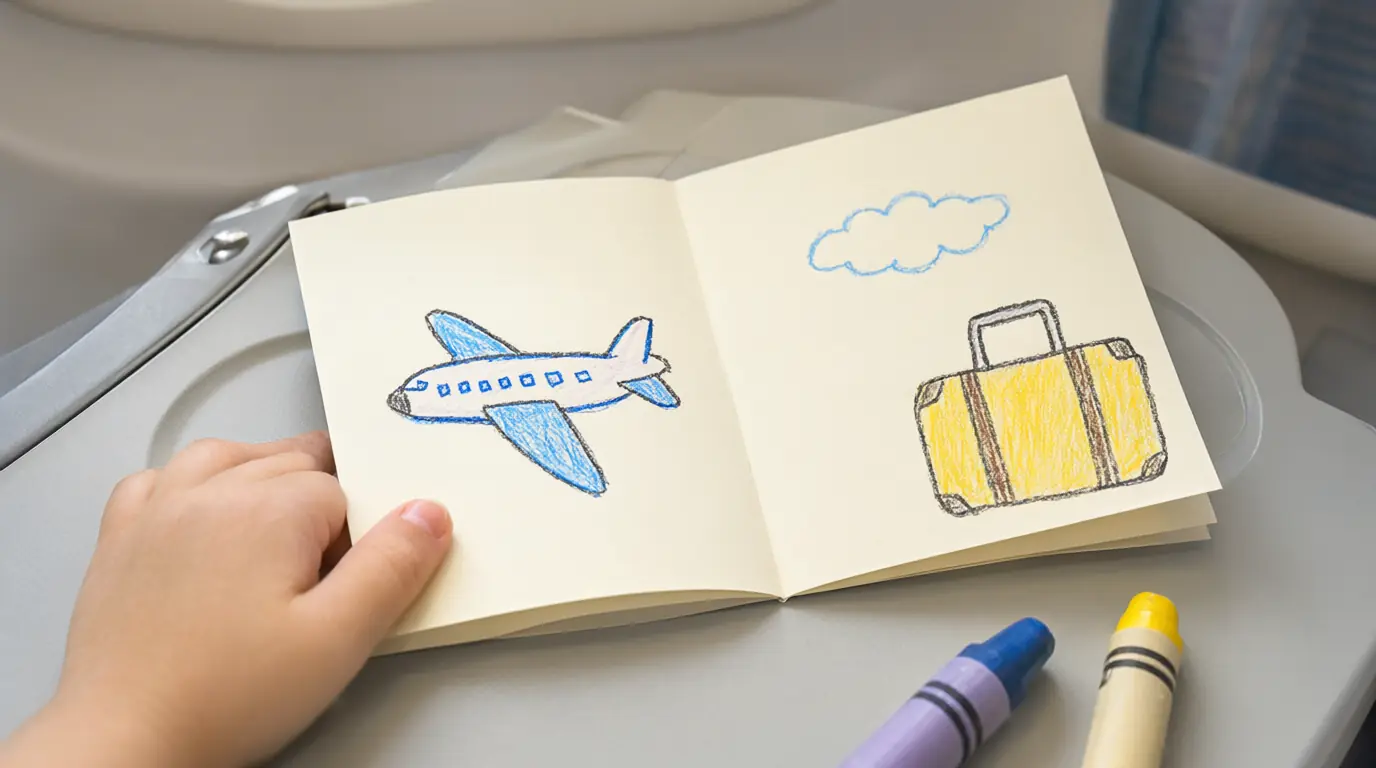
Make it your own: Younger children can add one sticker per page instead of drawing. Older children can write a word or a number under each picture or draw a map of the plane's route.
Seat-side story choices
This conversational game needs nothing but imagination. You offer two characters, your child picks one, and together you build a short story, with your child deciding what happens next. It keeps hands free for snacks and seat belts, and children enjoy being in charge of a plot while sitting quietly.
You’ll need
- No materials needed
- 2 small pictures drawn on sticky notes (optional)
- A soft toy to be the main character (optional)
How to do it
- Offer two characters, such as a brave penguin and a sleepy fox, and ask which one should go on a journey.
- Begin the story with one sentence, for example 'One morning the penguin packed a very small bag.'
- Ask your child what happens next and add their idea to the story.
- Take turns adding one sentence each until the story reaches a natural stopping point.
- Offer a choice of two endings and let your child pick one.
- Retell the story in a whisper, as a bedtime version, if the cabin is quiet.
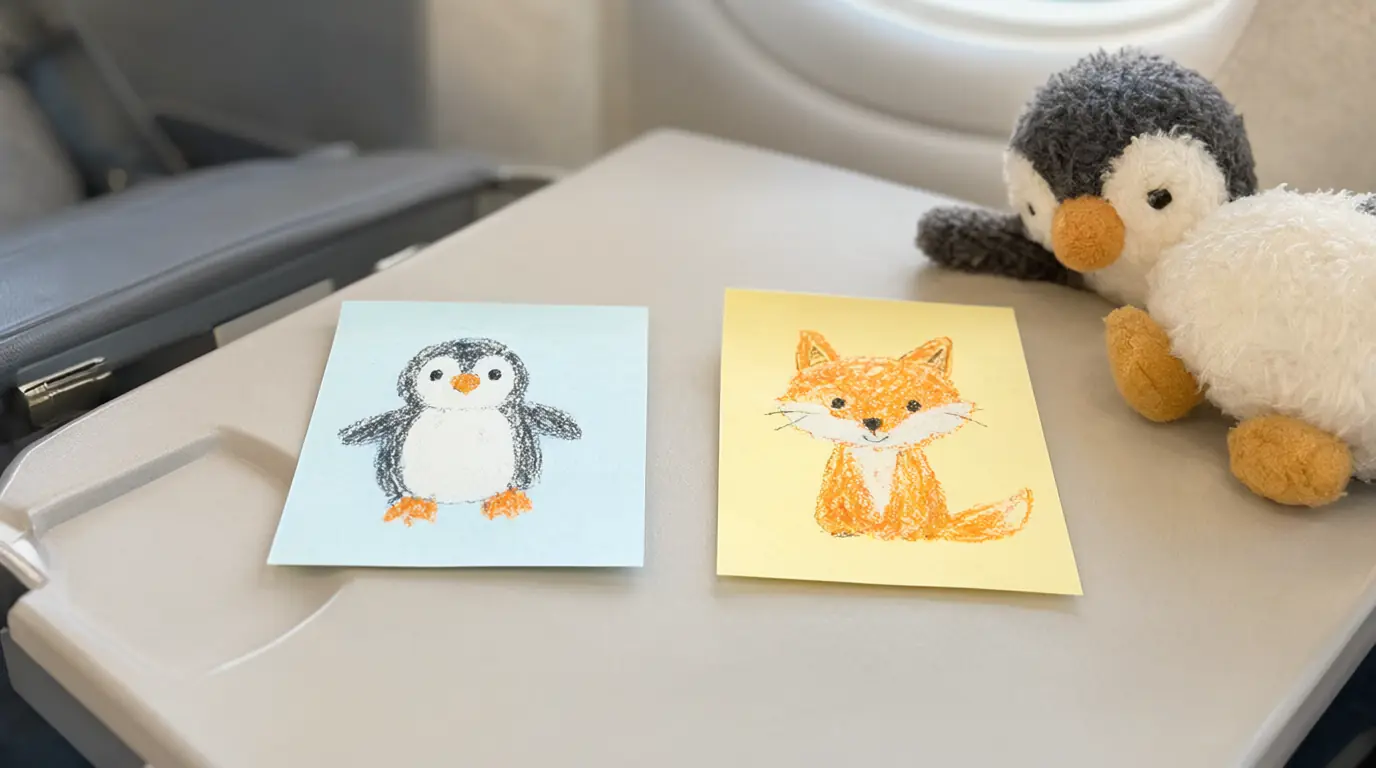
Make it your own: Younger children can answer with a word or point to a picture card. Older children can add a character, a problem and a solution, and say each part of the story in order.
Colour noticing list
A colour hunt turns the cabin into something to look at closely. Children find examples of chosen colours within their own seat area and mark each discovery. It sharpens attention and vocabulary, and because it needs no moving around, it keeps everyone safe and comfortable.
You’ll need
- 1 sheet of paper with 4 coloured squares drawn on it
- A pencil or crayon
- Small stickers to mark each find (optional)
How to do it
- Draw four squares in a row and colour each one differently, for example blue, red, yellow and green.
- Explain that you will look for each colour using only what you can see from your seat.
- Let your child spot something blue and point to it.
- Make a mark or add a sticker under the blue square for each blue thing found.
- Move on to the next colour and keep searching.
- At the end, count the marks together and talk about which colour was easiest to find.
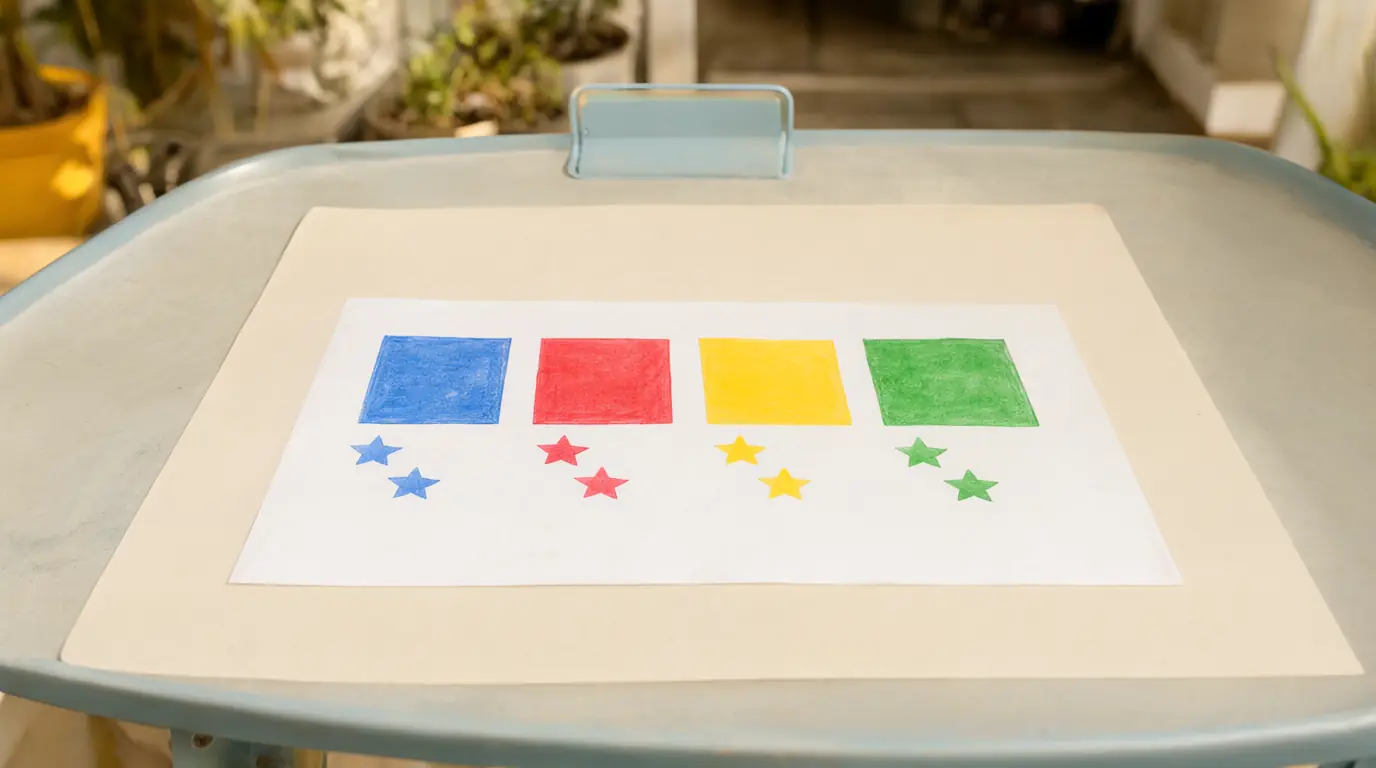
Make it your own: Younger children can hunt for one colour at a time and point rather than tally. Older children can add a column for shapes or try to find an object for every colour of the rainbow.
Destination postcard
A postcard gives the journey a purpose. Your child draws a place or person they look forward to seeing and dictates a short message. The writing is optional, the drawing is what matters, and the card can be given to someone at the end of the trip or saved as a memory.
You’ll need
- 1 card or stiff piece of paper, about postcard size
- Crayons
- A pencil for you to write the message
- A sticker for a pretend stamp
How to do it
- Show your child the blank card and ask who or what they are looking forward to seeing.
- Let them draw it on one side of the card, filling the space however they like.
- On the other side, invite your child to dictate a short message, and write it exactly as they say it.
- Add a sticker in the corner as a stamp.
- Decide who will receive the card and what your child wants to tell them.
- Store the card in the pouch to share at the end of the flight.
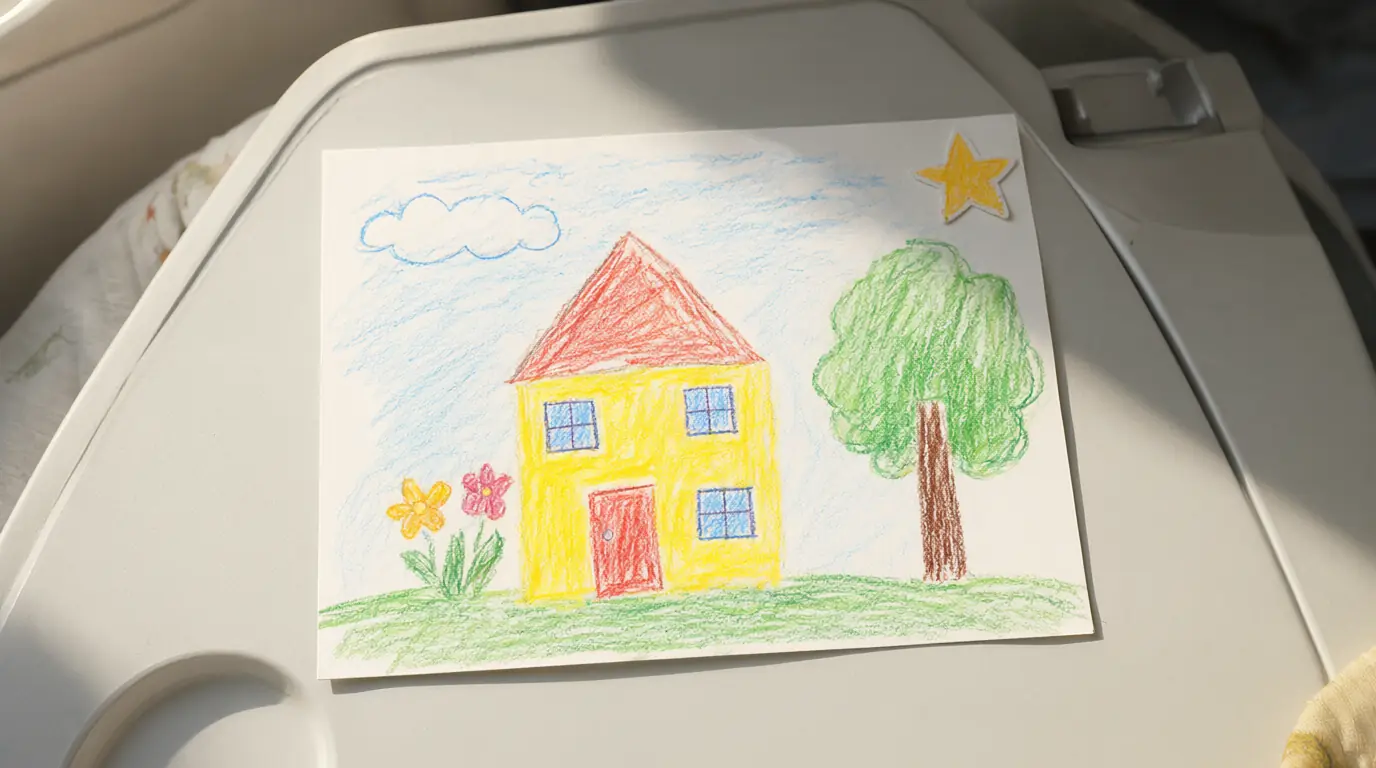
Make it your own: Younger children can scribble and add stickers, with you labelling the card afterwards. Older children can write their own name or a few letters and add a second drawing for something they see on the journey.

Make it work for your family
Rotate a small set of activities instead of presenting everything at once, and let your child rest or watch the clouds when they do not want another game. An overtired child will not enjoy a clever activity, so a nap or quiet cuddle can be the best choice. If a game causes a disagreement in a shared row, move to a conversation-only game.
Flights are easier with preparation. For ideas on what to expect with younger children, read flying with toddlers, and for other journeys that need low-prep play, try these car games for kids or bus games for kids.

Parents also ask
What should I pack for a toddler on a plane?
Pack flat, quiet items: paper, crayons, stickers, a small notebook and a familiar soft toy, plus snacks and a change of clothes. Keep them in one pouch within reach, and check your airline's carry-on rules before you leave home.
How long can a young child focus on an activity during a flight?
Most children aged 3 to 7 will stay with one activity for about 10 to 15 minutes. Plan short blocks with breaks between them, and let your child rest, watch the window or eat a snack when they want to.
Are screen-free activities realistic on a long flight?
Yes, in short blocks, mixed with rest, snacks and a toilet trip. A few activities in rotation are enough. Some families also keep a screen as a backup, which is fine. Plan the mix in a way that suits your child.
Choose materials and activities that suit your child, supervise as needed and adapt the ideas to their interests and abilities. About our editorial approach